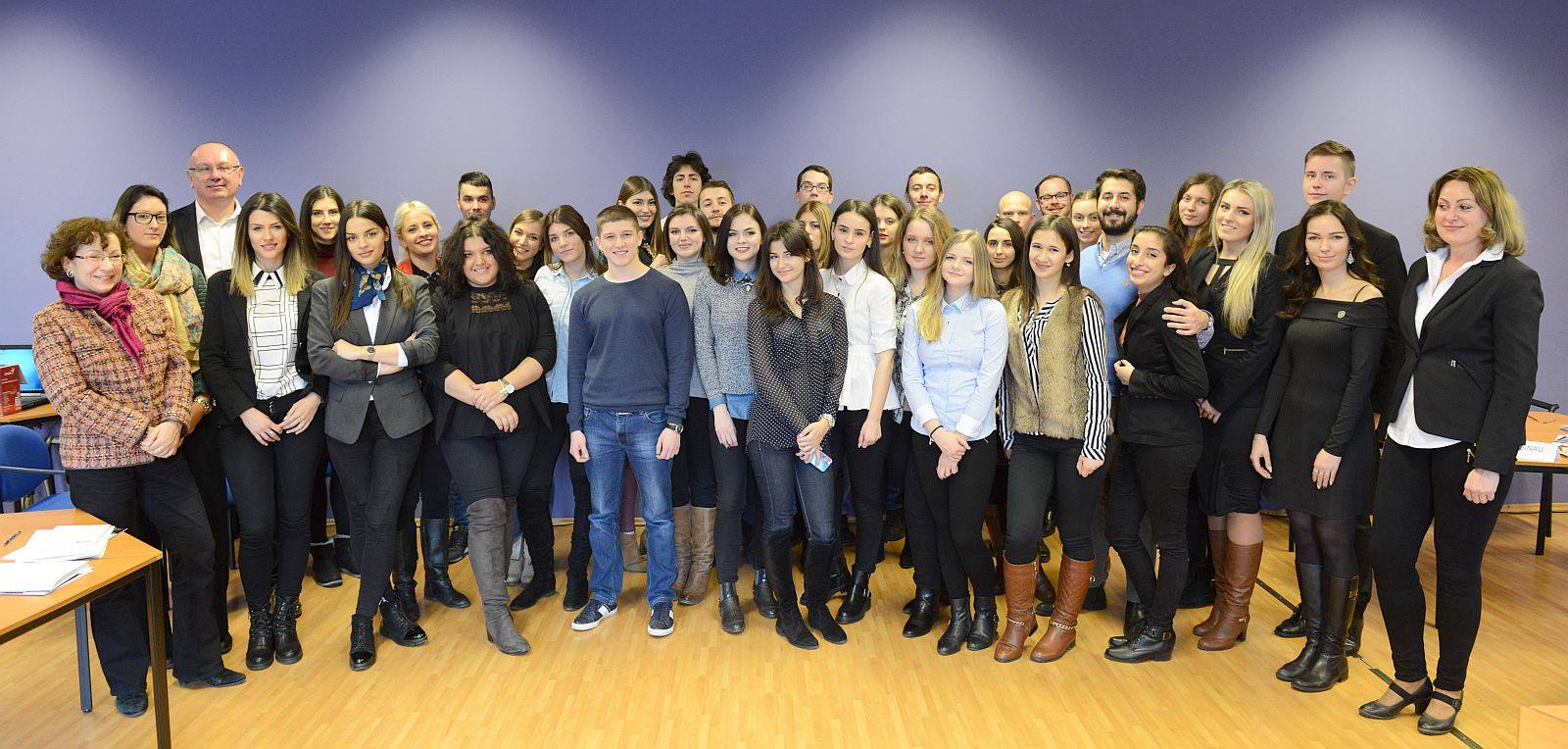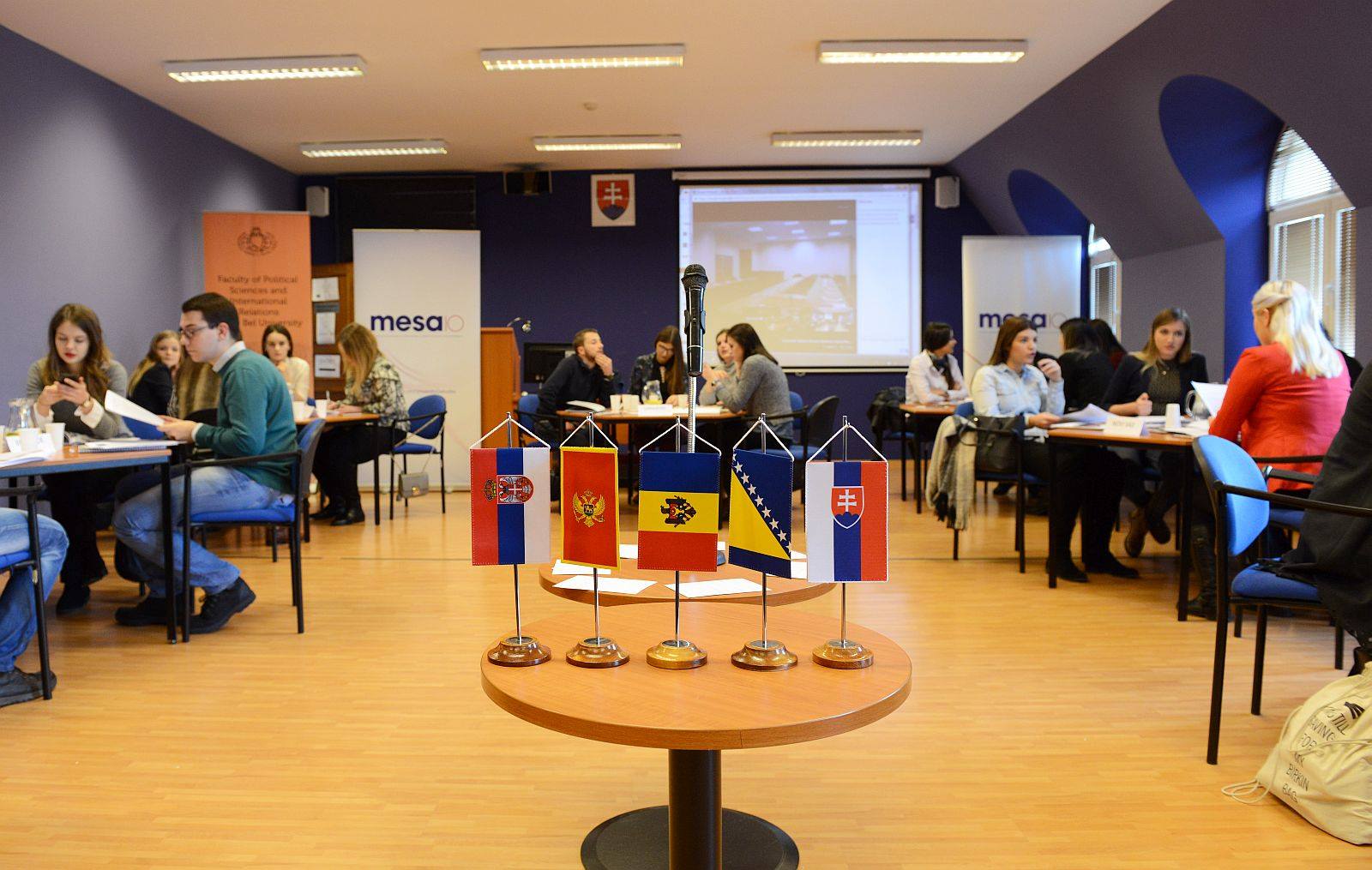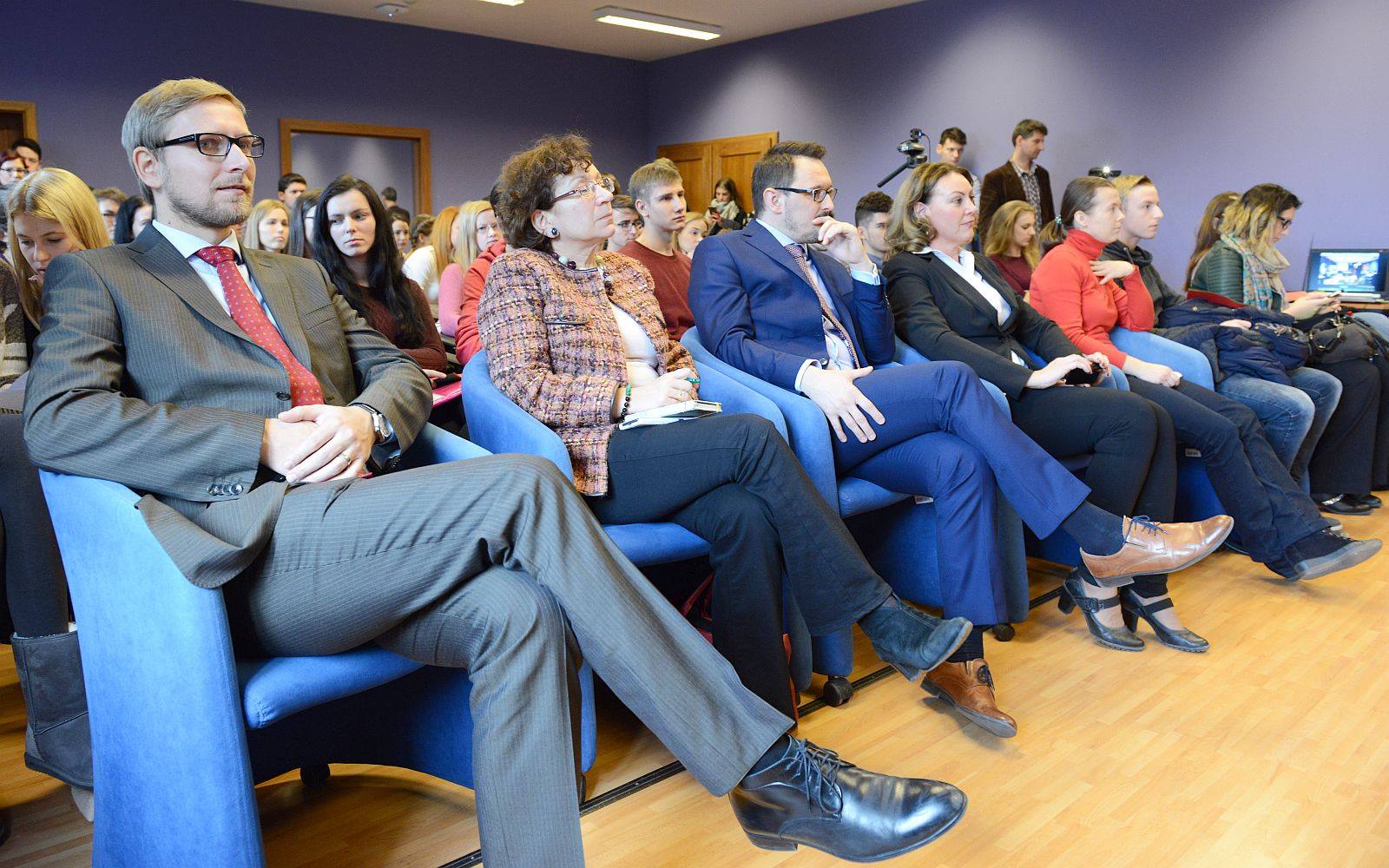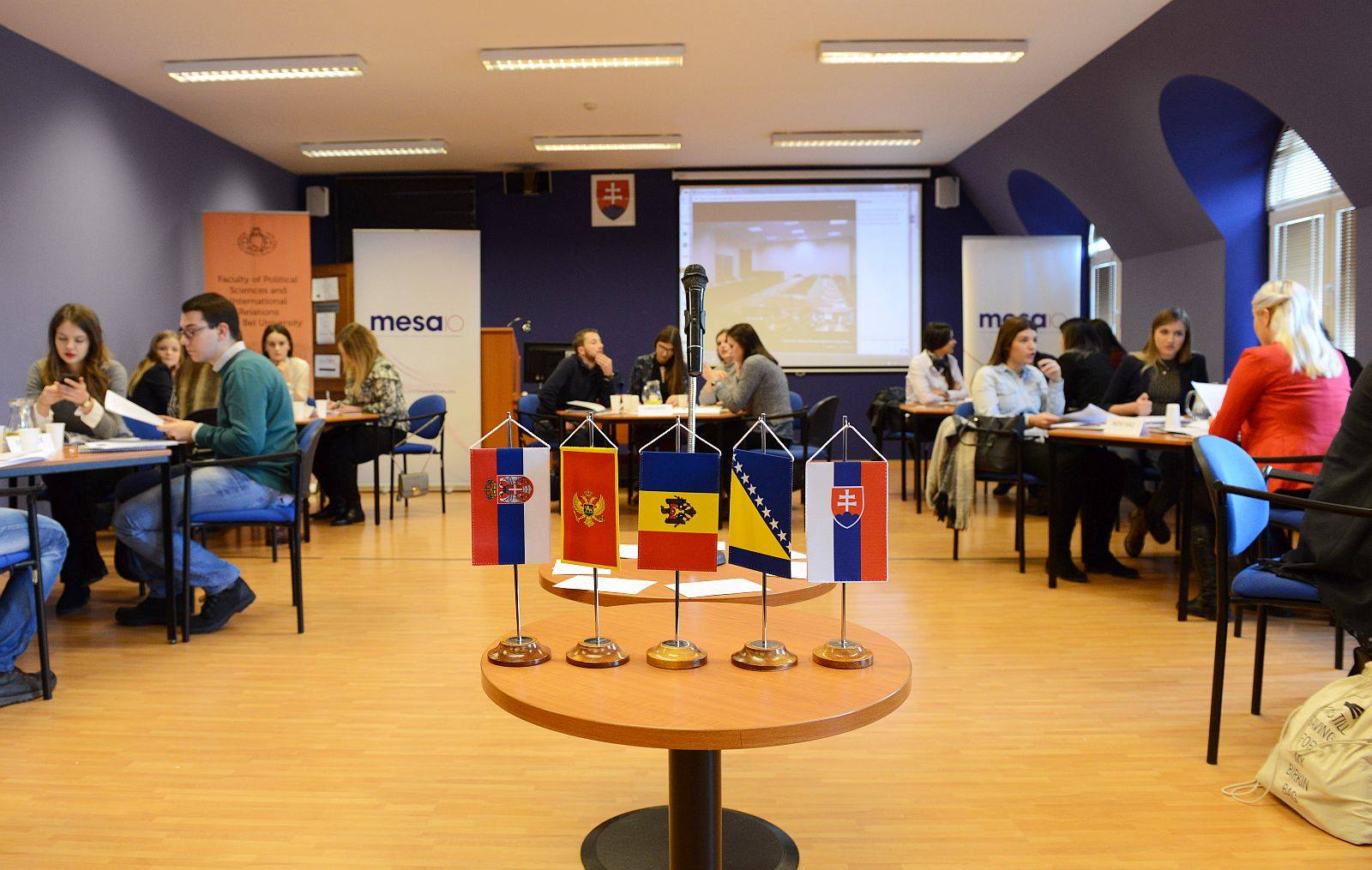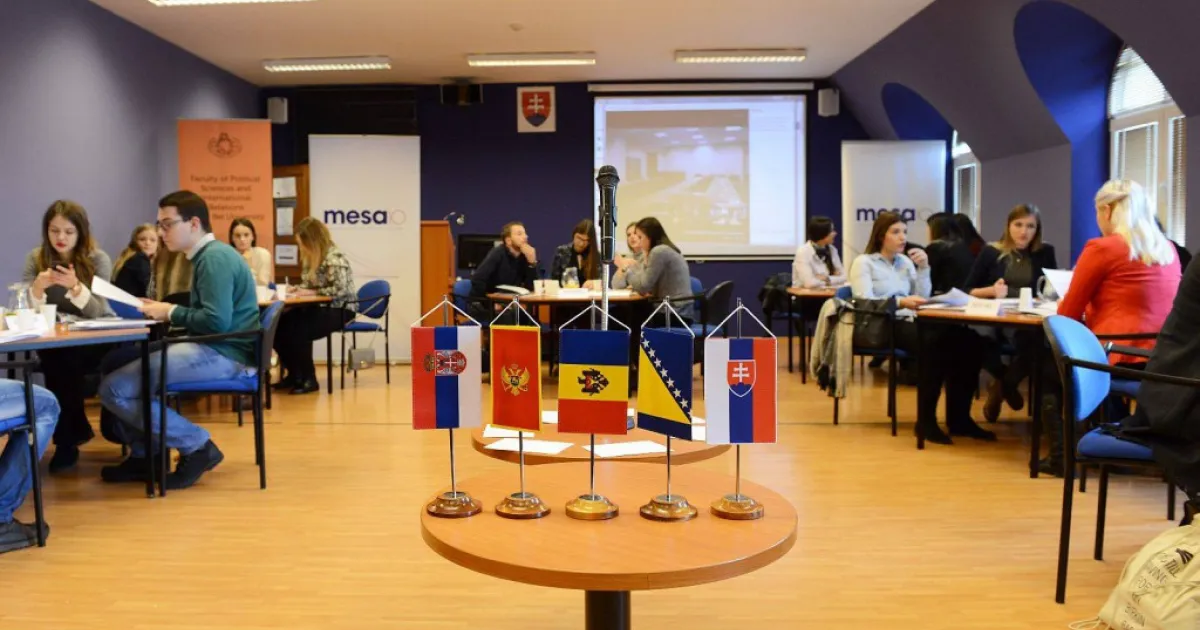
First round of student debates between seven universities from Slovakia, Serbia, Bosnia and Herzegovina, Montenegro and Moldova within the project “Strengthening Debating Skills and Promoting Democratic Values among Youth” took place on Wednesday, December 7th, 2016, in Banská Bystrica, Slovakia.
Students were debating questions of European and world security and political situation, with focus on European Union and NATO. Most pressing questions were impact of the election of Donald Trump for the US president on the relations between Europe and the United States, the impact of pro-Russian candidates, who are successful in elections in European countries on the strength of EU accession-ambitions of those countries; as well as the question if Brexit will make European Union stronger or weaker.
This week the debate group from the international relations department at IUS went to Slovakia to take part in a debate session between universities from five different countries. IUS is selected as the Bosnian university representative in this program. The core debate group consists of four members, Ms. Amina Mujkanović, Ms. Dženeta Begić, Ms. Berina Porča and Mr. Kerim Lojo. Their university coordinator is Mr. Nerkez Opačin together with his external associate Mr. Emir Suljagić.
In partnership with the NED grantee Center for Euro-Atlantic Studies (CEAS) from Belgrade and universities from Bosnia and Herzegovina, Moldova, Montenegro, Serbia, and Slovakia, the think tank organize a series of workshops and lectures and conduct a debate tournament on the benefits of Euro-Atlantic cooperation and the role of integration in promoting successful democratic transitions.
The Bratislava-based MESA10 (www.mesa10.sk) is a leading Slovak independent think tank focusing on social and economic policies. The Belgrade-based Center for Euro-Atlantic Studies (www.ceas.org.rs) is a nonpartisan think tank that provides policy recommendations to the government, policy makers, and civil society with the goal of strengthening liberal democracy in Serbia, implementing comprehensive security sector reform, and accelerating Serbia’s Euro-Atlantic integration.
The overall goal of this program is to promote universal democratic values and principles and build a network of future young leaders dedicated to upholding them.