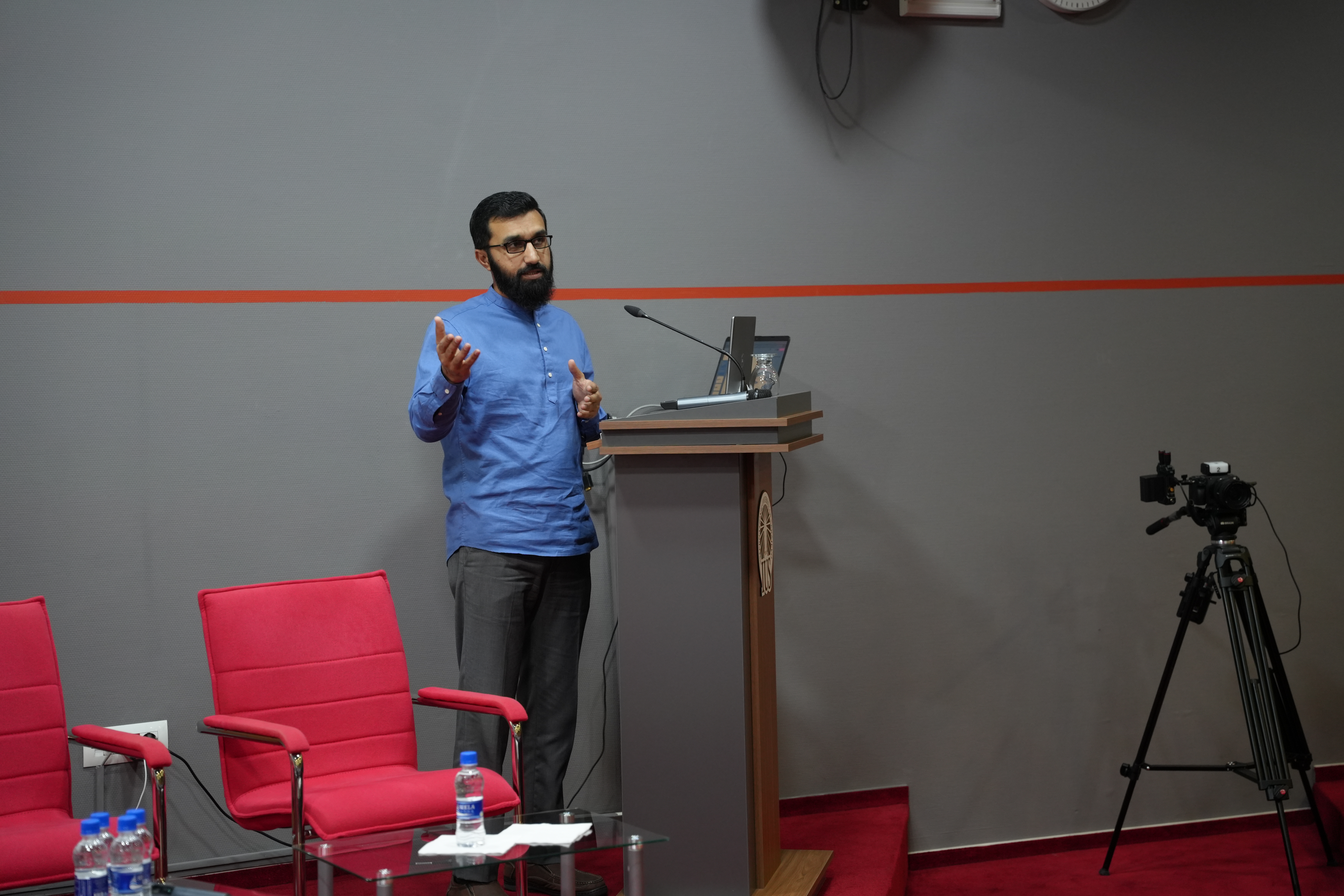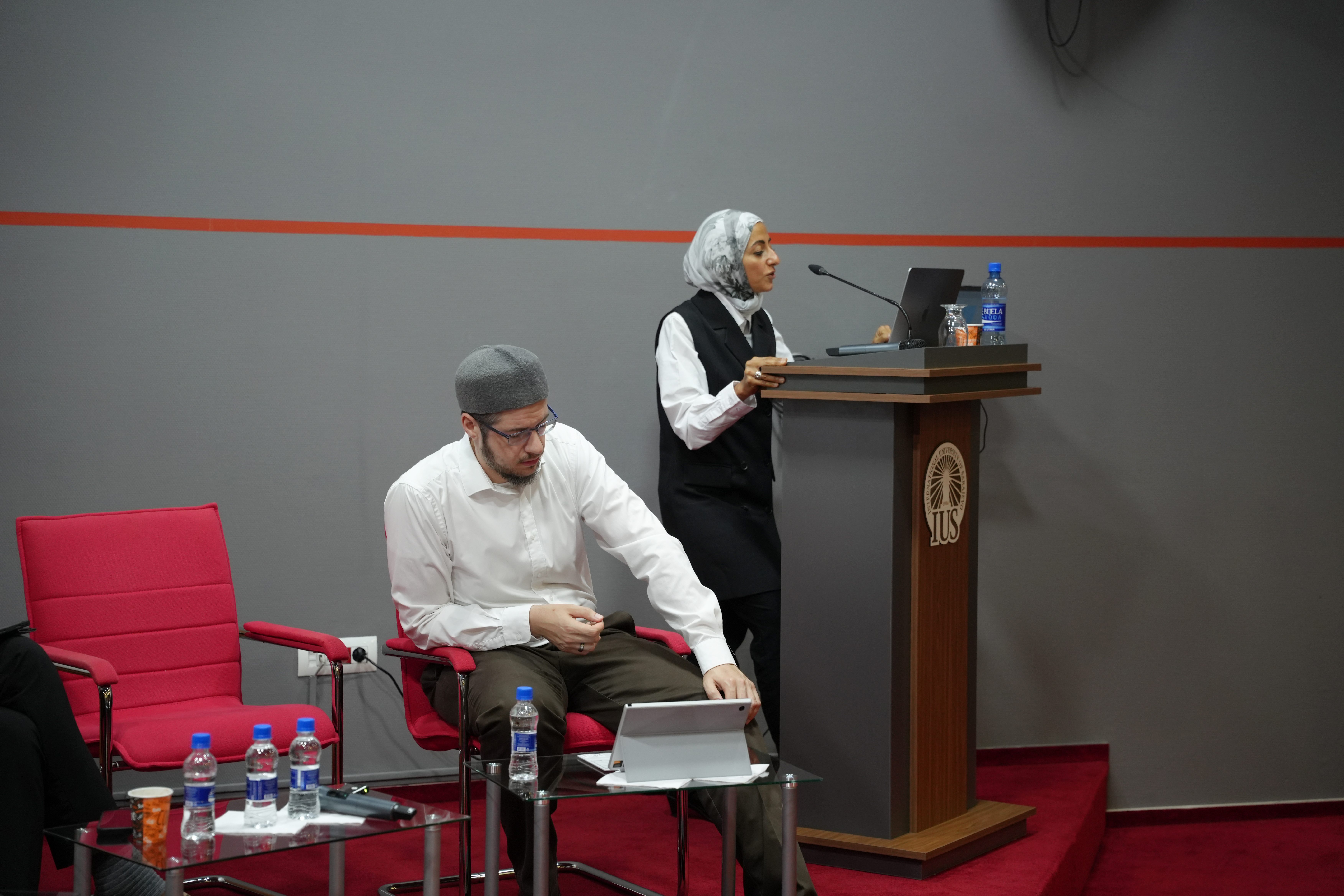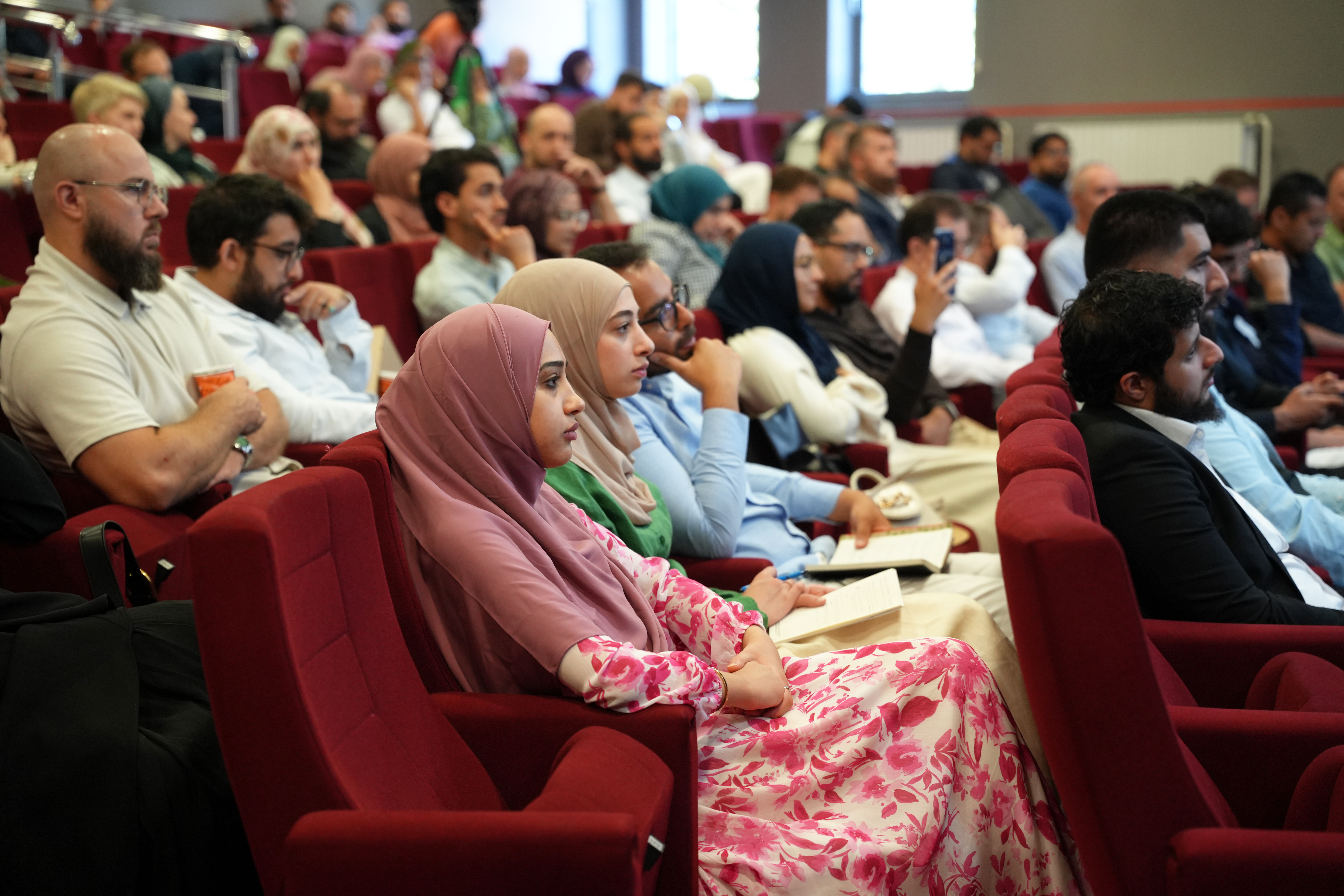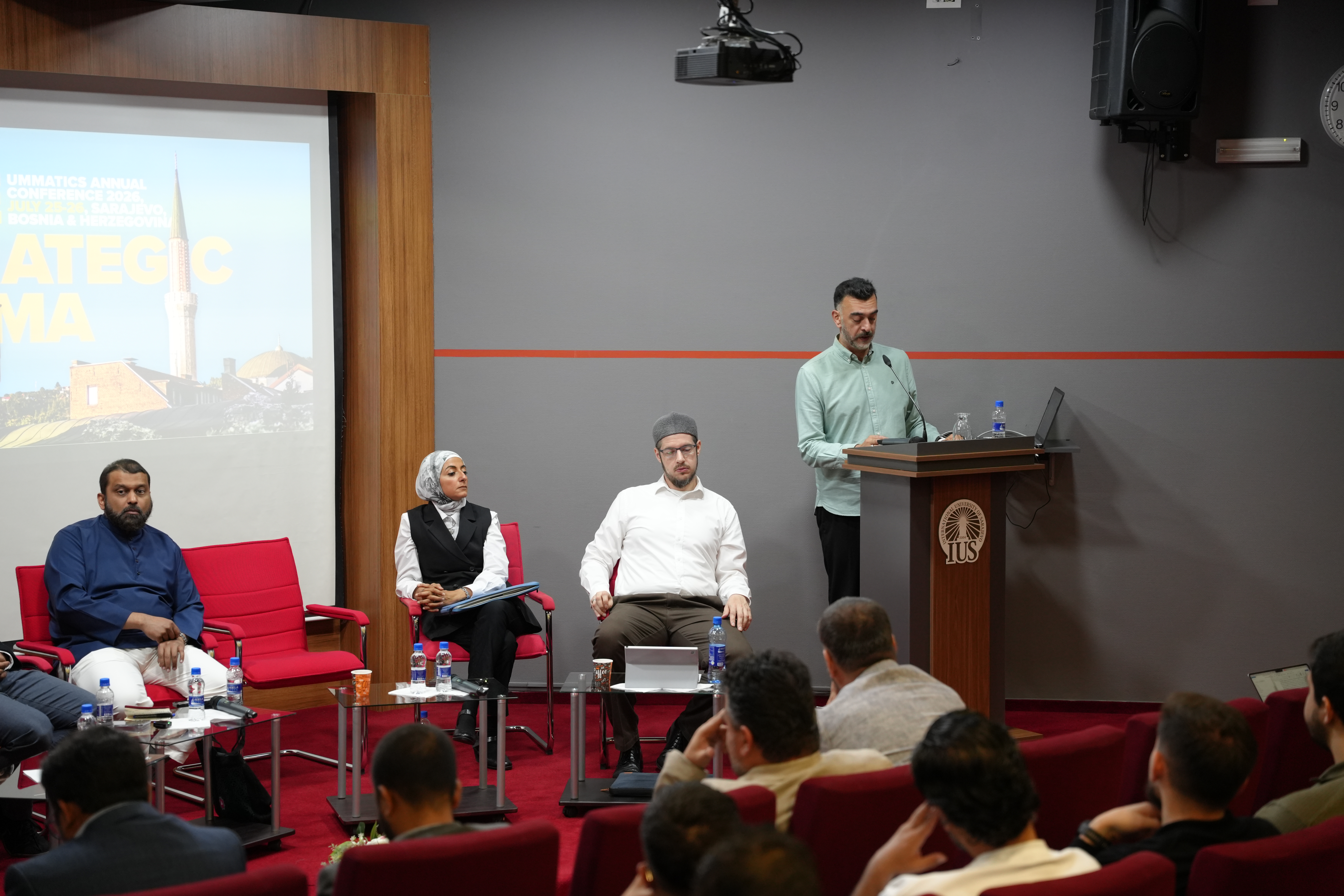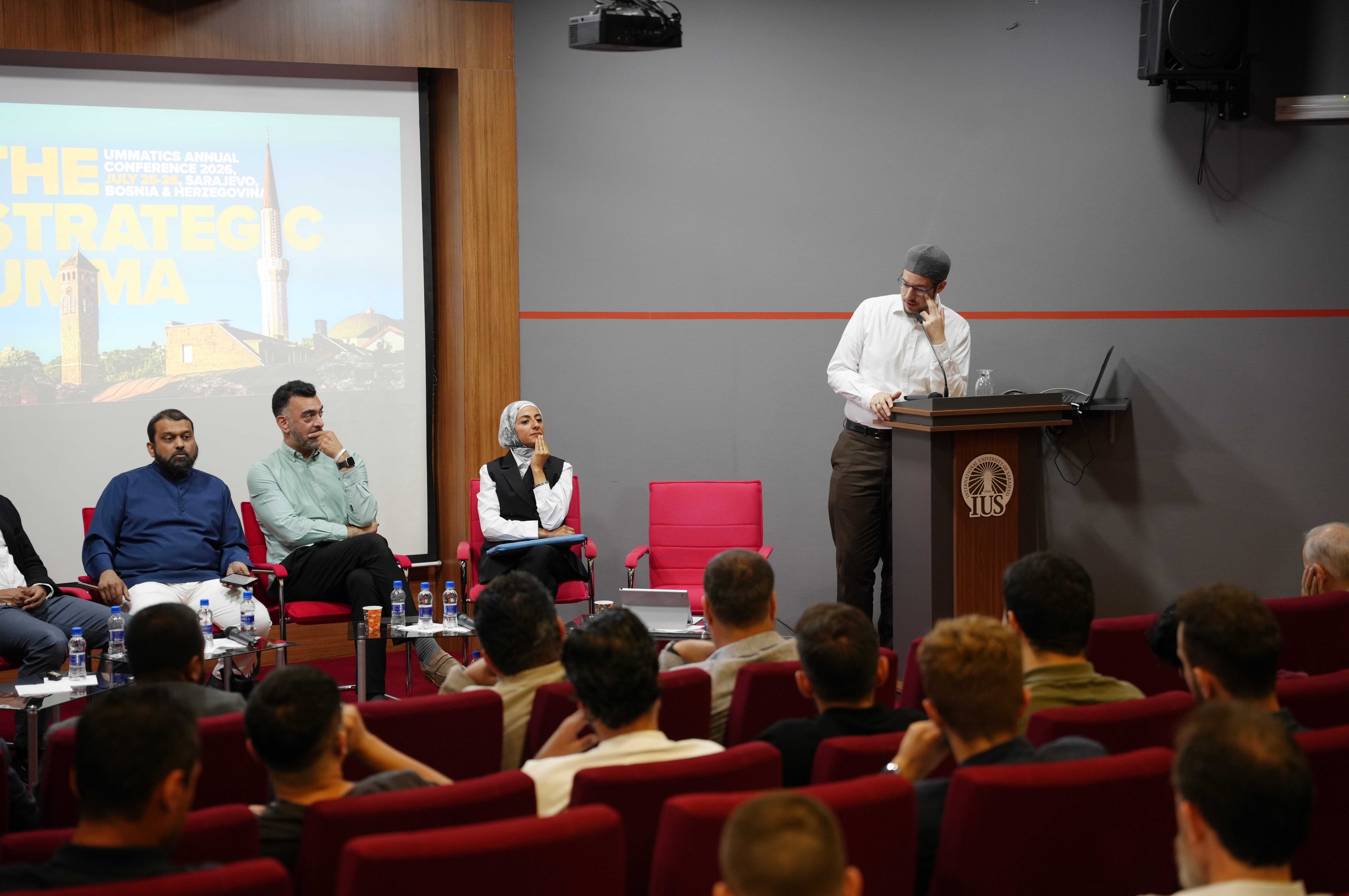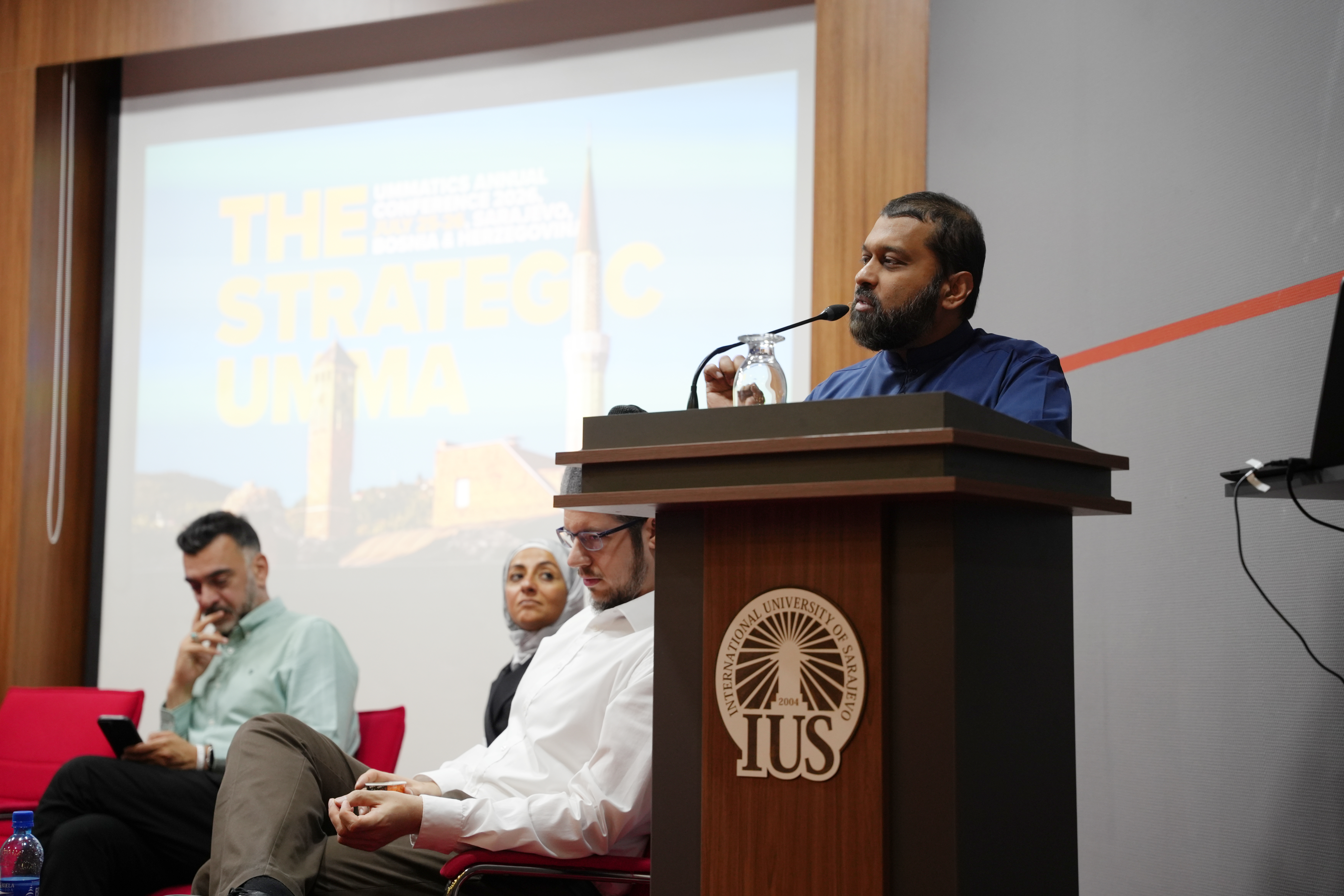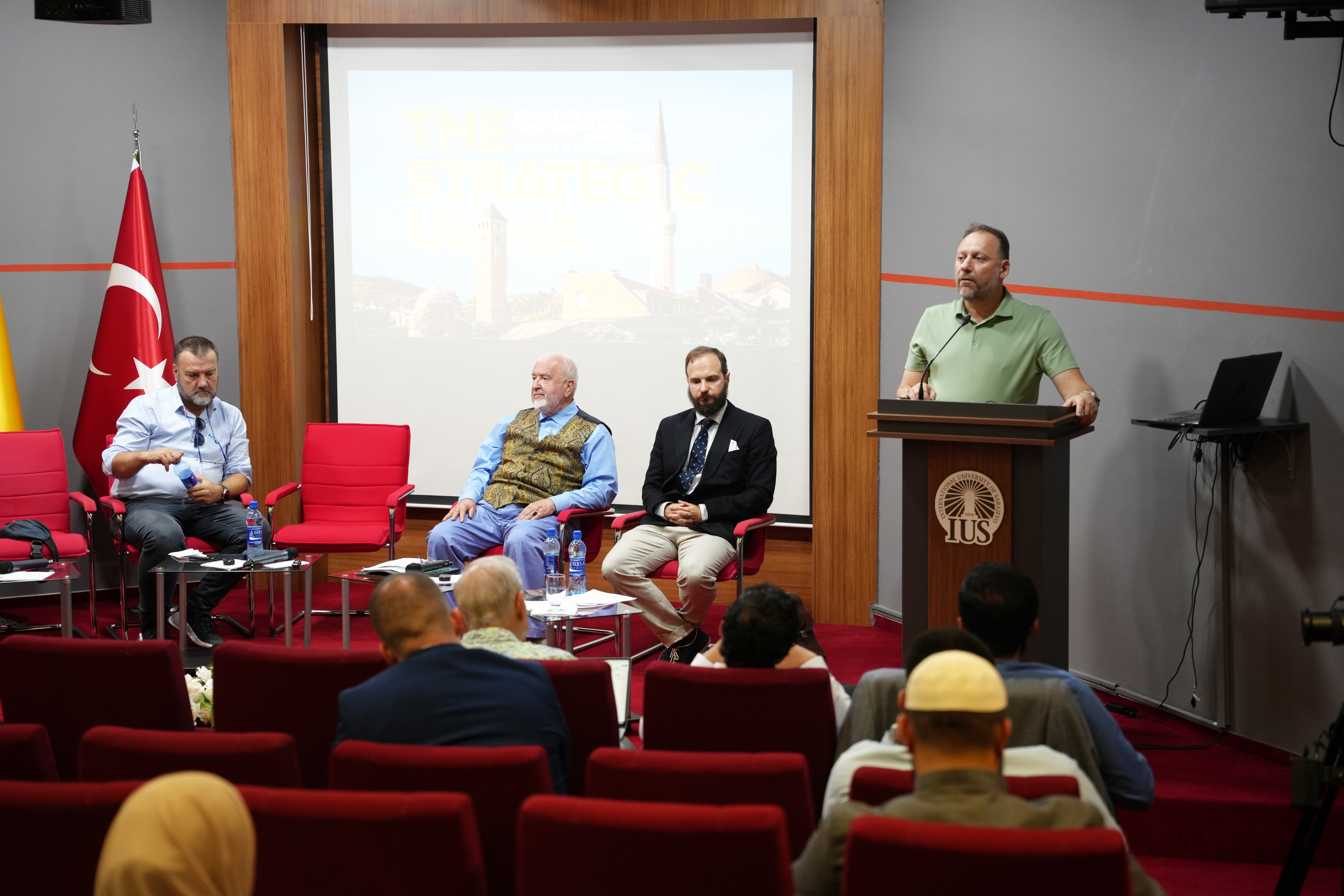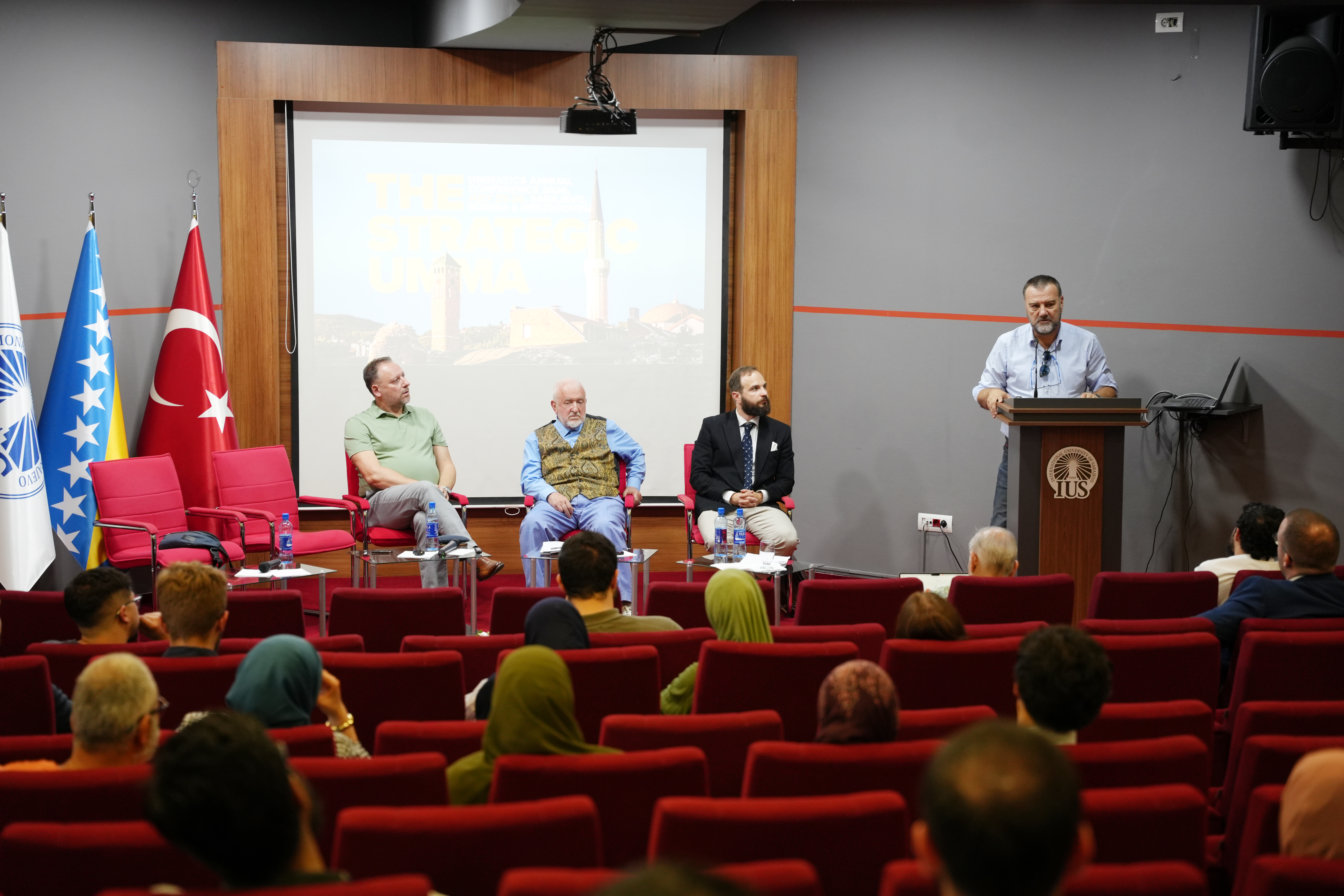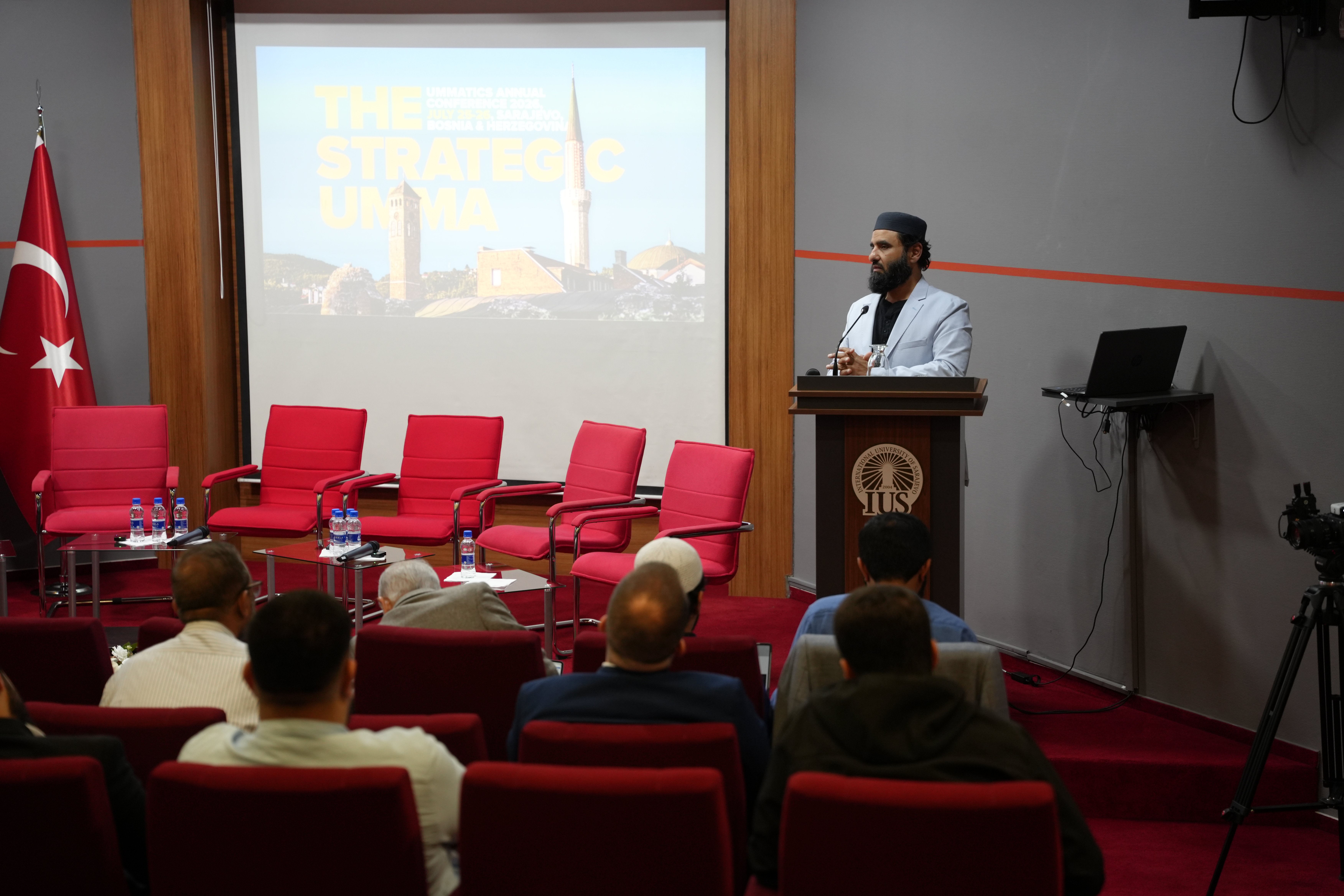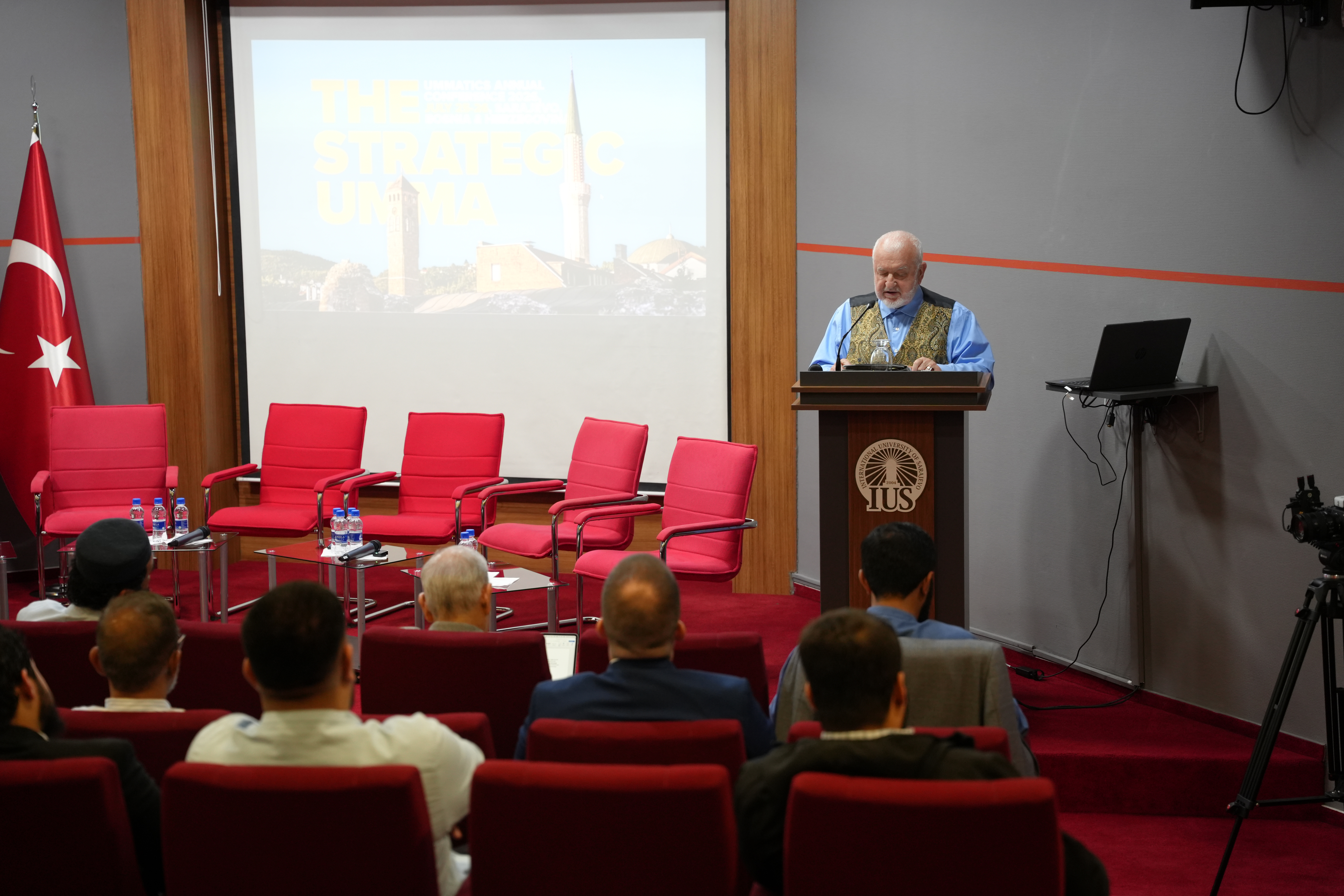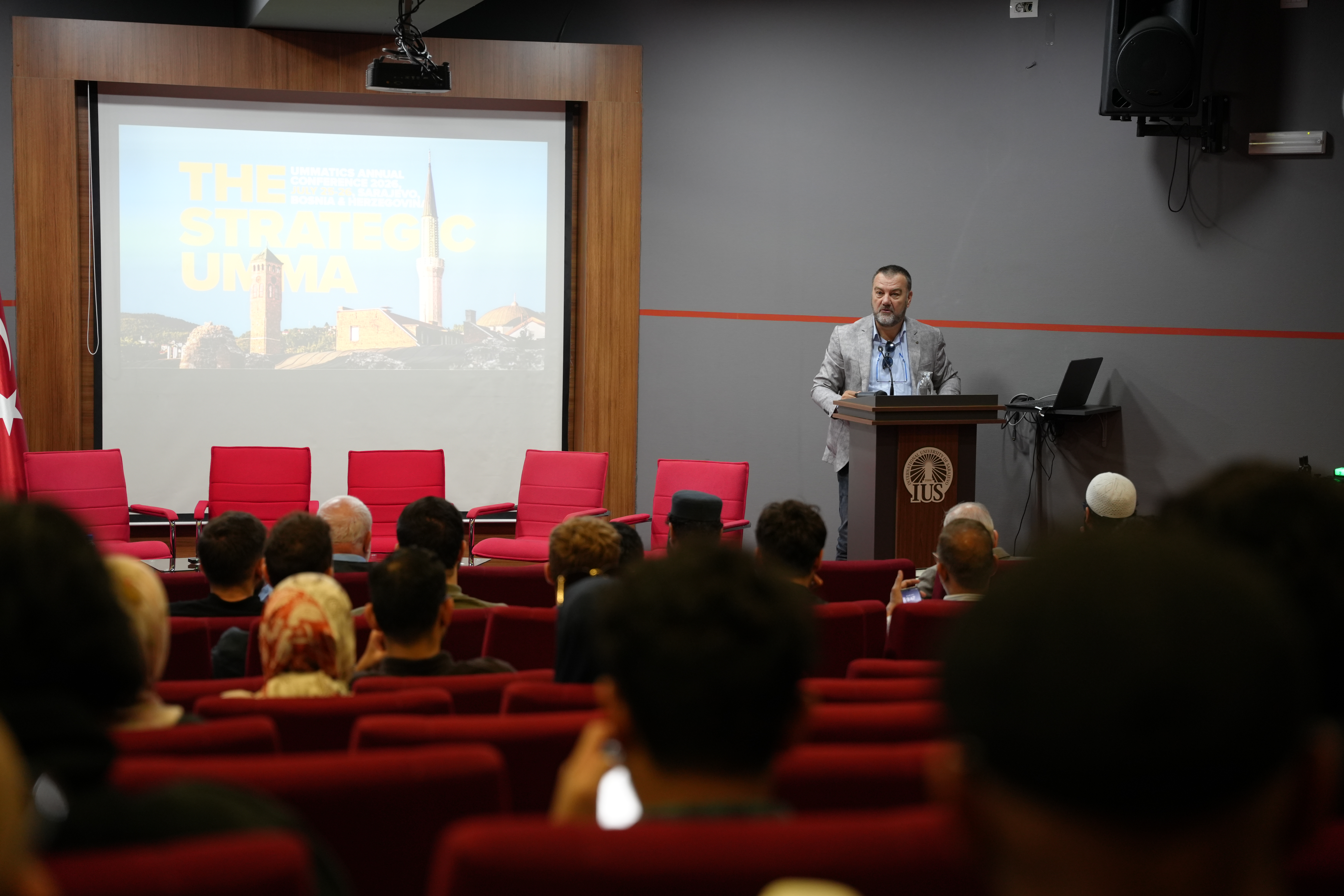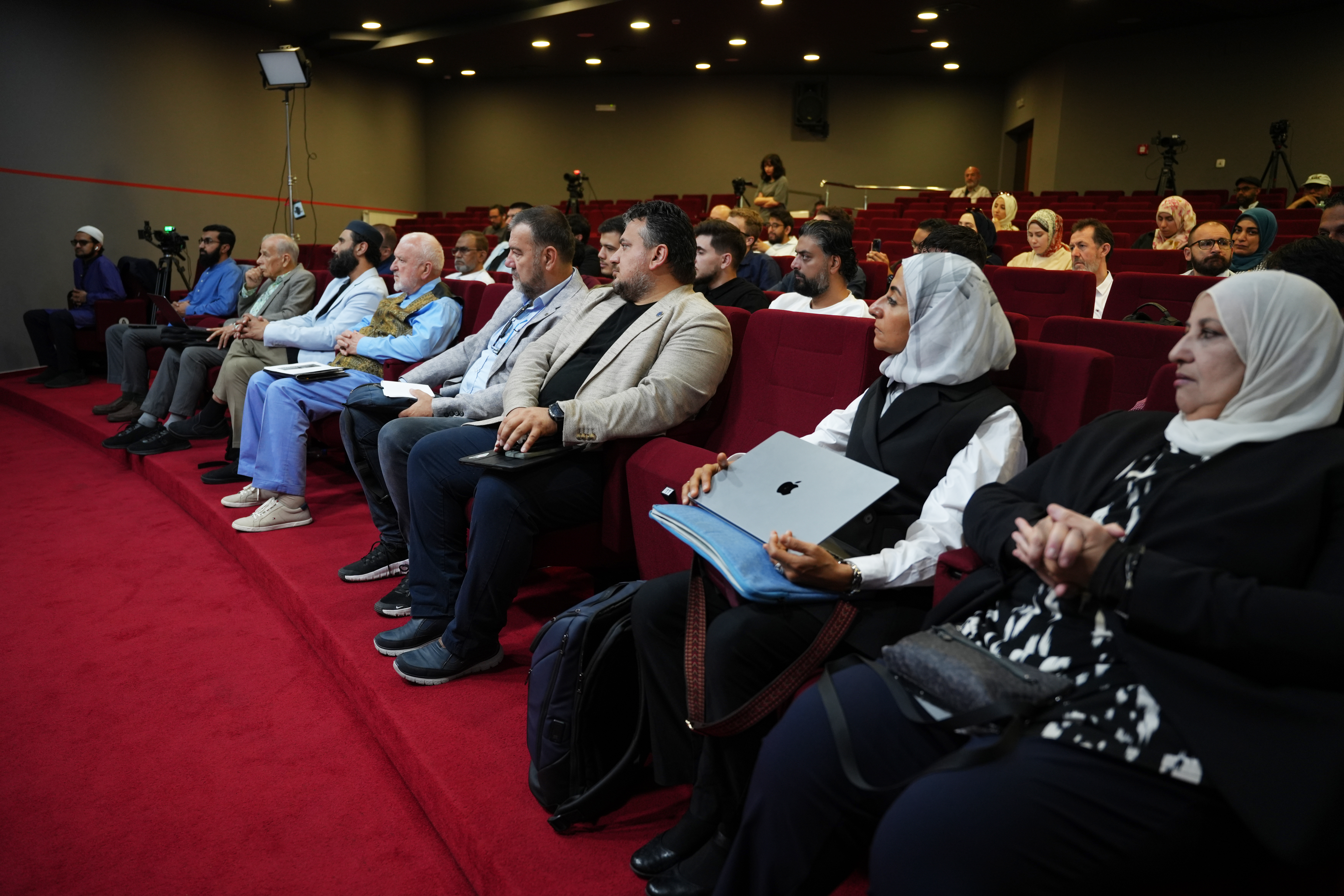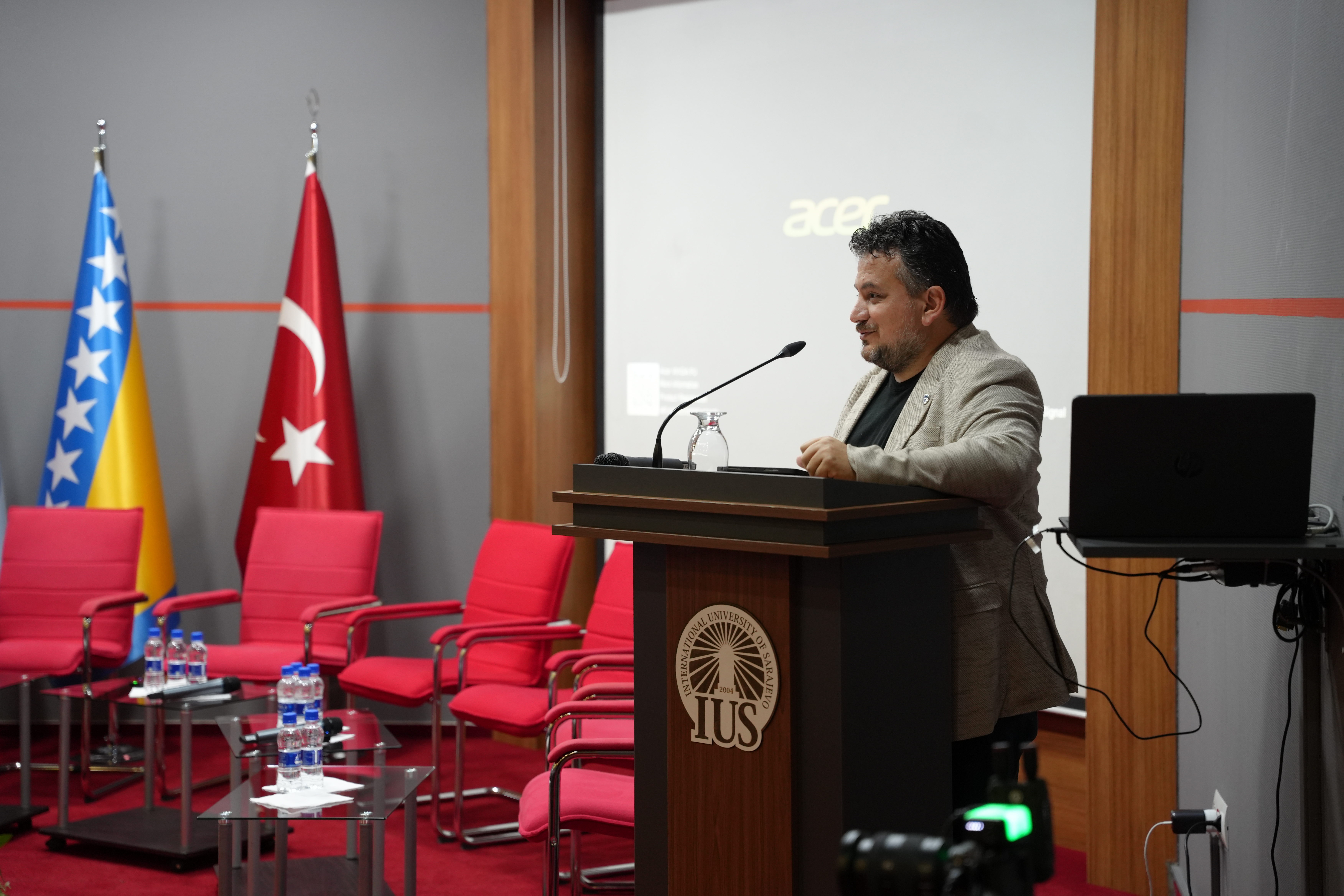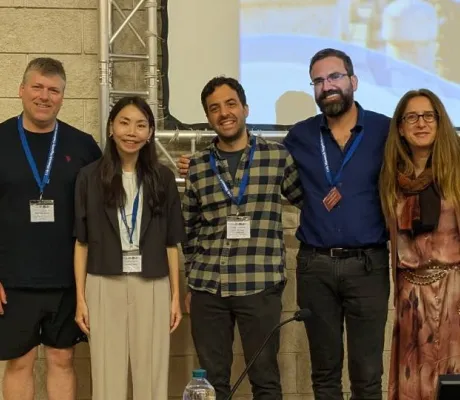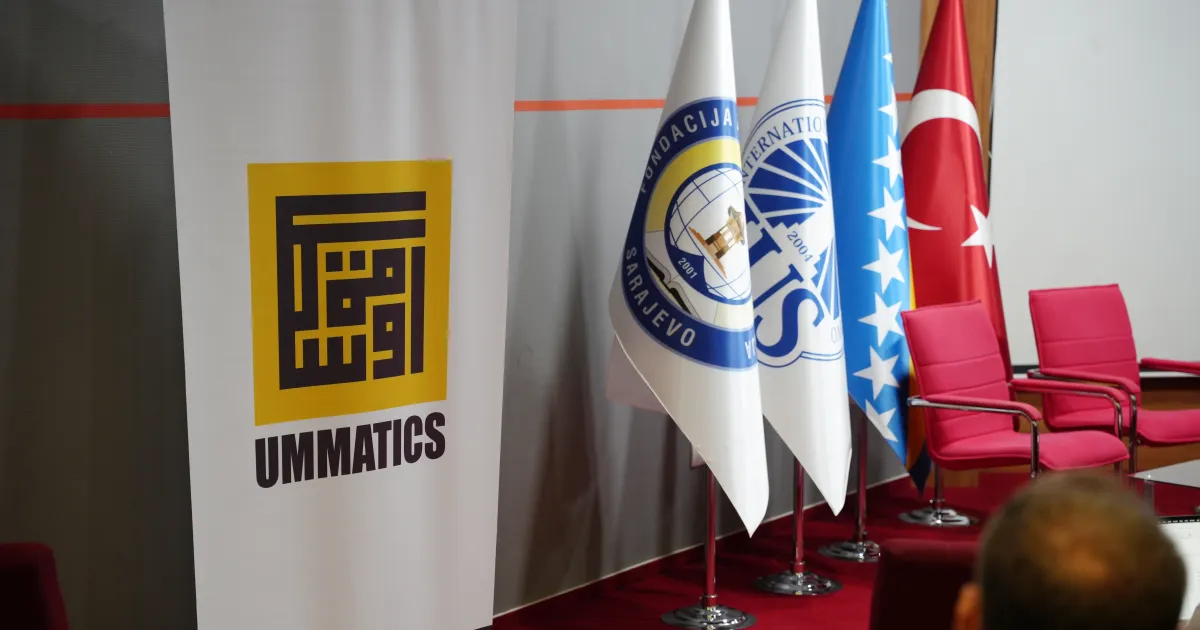
The International University of Sarajevo (IUS) hosted the Ummatics Annual Conference 2026, titled “The Strategic Umma: Managing Difference, Thinking beyond Secularism, and Building Future Impact,” on July 25–26, 2026.
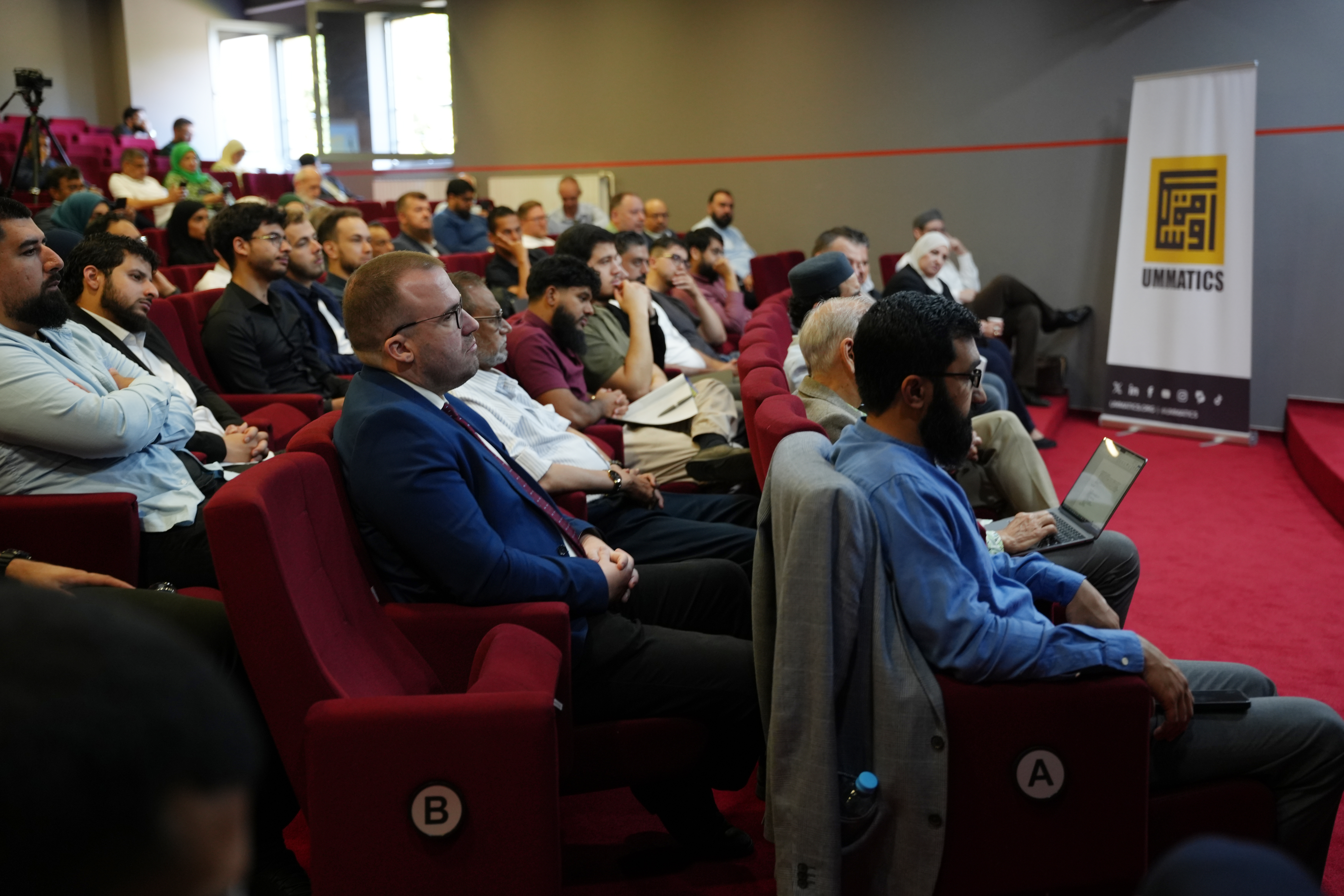
Organized by the Ummatics Institute in collaboration with IUS, the two-day conference brought together scholars, researchers, intellectuals and practitioners from universities and institutions around the world. Through a series of panel discussions, participants examined some of the most pressing intellectual, political and social questions facing Muslim communities today. The conference was held in the Red Amphitheater of the IUS campus.
Unity without Uniformity
The conference opened with welcome remarks by Assoc. Prof. Dr. Tarik Namas, IUS Vice-Rector for Academic Activities and Students’ Affairs; Dr. Mustafa Cerić, Grand Mufti Emeritus of Bosnia and Herzegovina; Dr. Admir Mulaosmanović of the Aurora Foundation; Dr. Ovamir Anjum, founder of the Ummatics Institute; and Dr. Uthman Badar, Lead Editor at the Ummatics Institute.
The first panel, “Beyond the Liberal ‘Peace’: Managing Deep Difference in the Umma,” focused on how Muslim communities can strengthen unity without requiring complete uniformity. Speakers explored ways of addressing internal intellectual, political and sectarian differences while avoiding both forced conformity and fragmentation.
The discussion featured Dr. Ovamir Anjum, Dr. Yasmeen Daifallah of the University of California, Santa Cruz, Dr. Ahab Bdaiwi of Leiden University, Dr. Yasir Qadhi of the Islamic Seminary of America and Dr. Mairaj Syed of the University of California, Davis.
Future Studies and Civilizational Vision
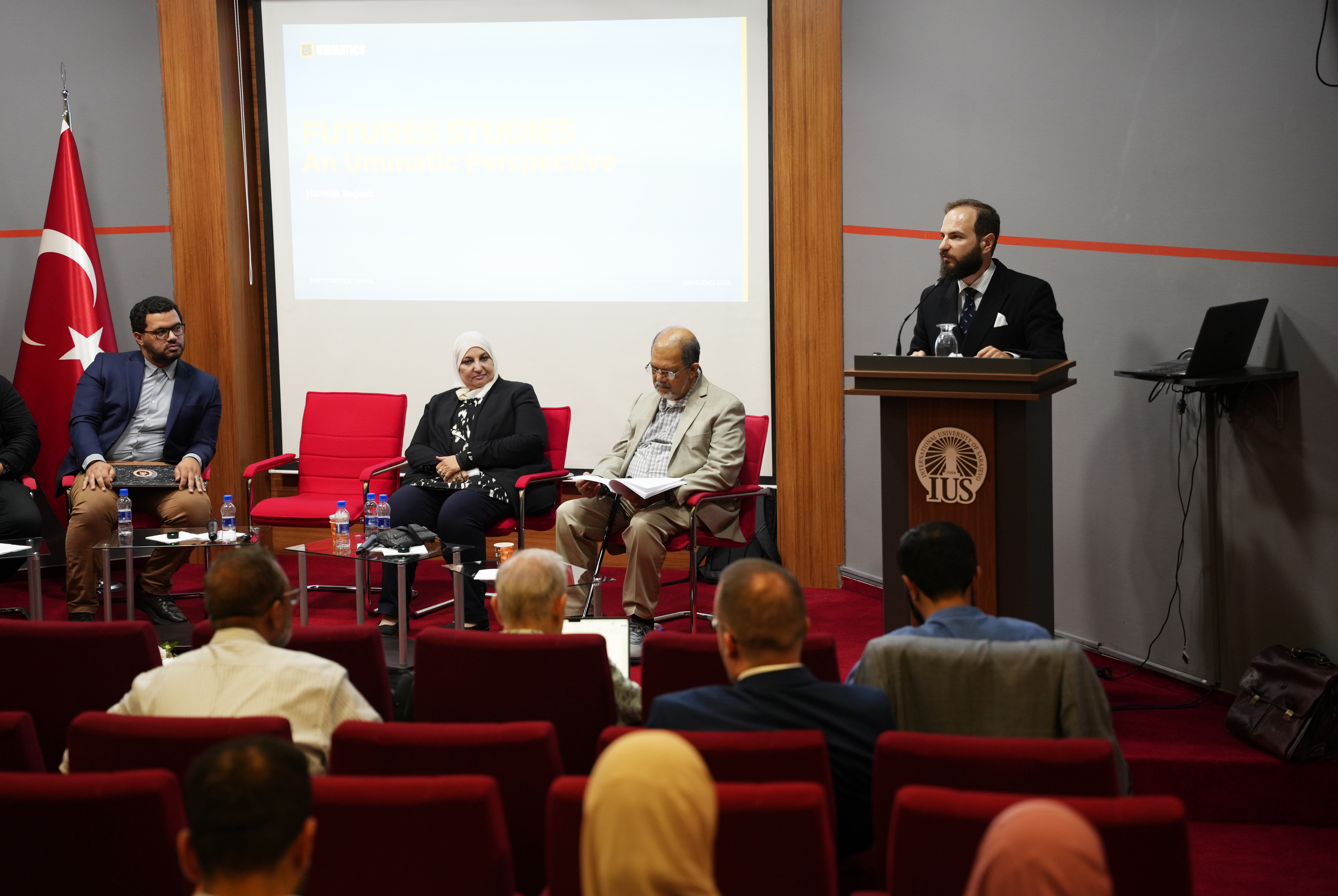
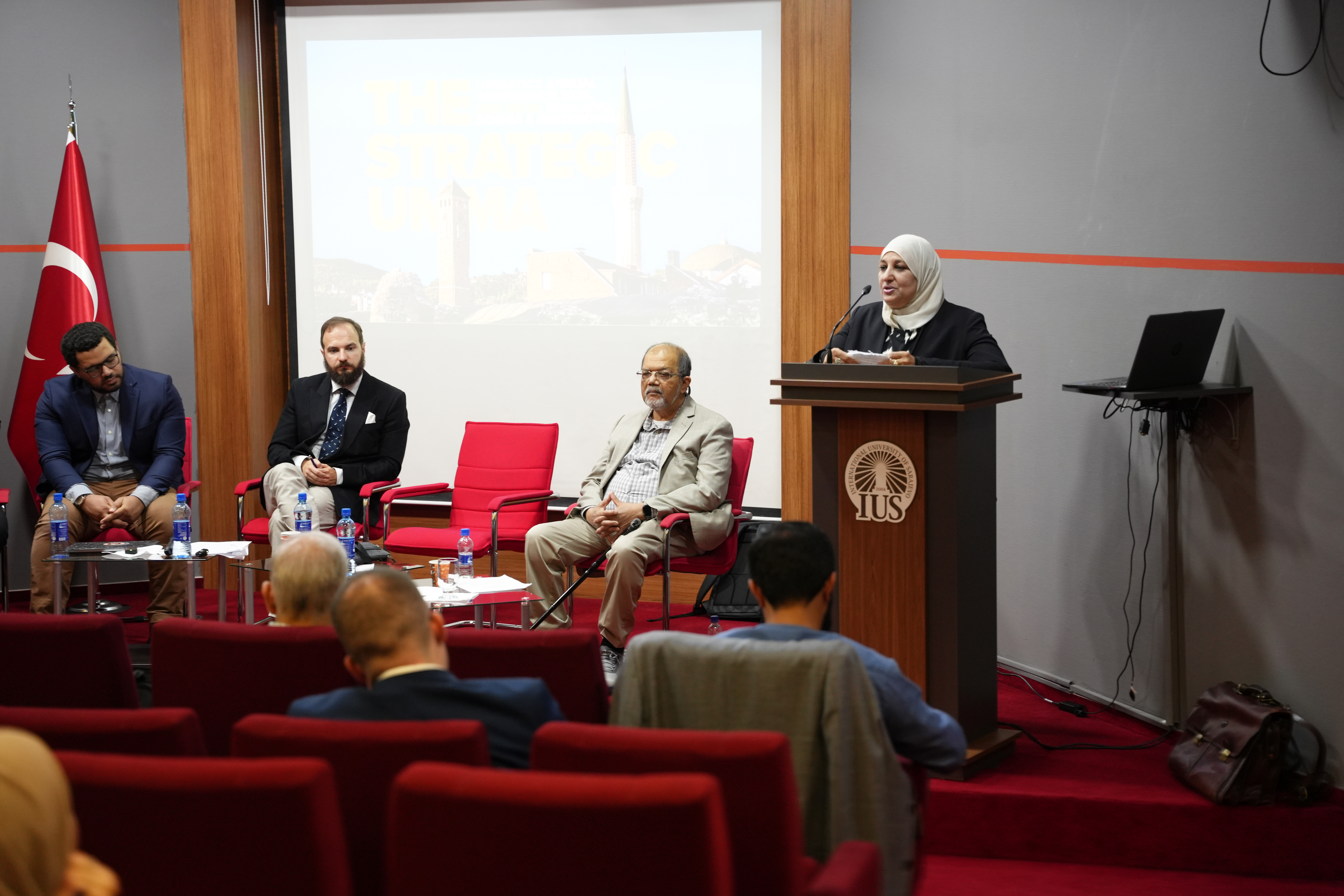
A further session, “The Ummatic Horizon: Future Studies and Civilizational Vision,” examined how the theories, methods and tools of Future Studies could support long-term Muslim civilizational renewal.
Participants discussed the importance of moving beyond short-term and reactive approaches toward coherent strategies, stronger institutions and shared visions for the future. The panel included Dr. Hamdija Begović, Ahmed Elbenni of Princeton University, Dr. Rafik Beekun of the University of Nevada, Reno, Dr. Sahar Khamis of the University of Maryland and Dr. Shaheen Kattiparambil of the University of Leeds.
The first day concluded with “Insights from Two Genocides — Srebrenica and Gaza,” a session reflecting on the lessons that the experiences of Srebrenica and Gaza hold for the wider Muslim world. The discussion featured Dr. Mustafa Cerić, Dr. Admir Mulaosmanović and Dr. Ermin Sinanović, Executive Director of the Center for Islam in the Contemporary World at Shenandoah University.
Secularism, Solidarity and Muslim Communities in Europe
The second day opened with the panel “Interrogating Secularism,” which reconsidered the assumptions, intellectual foundations and historical legacies of secularism. Speakers addressed the development and future direction of Muslim critiques of secular thought and its influence on political and social life.
The panel brought together Dr. Uthman Badar, Dr. Anver Emon of the University of Toronto, Dr. Usaama al-Azami of Hamad Bin Khalifa University, Dr. İsmail Yaylacı of Marmara University and Dr. Ibrahim Khan of Princeton University.
The conference continued with “Architectures of Solidarity: GEM Ecosystems and Global Impact.” This session explored how collaborative networks and ecosystems can help Muslim communities move beyond individual success toward communal empowerment, sustainable institution-building and meaningful global integration.
The discussion featured Ashraf Motiwala, President of the Ummatics Institute; Dr. Joseph Kaminski, Professor of Political Science and International Relations at IUS; and Dr. Mustafa Salama of the Ummatics Institute.
The final panel, “Muslims in Europe: Past, Present, Future,” examined the current position and future trajectory of Muslim communities across the continent. Dr. Farid Hafez of William & Mary, Dr. Yassir Morsi of La Trobe University and Dr. Besnik Sinani of the University of Tübingen discussed questions of belonging, political participation, Islamophobia, religious authority and the development of Muslim communal life in Europe.
By hosting the conference, IUS once again provided a platform for open academic dialogue, international cooperation and critical engagement with issues of global significance. The event highlighted the importance of intellectual diversity, strategic thinking and collaborative institution-building in developing meaningful and sustainable responses to the challenges facing Muslim communities worldwide.