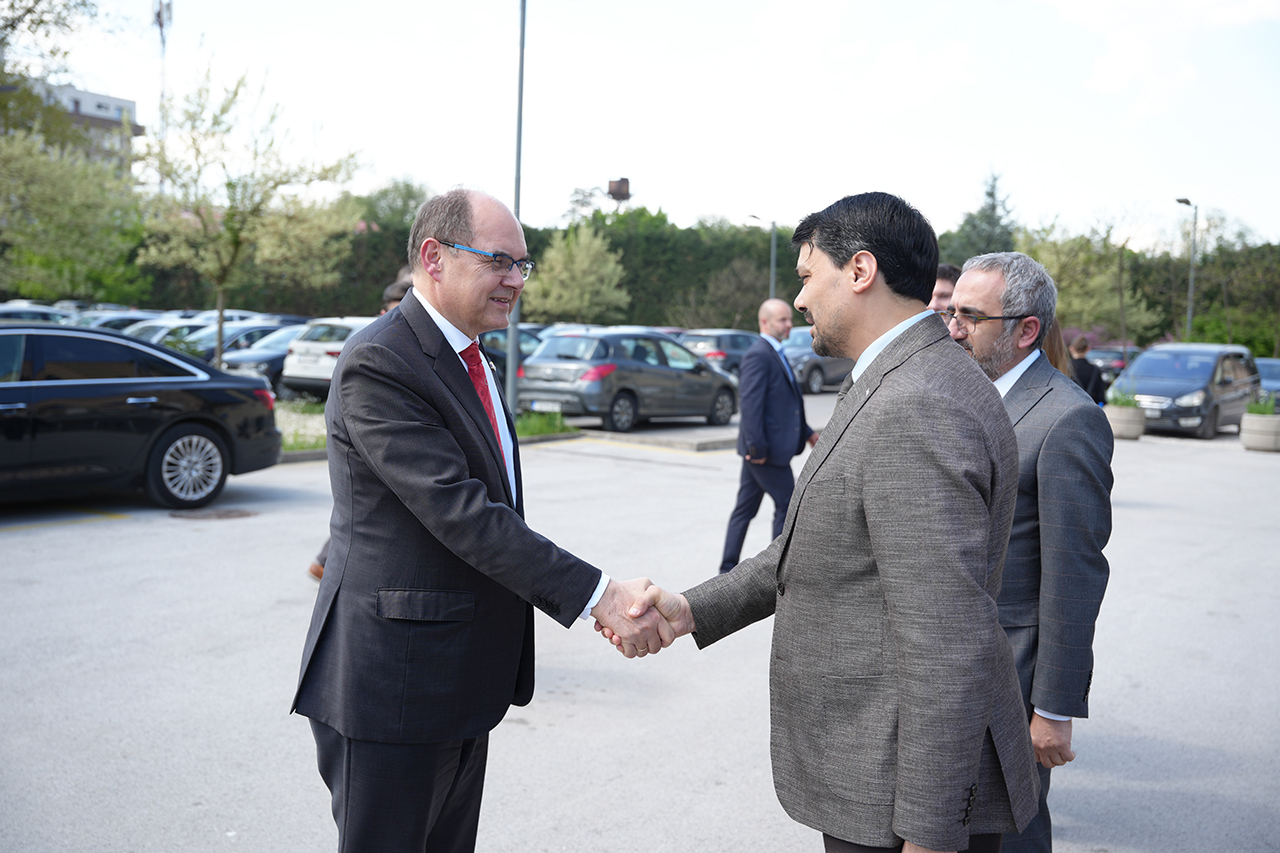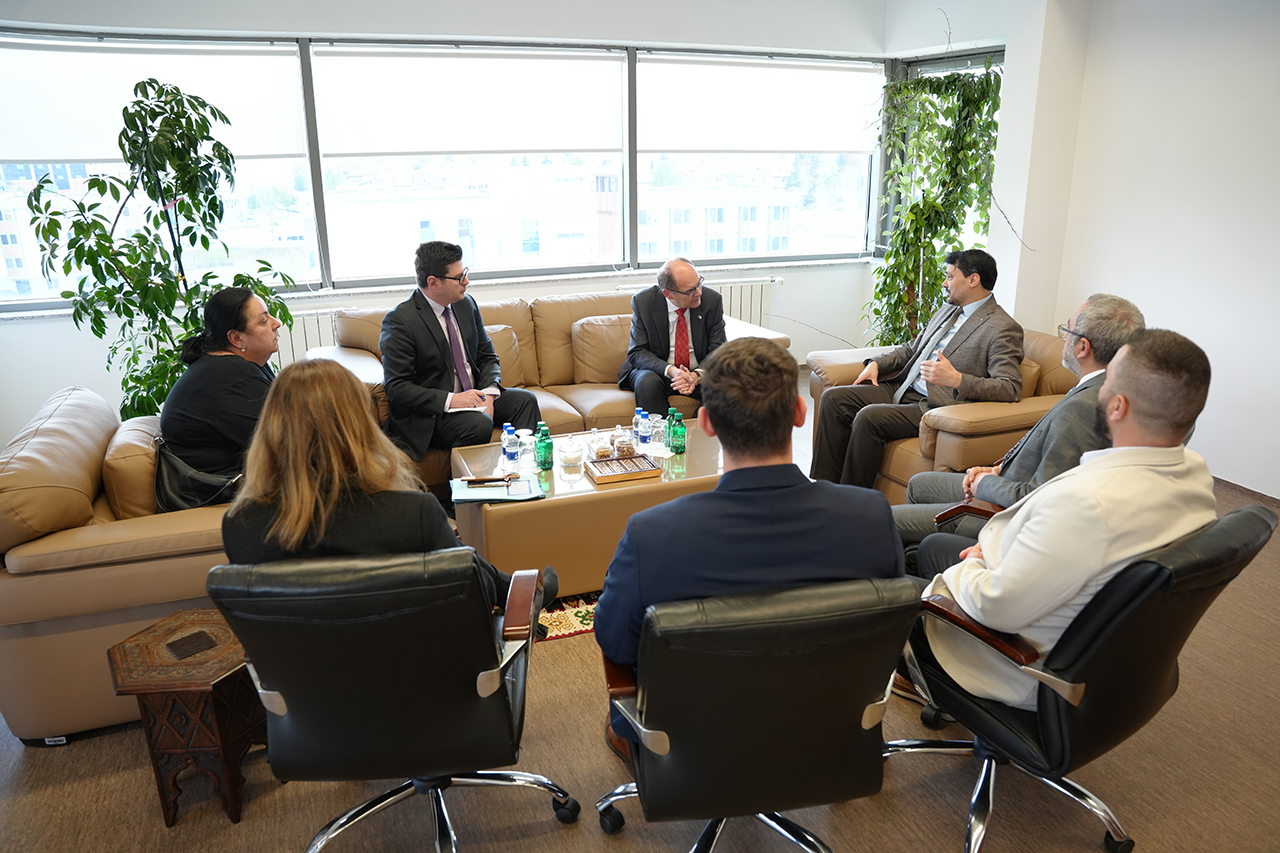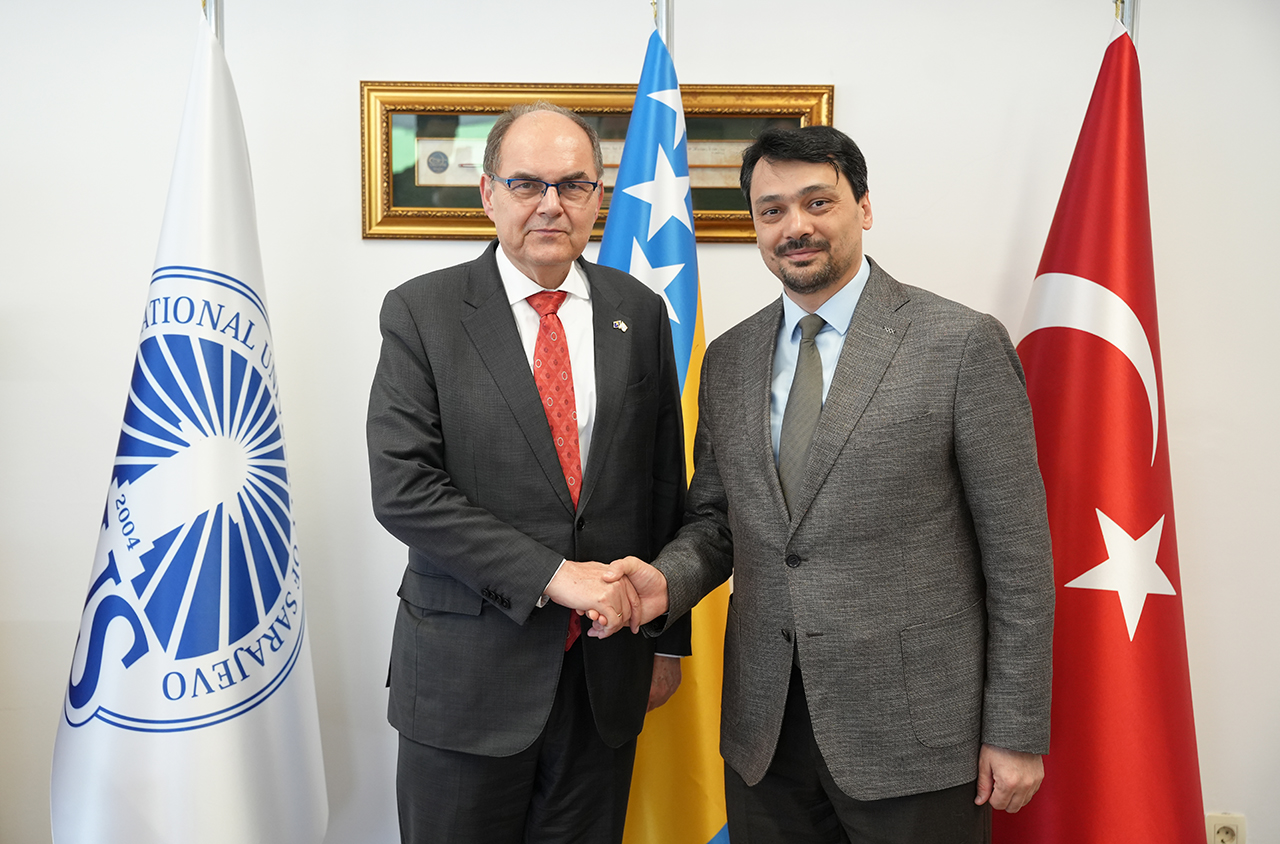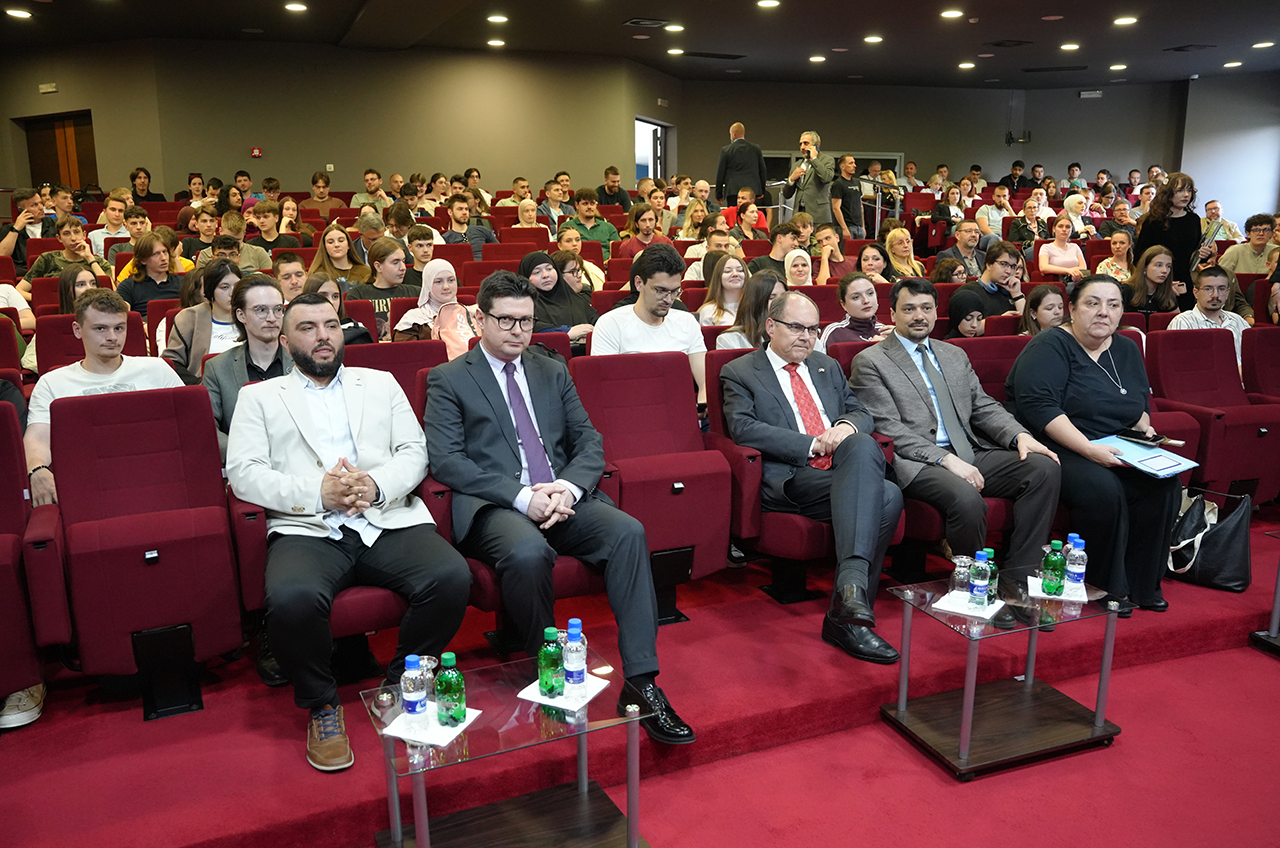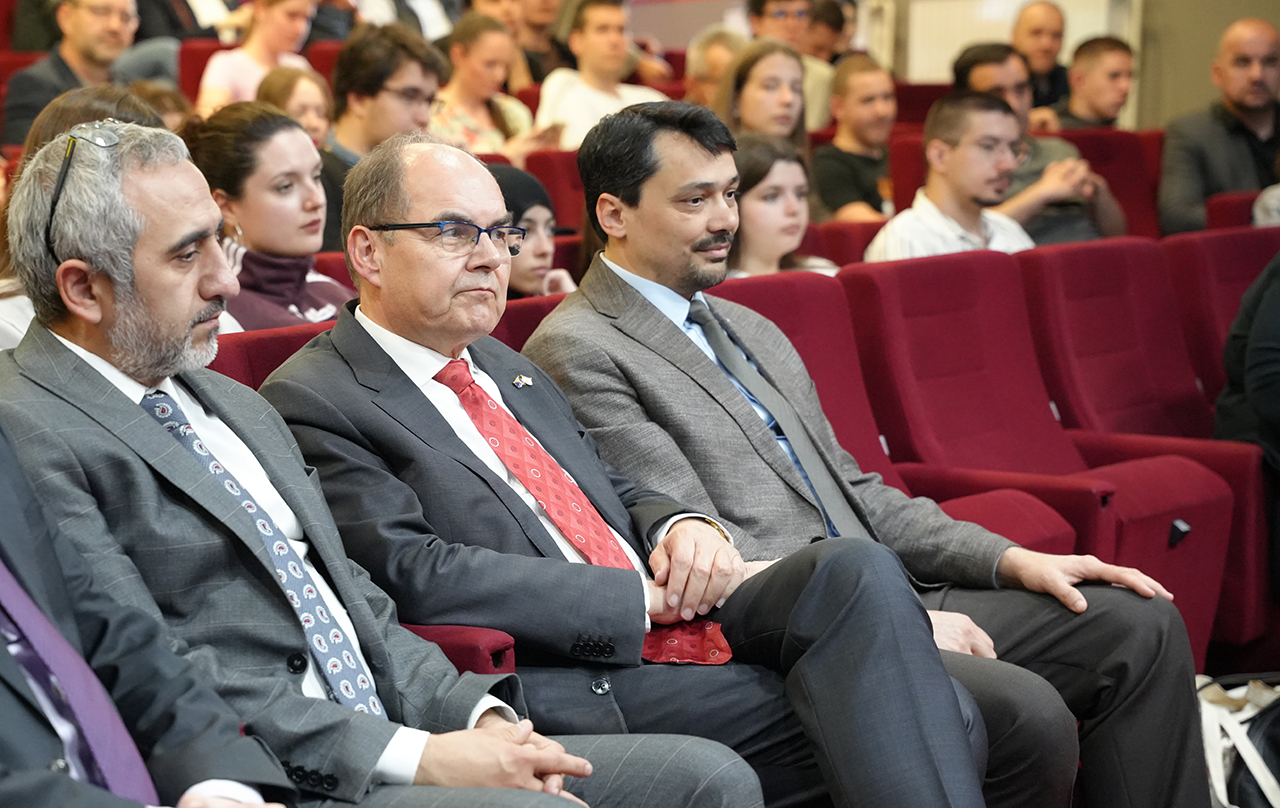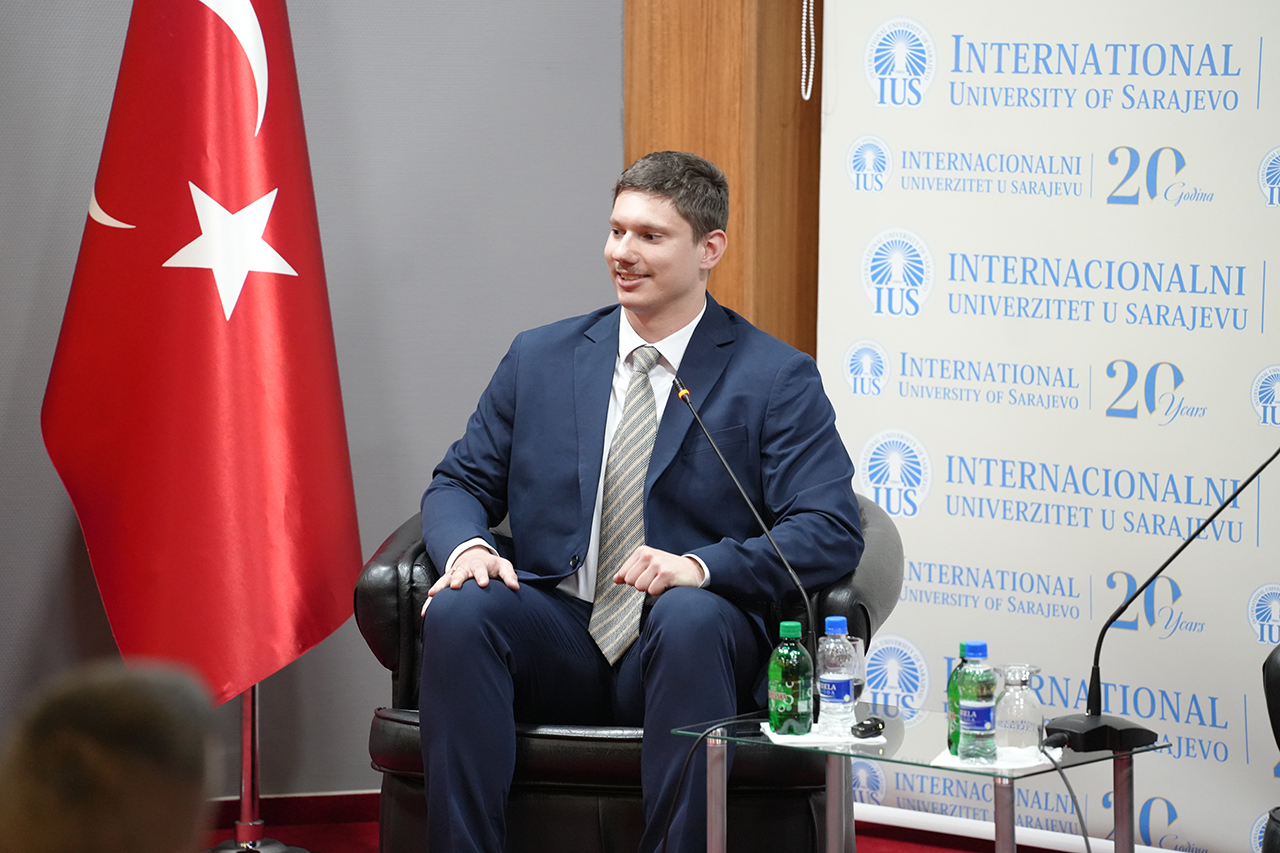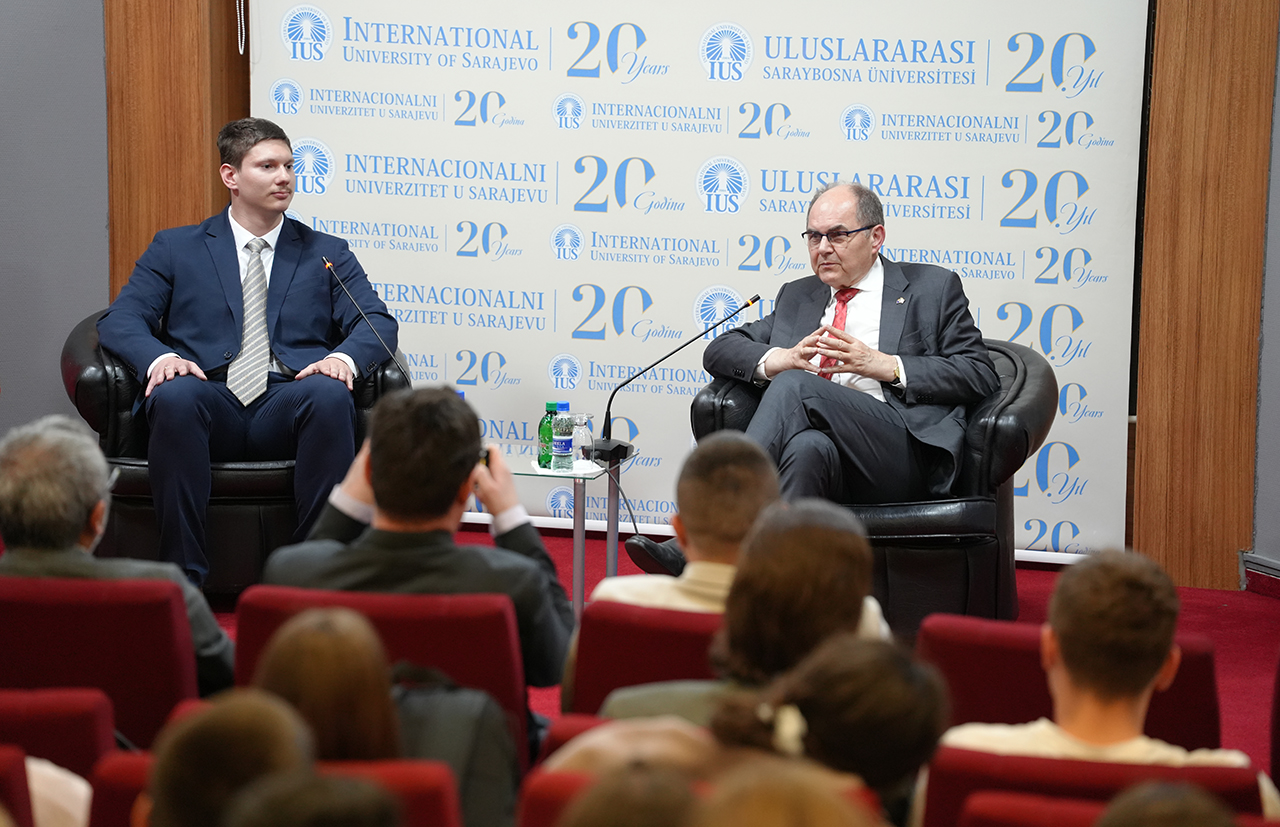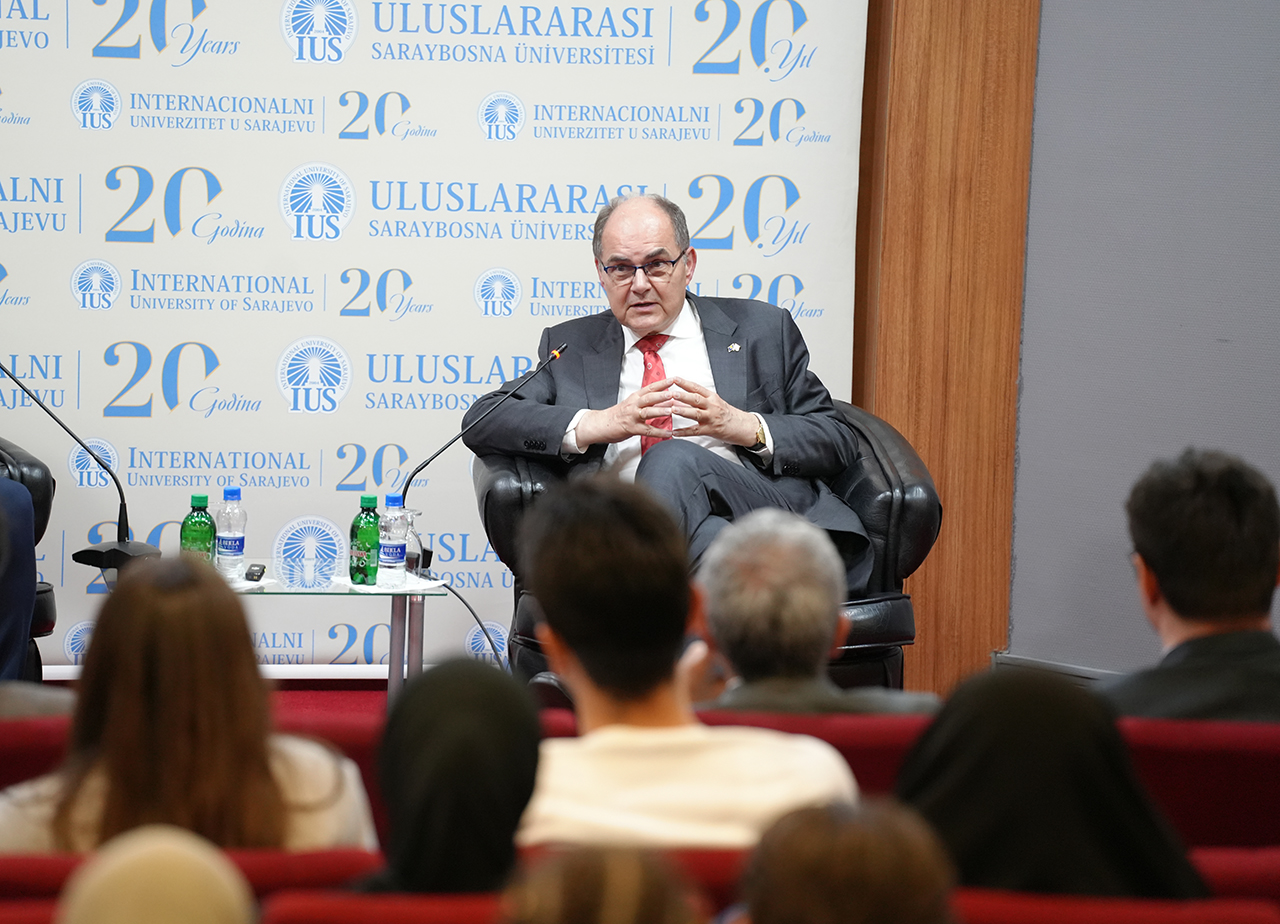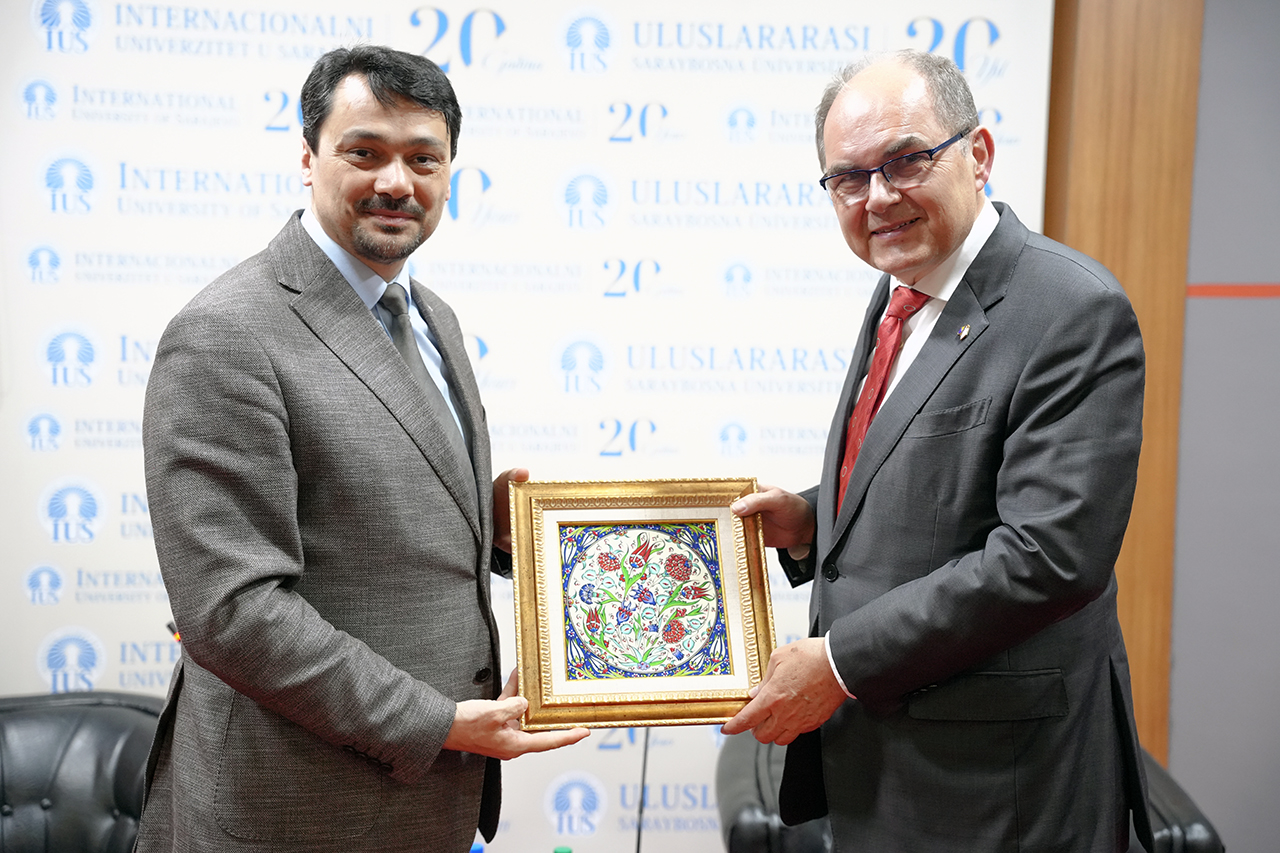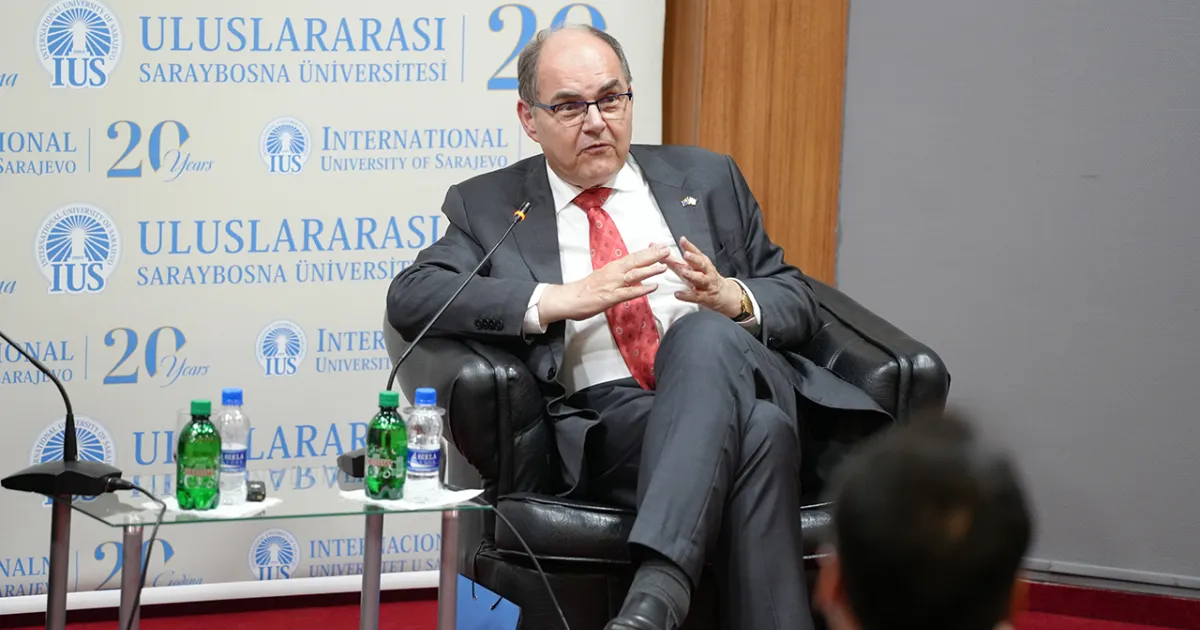
The International University of Sarajevo (IUS) hosted today a panel discussion titled “The Role and Evolution of International Engagement in Bosnia and Herzegovina”, organized by the IUS Balkan Studies Center (BSC) and the Global Affairs and Political Studies Club, in collaboration with the Political Science and International Relations (PSIR) study program.
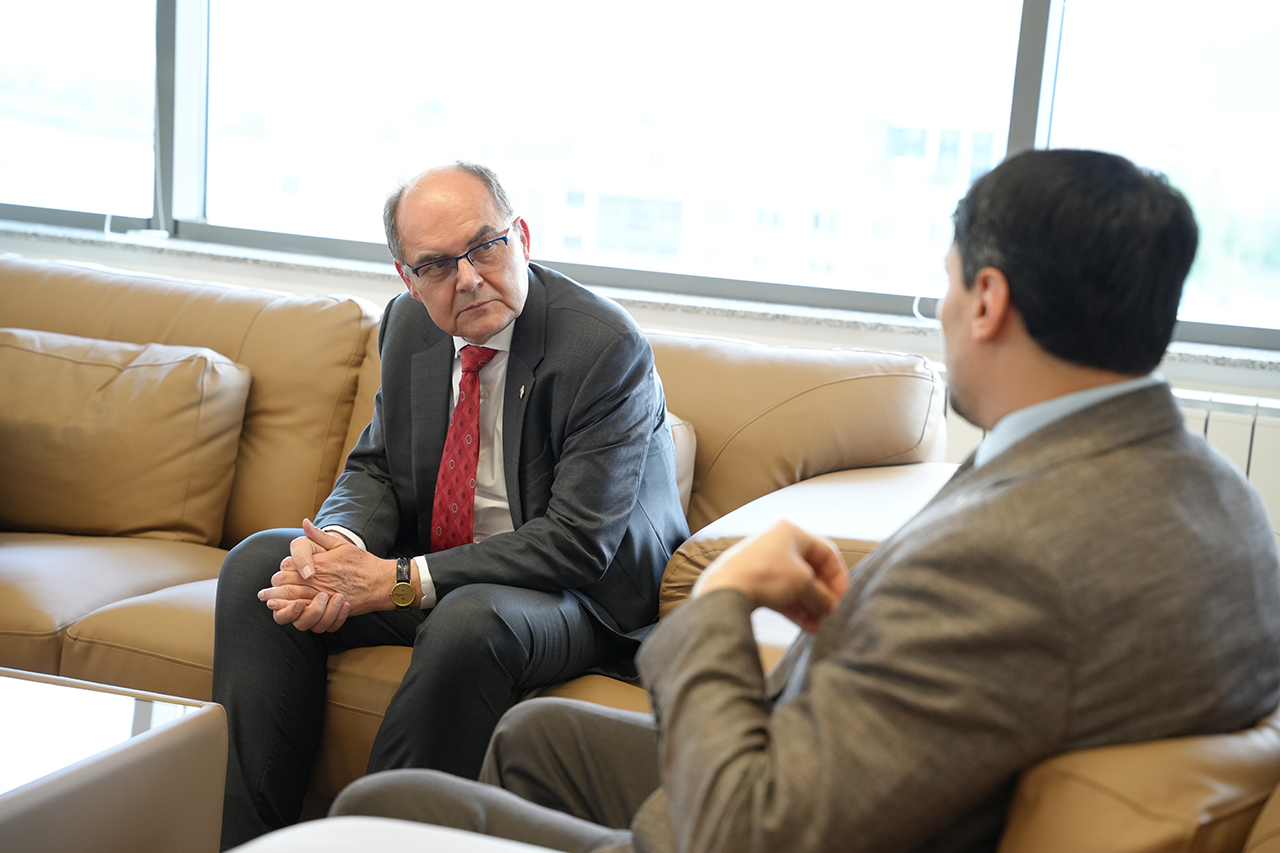
The event featured H.E. Christian Schmidt, High Representative for Bosnia and Herzegovina, as the guest speaker, who shared valuable insights into the development of international engagement in the country and the evolving role of international institutions in Bosnia and Herzegovina.
During his address, High Representative Schmidt reflected on the transformation of Bosnia and Herzegovina since the establishment of the Office of the High Representative (OHR) following the Dayton Peace Agreement. He highlighted the significant institutional progress achieved over the years, including the establishment of key state-level structures such as the judiciary, parliament, and unified systems like license plates and national symbols.
Despite these advancements, Schmidt emphasized that the long-term goal remains strengthening local ownership and responsibility. He noted that while progress has been made, further efforts are needed to ensure the full functionality of institutions and to advance Bosnia and Herzegovina’s path toward European integration.
Addressing current challenges, Schmidt pointed out that Bosnia and Herzegovina faces complex political and societal dynamics, including differing perspectives on governance and reform priorities. He stressed the importance of constructive dialogue, compromise, and respect for institutional processes as fundamental elements of a functioning democratic system.
Particular attention was given to the role of citizens and civil society. Schmidt encouraged students to actively engage in societal issues, ask critical questions, and demand accountability from decision-makers. He underlined that a strong and independent civil society, supported by free media, plays a crucial role in ensuring transparency and driving positive change.
Speaking on Bosnia and Herzegovina’s European future, Schmidt highlighted opportunities within the European Union’s growth plan for the Western Balkans, noting that timely implementation of reforms is essential for accessing available support and strengthening the country’s position in the integration process.
During the interactive Q&A session, participants had the opportunity to discuss a wide range of topics, including the role and future of the OHR, the use of executive powers, and the importance of legal and institutional reforms. Schmidt reiterated that the ultimate objective is a gradual transfer of responsibilities to domestic institutions, enabling Bosnia and Herzegovina to function fully independently.
The discussion provided students with a valuable opportunity to gain deeper insight into the political and diplomatic landscape of Bosnia and Herzegovina, while also encouraging critical thinking, active citizenship, and engagement with contemporary societal challenges.
The event reaffirmed IUS’s commitment to fostering open dialogue and providing platforms for students to engage with key national and international stakeholders on issues shaping the future of Bosnia and Herzegovina.