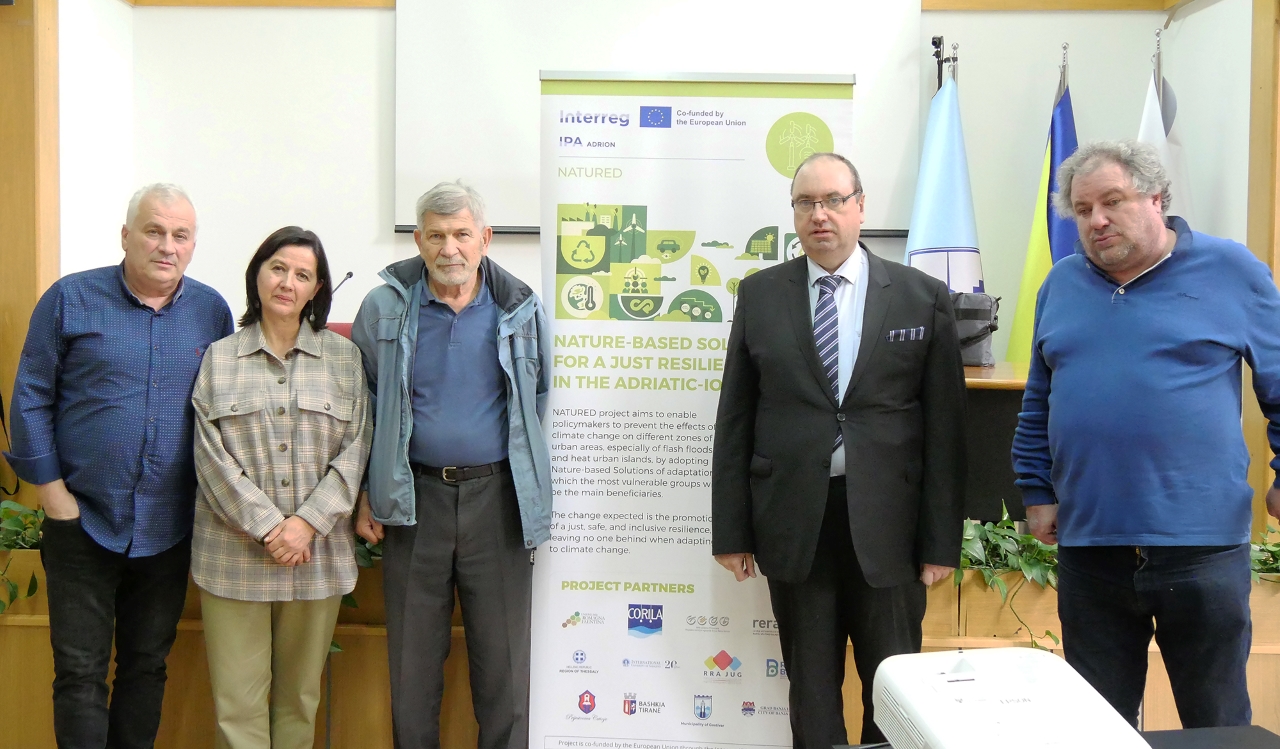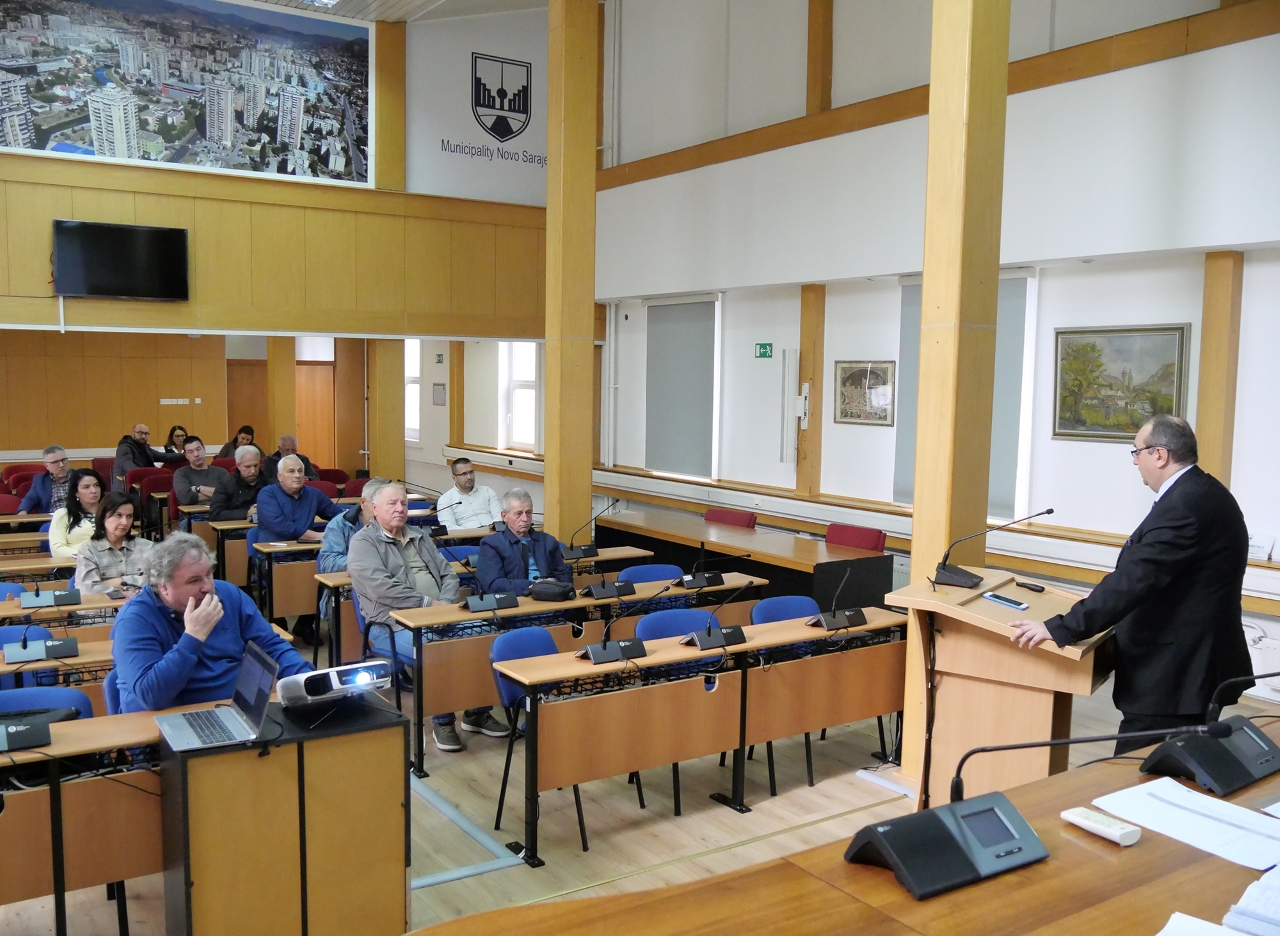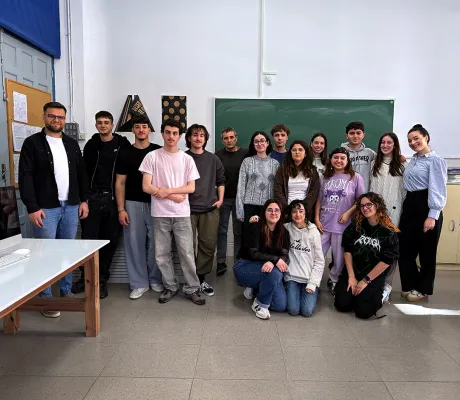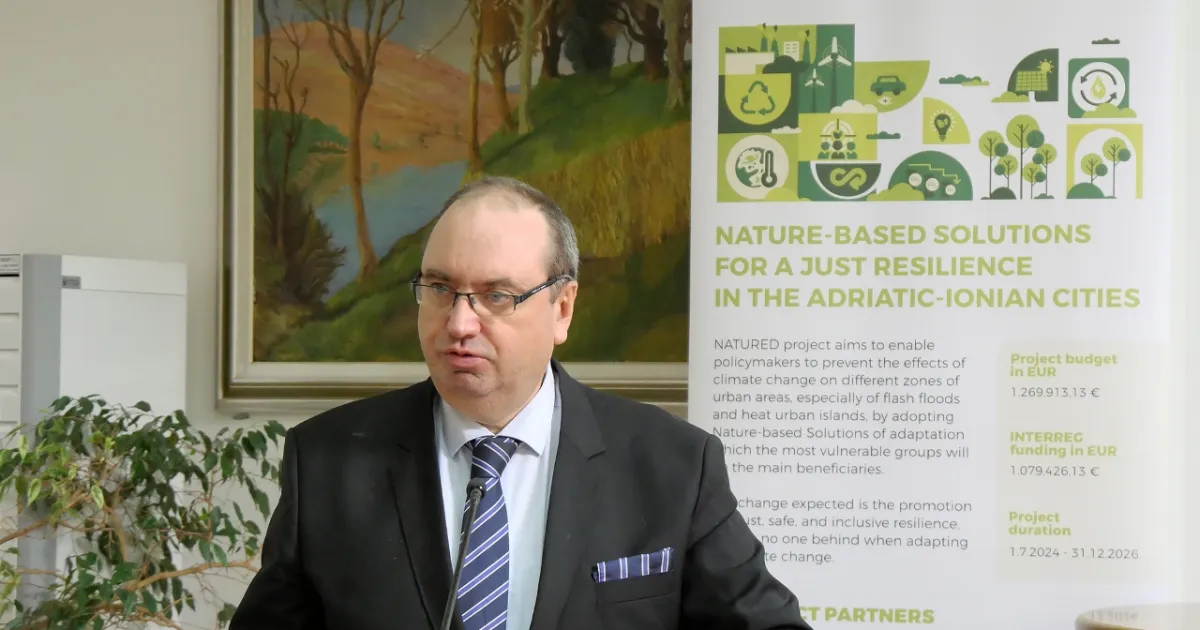
A stakeholder debate within the ADRION NATURED Project was held on October 14, 2025, at the Novo Sarajevo Municipal Council Hall. The event brought together more than 20 participants representing the public, private, and civil sectors, all of whom are directly affected by climate change and play a vital role in strengthening resilience to its negative impacts—such as flash floods, landslides, urban heat islands, and forest fires.
The debate was moderated by Dr. Ismar Alagić, Professor at the International University of Sarajevo (IUS) and the NATURED Project Leader at IUS. The NATURED Project unites 12 partners from 9 Adriatic–Ionian countries, along with numerous associated partners and pilot local communities working together to develop nature-based solutions (NbS) that enhance climate resilience.
Presentations and Key Topics
The event began with two introductory presentations.
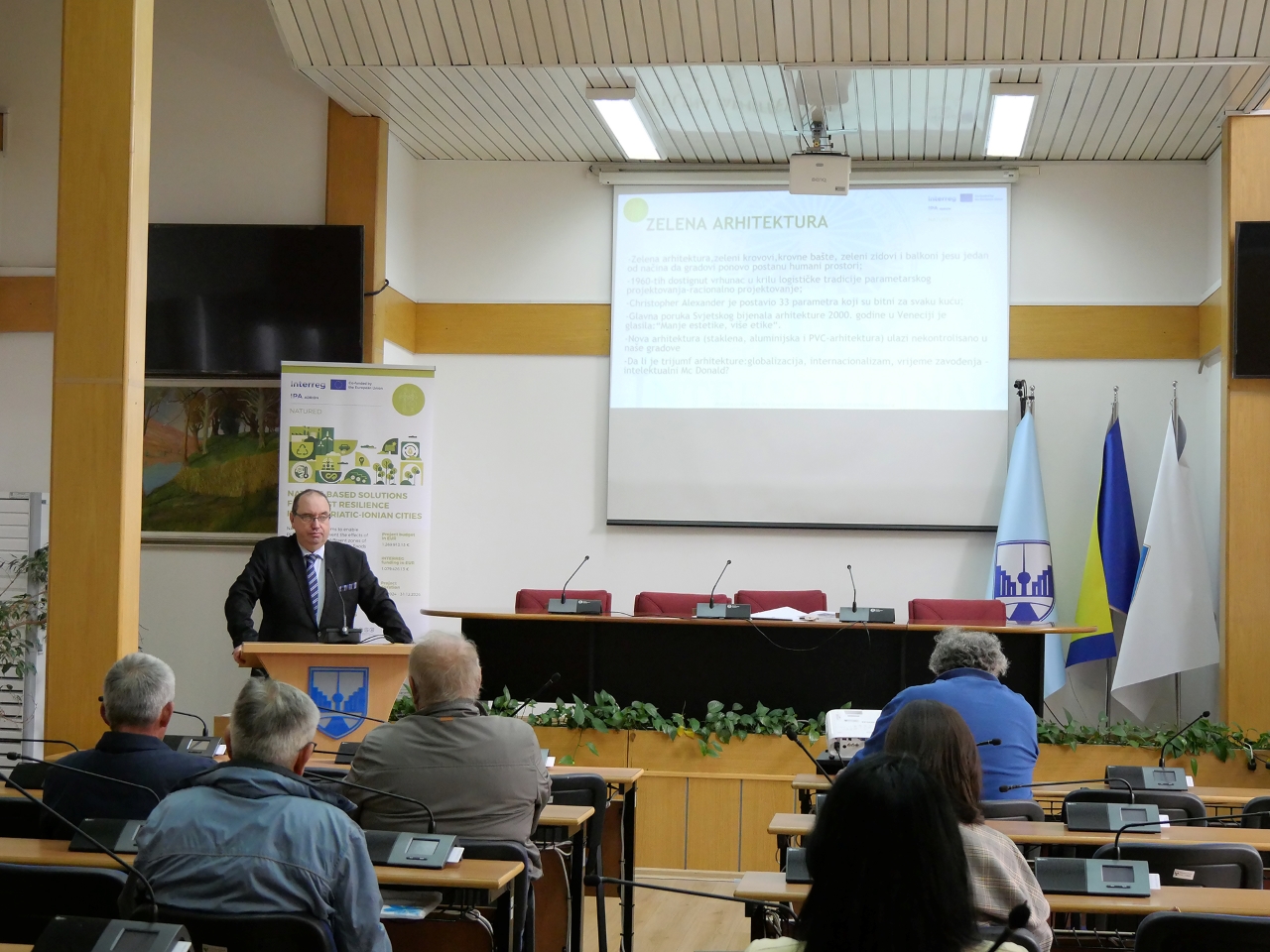
Dr. Ismar Alagić presented “Proposals and Implementation of Nature-Based Solutions to Increase Climate Resilience in the Adriatic–Ionian Area – Focus on the Municipality of Novo Sarajevo”, while MBA Domagoj Vidaković from Energodata (Croatia) gave a presentation titled “Effects of Climate Change in Urban Areas – Experiences and Best Practices.”
A lively and productive discussion followed, during which participants evaluated the applicability of 36 proposed nature-based solutions for the Municipality of Novo Sarajevo. The discussion focused on their feasibility, responsibility for implementation, timelines, potential to create new green jobs, and alignment with existing strategic frameworks such as the Climate Strategy Plan of Novo Sarajevo.
Highlights and Insights
In his presentation, Dr. Alagić emphasized green building elements as essential tools for NbS implementation and presented IUS-developed vulnerability matrices for surface floods, urban heat islands, and landslides within the municipality. Participants recognized the municipality’s preparedness and strategic positioning for future projects addressing climate resilience.
Dr. Alagić also noted the potential synergy with other ongoing local initiatives, such as the “Clean Miljacka River” Project led by the City of Sarajevo.
MBA Vidaković highlighted the importance of having comprehensive strategic documents, including Urban Green Renewal Plans and Sustainable Energy and Climate Action Plans (SECAP), as strong foundations for systematic local action and successful participation in EU-funded projects.
Stakeholder Engagement and Recommendations
Throughout the debate, participants expressed the need for further education and training across all sectors—public, private, and civil—on topics related to climate change adaptation and nature-based solutions.
They also proposed practical measures such as:
Prevention of floods and landslides,
Greening of riverbanks and improvement of stormwater and wastewater systems,
Protection of water sources,
Strengthening of civil protection and emergency response services,
Development of environmentally friendly green public transport,
Creation of new green spaces as the “lungs” of the municipality, and
Introduction of modern urban furniture to mitigate the effects of urban heat islands.
The NATURED Project continues to serve as a valuable platform for collaboration between academia, local authorities, and communities, fostering practical and sustainable approaches to climate resilience across the Adriatic–Ionian region.