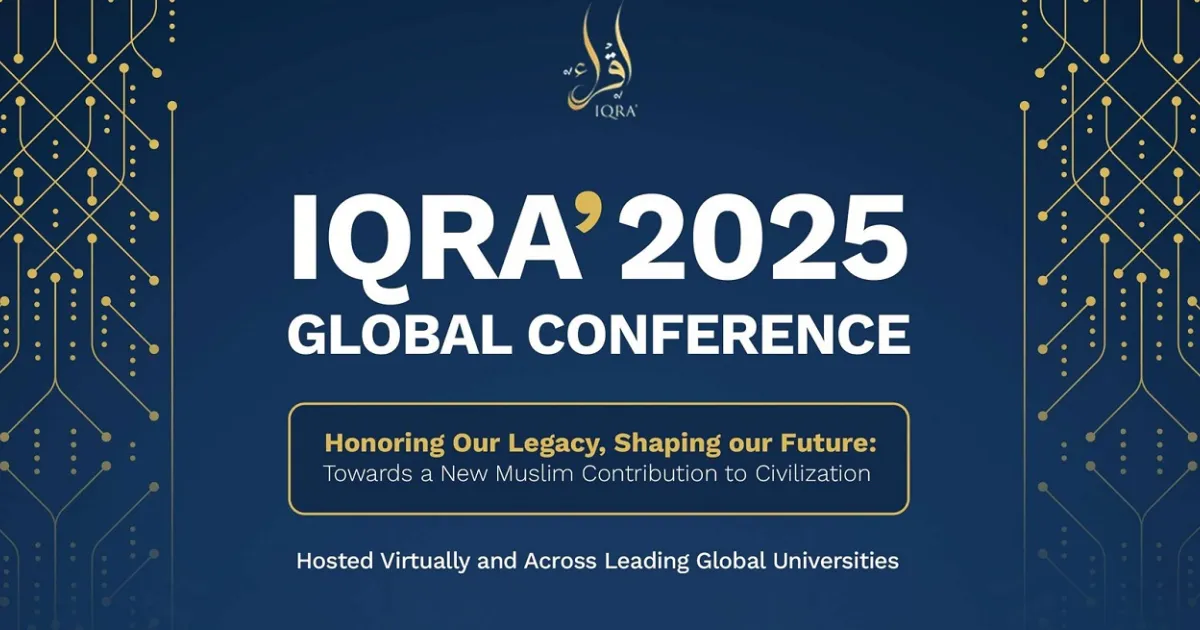
The IUS Center for Islamic Finance, Innovation and Sustainability (CIFIS) co-hosted the IQRA 2025 Global Conference under the overarching theme “Honoring Our Legacy, Shaping Our Future” held on August 22-24, 2025. The conference brought together academics, policymakers, and practitioners from across the globe to explore the evolving role of Islamic finance, FinTech, and sustainable development in shaping cooperative economic futures.
One of the highlights of the program was Panel 3: Economic Empowerment & Resources, which featured distinguished speakers and thought leaders. The session examined how Islamic finance and FinTech innovations can foster resilience, enhance trust, and expand access to financial services in diverse contexts.
The panel opened with Keynote Speech 3 by Hfz Edib Smolo, PhD (Effat University, KSA), titled “Islamic Finance in the Digital Age: FinTech as a Civilizational Tool.” Dr. Smolo underscored the importance of aligning technological progress with Islamic principles to ensure inclusive and sustainable growth.
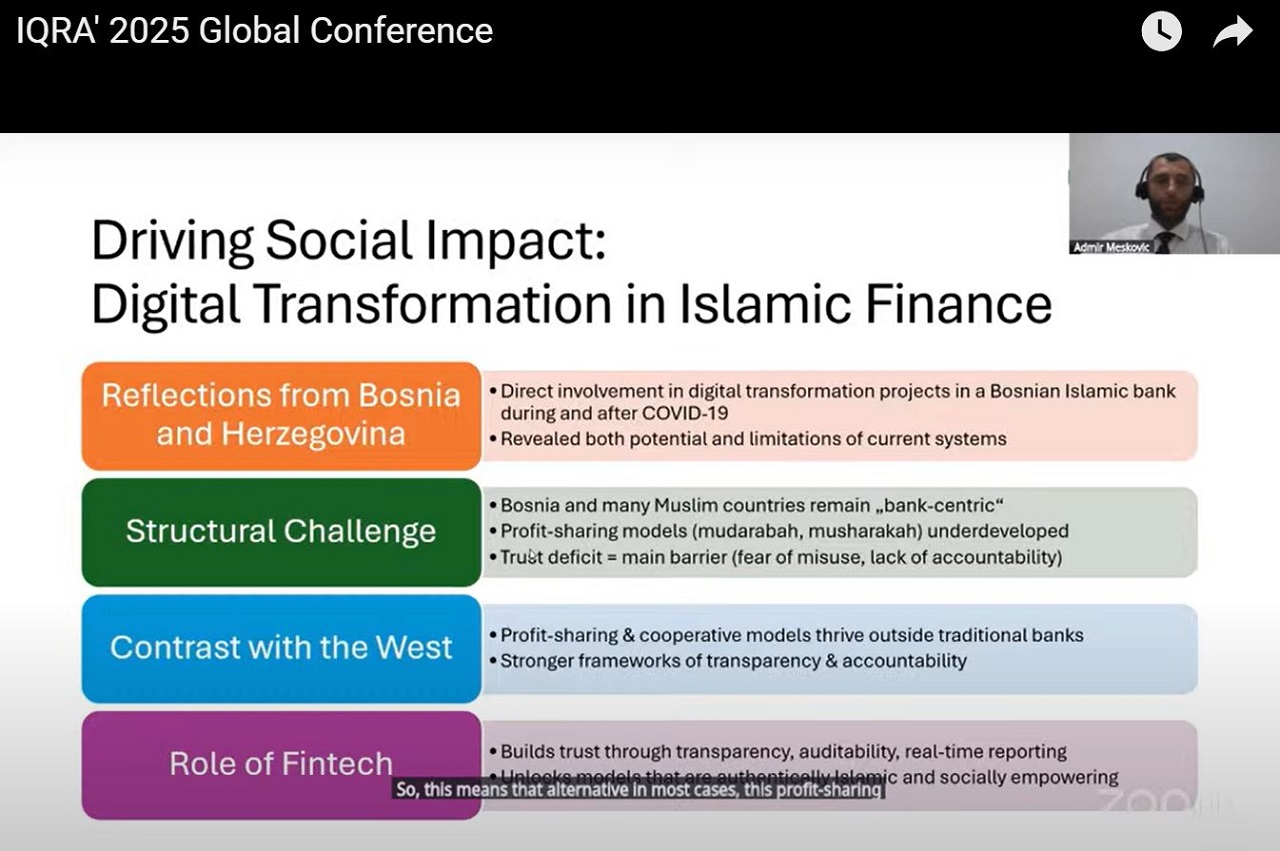
Following the keynote, participants engaged in presentations and discussions on the challenges and opportunities of economic empowerment in Muslim societies. Dr. Admir Mešković (International University of Sarajevo, Bosnia and Herzegovina) presented a talk on “Driving Social Impact: Digital Transformation in Islamic Finance.” His contribution highlighted the potential of digital solutions to strengthen transparency, address trust deficits, and unlock profit-sharing models that go beyond conventional bank-centric structures.
Other panelists included Edina Latic (Austria), Hfz Haris Zogic (Serbia), and Dr. Amra Selimovic-Fijuljanin (Bosnia and Herzegovina). The session was moderated by Dr. Alija Avdukic (University of Dundee, UK), who facilitated a dynamic discussion on how Islamic finance can serve as a vehicle for both social impact and sustainable development.
The conference underscored the central role of Islamic finance in promoting cooperative economic models and emphasized the transformative power of FinTech in addressing global challenges. By bringing together experts from different regions, the event reaffirmed the importance of cross-border collaboration in building a more transparent, accountable, and resilient financial system.