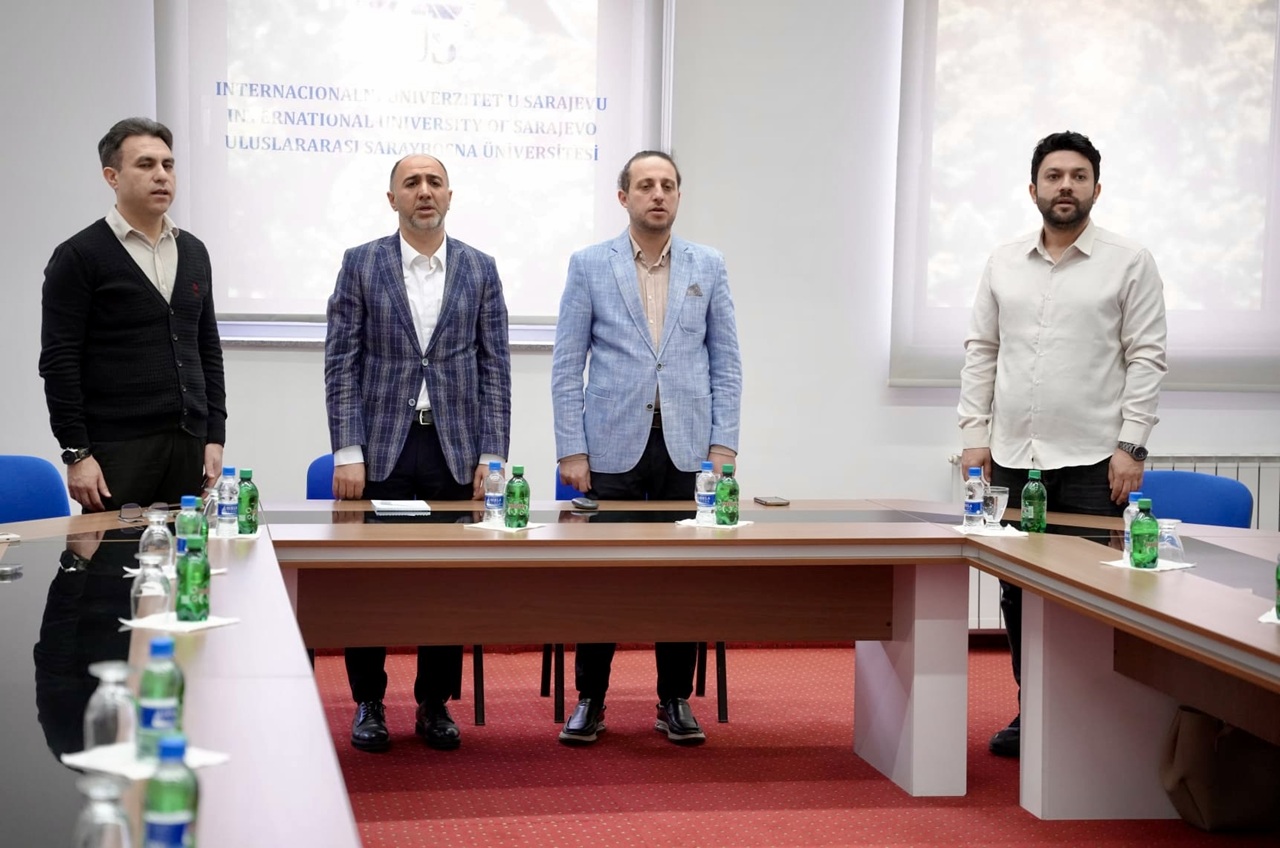
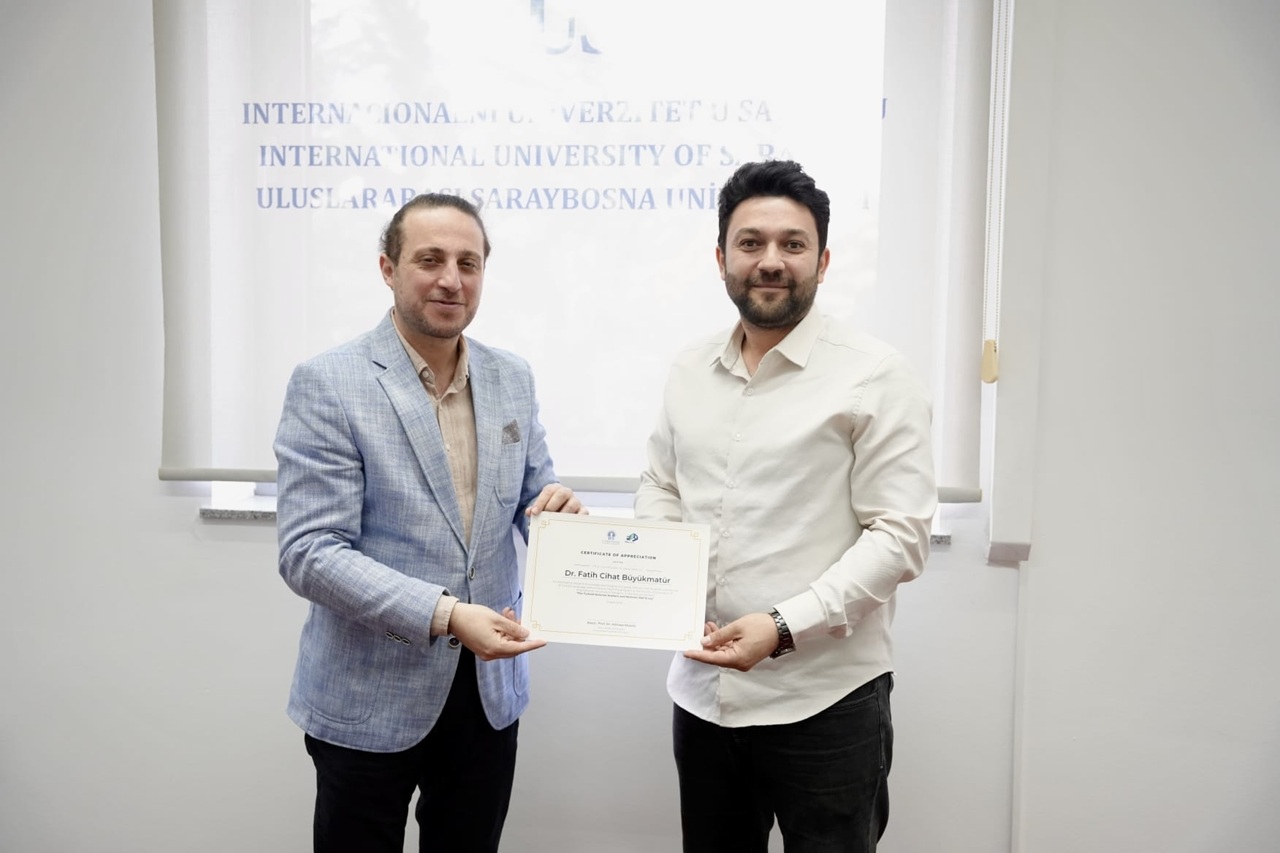
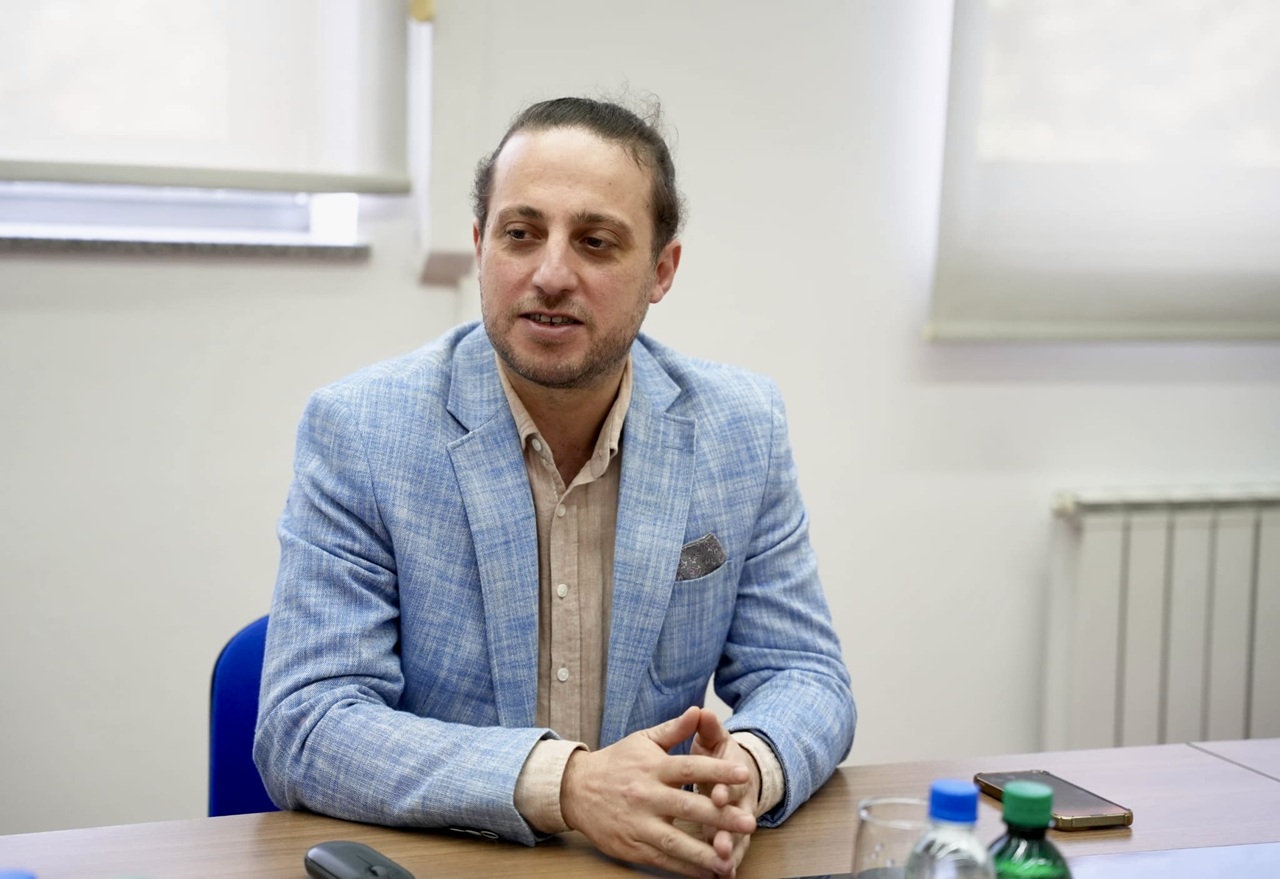
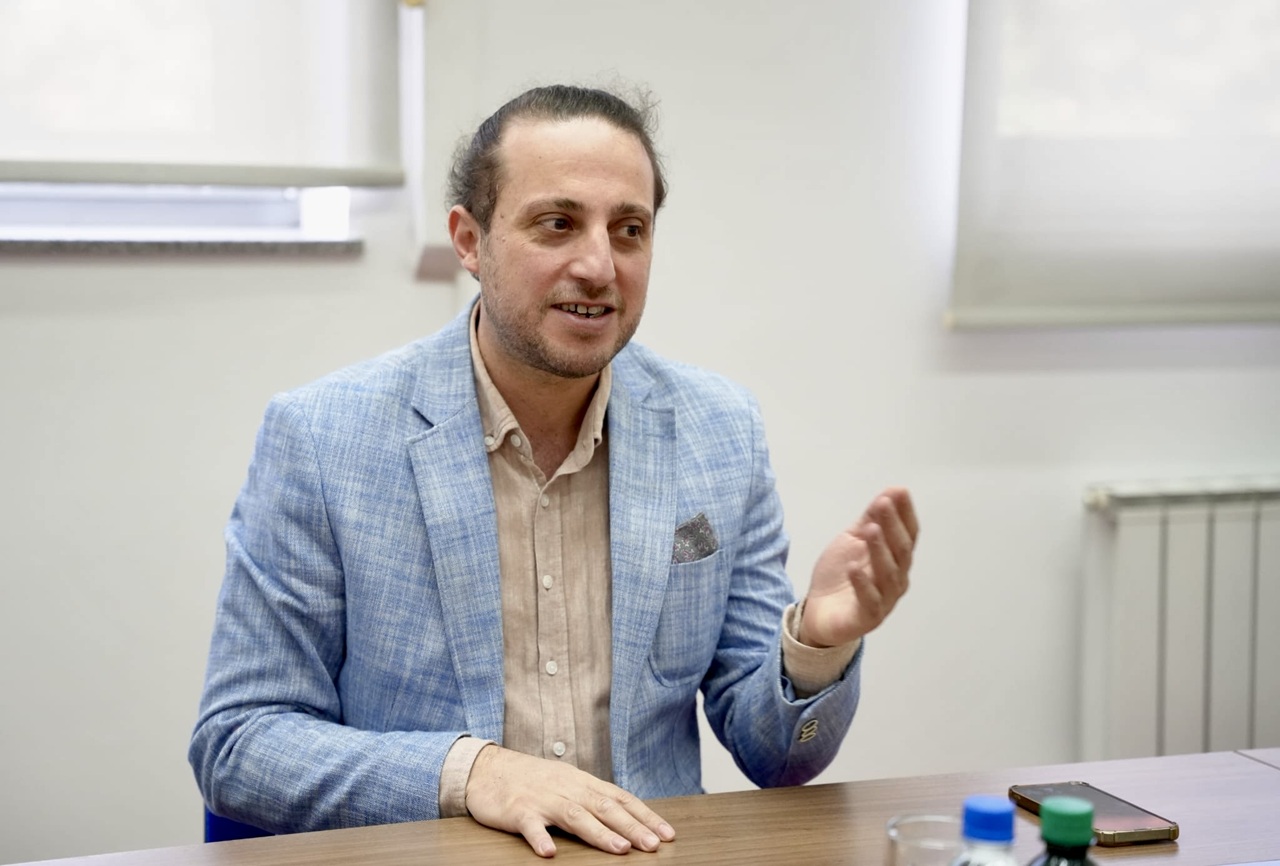
On Thursday, April 9, 2026, the Turkish Language and Literature, Teaching (TLT) study program at the International University of Sarajevo (IUS) organized a lecture dedicated to the life, character, and spiritual depth of Mehmet Akif Ersoy, the author of the Turkish National Anthem. The lecture was delivered by Dr. Fatih Cihat Büyükmatür, who offered a thoughtful and insightful perspective on one of the most prominent figures in Turkish literary and intellectual history.
During the lecture, Dr. Büyükmatür shared valuable reflections on Mehmet Akif Ersoy’s life and legacy. He highlighted the poet’s multicultural background, noting that his father’s side originated from the Balkans, while his mother’s family came from Bukhara before settling in Istanbul. According to Dr. Büyükmatür, these two cultural and spiritual lineages played a significant role in shaping Ersoy’s personality, worldview, and understanding of Islam.
Dr. Büyükmatür also emphasized that Ersoy was raised in Istanbul, one of the major centers of Islamic civilization, where he received a strong religious education while also remaining closely connected to modern natural sciences. He described Ersoy as a figure whose personality was marked by Islamic sensitivity, patriotism, humility, perseverance, and honesty, illustrating these qualities through various anecdotes from the poet’s life.
Speaking about Ersoy’s understanding of patriotism, Dr. Büyükmatür underlined that love for one’s homeland goes beyond symbols and territory, encompassing deep respect for the culture, values, and traditions of a nation. In this context, he shared the well-known anecdote about Akif’s reaction to criticism of baklava, presenting it as a symbolic reflection of the poet’s sincere and all-encompassing devotion to his country.
The lecture also addressed Ersoy’s important role during the Turkish War of Independence. Dr. Büyükmatür spoke about the poet’s writings, sermons, and intellectual contributions during this period, stressing that these efforts reached their pinnacle in the writing of the Independence March (İstiklal Marşı). He noted that, like much of Ersoy’s literary work, the National Anthem carries a profound spiritual and Islamic depth inspired by the Holy Quran.
The event concluded with an engaging Q&A session, during which Dr. Büyükmatür answered questions from the audience about Mehmet Akif Ersoy and his literary legacy.