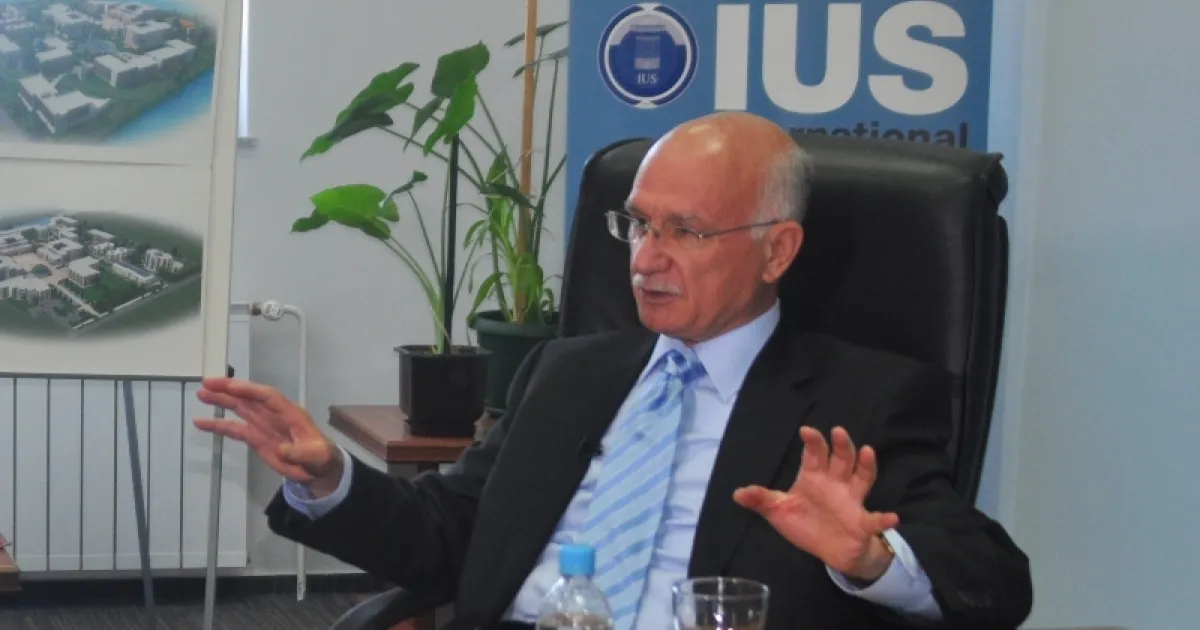
Dr. Anas al-Shaikh Ali, CBE, FRSA is Chair of the Association of Muslim Social Scientists (AMSS), founding trustee and former chair of the Board of Trustees of the Forum Against Islamophobia and Racism (FAIR), and Director and Academic Advisor at the UK's International Institute of Islamic Thought (IIIT). At AMSS, Ali leads the organization's efforts to promote the Islamic position in various academic disciplines. At FAIR, Ali documents and works against Islamophobia and other forms of discrimination; in addition, he directs IIIT's Translation Department. Holding a PhD in American Studies, Ali has also taught on literature and translation in universities in the Middle East. In June 2009, Ali was awarded the Commander of the Civil Division of the Most Excellent Order of the British Empire. Ali was one of the signatories in October 2007 of A Common Word Between Us and You, a letter addressed to Christian leaders in an appeal for peace and cooperation among the two world religions.
Dr. Ali, thank you for joining us here at IUS. There has been much discussion and debate about Islamophobia in both academic, political and media circles. You are an expert in this area and I would like to begin by asking you, what is the correct methodology for dealing with Islamophobia?
Islamophobia is an evil that is going to affect Muslims everywhere in the long run. It is affecting the lives of Muslims in many places. It is really spreading far and fast. There are many organizations that are actually focusing on spreading Islamophobia through many means, and now through the internet, and social media, it is spreading all over the world. The best way to deal with it is a calm, intellectual and professional way. There are some organizations, but they are working part time, some of them are making some progress but others are creating even more Islamophobia by trying to deal with Islamophobia because they are not trained, they are not professionals, and they don't know how to go about it. And then there are Muslims who also create Islamophobia through the things they say and through the things they do.
What can be done to alleviate Islamophobia and bring about harmony in societies where Islamophobia is rampant?
I think we need an entity that works full time to combat Islamophobia and for it to be stationed somewhere, we need one entity in the United States, we need one entity in Europe, and we need an entity that deals with Islamophobia in Muslim countries. When I talk to people about the existence of Islamophobia in Muslim countries, they get surprised, at the beginning; they don't want to believe that there is a great deal of Islamophobia in Muslim countries. One of the examples I will give you, which I only read about last night, about this Technical University in Ankara, yesterday a couple of girls in hijab went to register, and they were harassed by a mob of people with banners attacking the hijab and nobody intervened, at the end of the day, they were shouted out, screamed out and insulted, and they had to leave the campus and nobody intervened, so if that is not Islamophobia, what is? So, I think we need to approach it in an educated, professional, and intellectual way, through a very carefully planned long term strategy, and as I said we need this sort of entity in different places, they need to focus on the media, they need to focus on legal issues, they need to focus on education.
Can you please elaborate, what is the particular significance of education in building social cohesion combating prejudice and Islamophobia?
One of the serious problems actually is education, sometimes, it is not what is being taught, sometimes, it is what is not being taught because you know, you would have looked at some of these textbooks that are used in teaching history and civilization, they start with Plato, make a one thousand year jump into Leonardo Da Vinci , they label all that period "the dark ages", but that period was anything but dark, and that is why books like The Theft of History by Jack Goody from Cambridge University, the Renaissance, The One or the Many are among the many that must be taught, textbooks need to be looked at, the curriculum needs to be discussed and addressed, so education is a serious challenge in challenging Islamophobia.
In addition to discrimination and Islamophobia, there are other societal problems such as unemployment, especially among the youth. What advice do we give to young students and graduates who plan to leave Bosnia because of unemployment problems.
I tell you this; it is not only people from Bosnia who want to live abroad. There are many people from other European countries who are looking for opportunities to go abroad. There is a lot of unemployment. There are many cases of young people who have graduated from the best universities, four or five years ago, and still, they haven't been able to find a decent job, and some of them have taken part-time jobs and try to do whatever they can, so it is a problem, and the advice you give them is not to go unless they have a very firm offer for a job. They don't go to seek a job, because jobs are not readily available, unless they have a firm commitment of some entity that guarantees them a visa, because now countries are extremely strict with their laws and people can get into trouble. So, I think they have to be very careful how they approach this. And I do not know any place in the world that is welcoming people and offering them jobs, so the same problem that is here, believe me is elsewhere, problems in Greece, problems in Spain and in other European countries as well.
So, what role can Cultural Studies play in addressing ethical, social and cultural issues in societies?
I was delighted to learn about this Cultural Studies Program, I think that it is extremely important that we establish such studies at universities because such programs can have an impact on many different aspects of life.
Thank you very much for your time.
(Interviewed by Assist. Prof. Dr. Tuba Boz, Cultural Studies Program, IUS.)