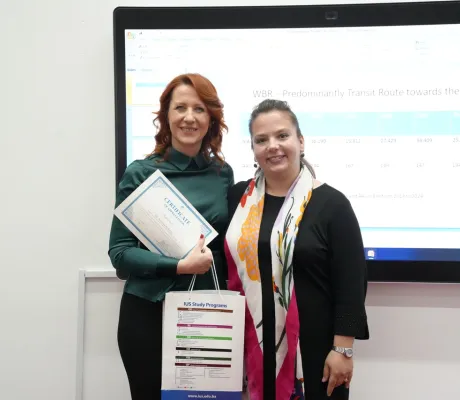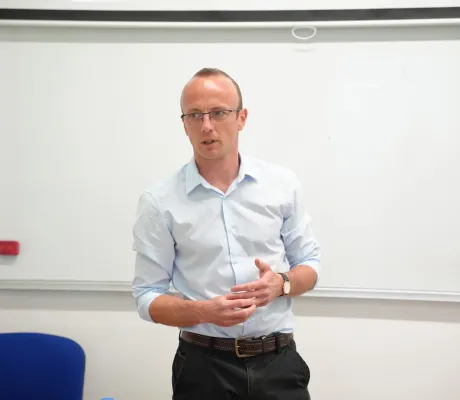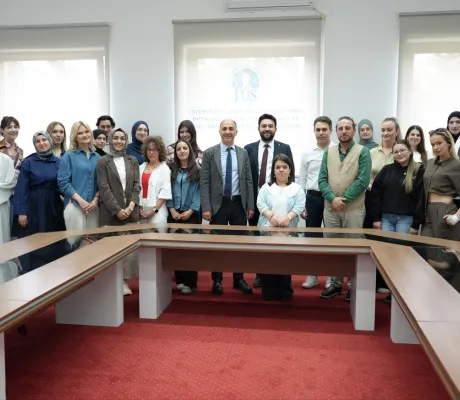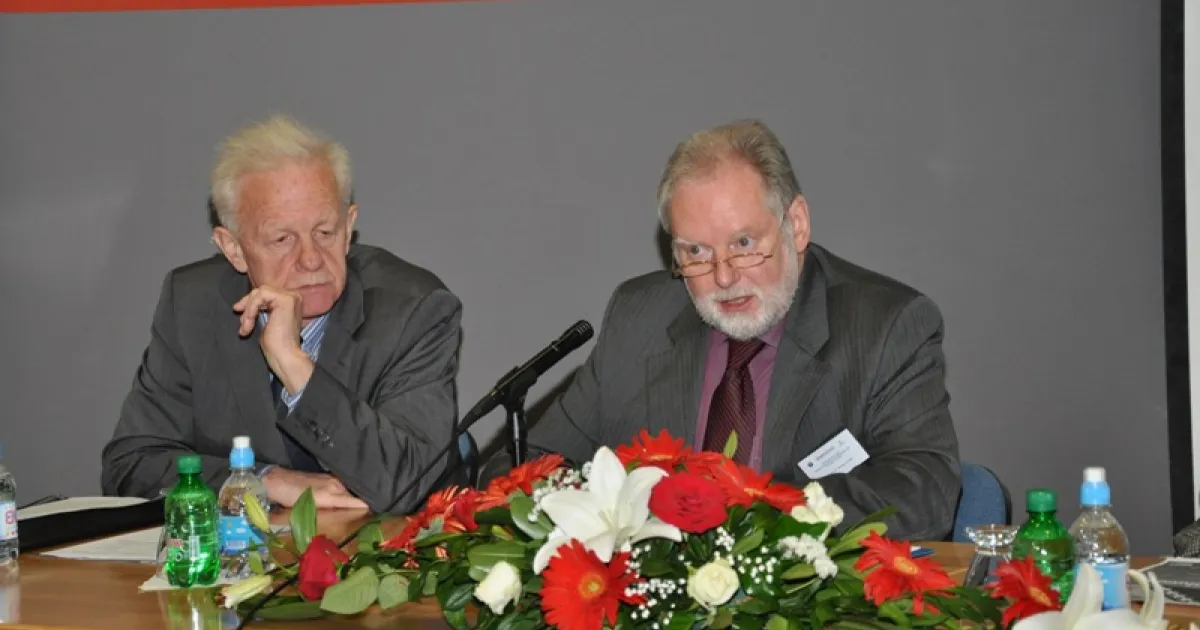
The Centre for Economic Development and Research has organized a workshop entitled "Diaspora and Rural Development: Possible Solutions for B&H" which was held on June 5th, 2013, at the International University of Sarajevo (IUS). The main objectives of the workshop were:
The workshop was chaired by Assist Prof. Dr. Hasan Korkut, dean of the Faculty of Business and Administration at IUS, and opening speeches were given by Mr. Joseph Guntern, director of SDC in B&H, Ms. Anđela Lalović, RRPP program coordinator for B&H, and Dr. Josef Pöschl, from Vienna Institute for International Economic Studies (wiiw).
The initiator of the seminar was Assist. Prof. Dr. Nermin Oruč, a lecturer at the Faculty of Business and Administration at IUS, as well as the president of the CEDAR organization and a project leader at RRPP funded project "Linking Diaspora and Rural Entrepreneurs in Albania and Bosnia-Herzegovina".
Mr Guntern gave a speech about the importance of research in the field of economic development and the support to these efforts provided by SDC in BiH so far. He reminded that SDc's support started in 1991, primarily in the field of emergency assistance and humanitarian aid, while today it is focused on development projects. Some of the current projects in BiH funded by the SDC were presented, including the RRPP.
Ms Lalovic presented the RRPP program and its achievements so far in improving research capacity in BiH and the region. The research capacity building was supported through funding research project and organization of capacity building seminars. In the period 2008-2013, they supported 50 research projects (26 regional and 24 national) valuing 3.7 million CHF, and organized 16 regional trainings, conducted by international specialists for research methods and management, gathering a total of 268 participants. In addition, four international scientific conferences were organized.
Dr. Pöschl gave a brief overview of the key challenges of economic development that BiH is currently facing, as an introduction to the presentation of research results that followed. Possible role of investments by Diaspora in rural development for resolving some of these key challenges, such as high unemployment rates, increasing poverty and inequality, and rural-urban migration, was emphasized.
In the first presentation of the research carried out in the framework of this project, Ms Selma Delalic, researcher on the project, presented the results of the factors determining success of rural entrepreneurship, based on a mix of quantitative (regression analysis) and qualitative (semi-structured interviews) research methods. The research identified key obstacles that rural entrepreneurs are facing in running their businesses. These problems can be summarized in a number of factors relating to market access, access to capital, and the availability of knowledge and skills, especially those related to management and marketing.
Mr Nermin Oruc, project leader, presented the results of analysis of potential of the diaspora, where the capital investment and the specific knowledge and skills were identified as key diaspora's potential that has not been sufficiently exploited yet. Results of this study also show that the key factors that do not allow the use of significant potential of diaspora for economic development in BiH are lack of information about investment opportunities in Bosnia and Herzegovina, the uncertainty of investment, lack of institutional cooperation with potential investors, and under-developed channels for the transfer of knowledge through virtual return, as preferred option for the interviewees from Diaspora.
In the third and final part, the best practices of engaging Diaspora in the economic development of other countries were presented, with special focus given to measures for linking diaspora and rural entrepreneurs in reducing obstacles identified as the most important for improving the performance of rural enterprises by using potential identified as ones Diaspora is willing to engage. This primarily refers to attraction of investments and transfer of knowledge. Based on the discussion between all participants, a number of measures that will be sent to all institutions dealing with economic development in BiH were proposed. Some of the proposals are:
In addition to these specific ideas, it was concluded that a special focus should be put on projects that are local in nature, and that it is necessary to include all institutions dealing with the economic development activities in engagement of BiH Diaspora.
Activities on implementation of the proposals discussed and agreed at the workshop will be continued, through implementation of new projects by CEDAR, as well as advocacy and cooperation activities towards government institutions at different levels in BiH.