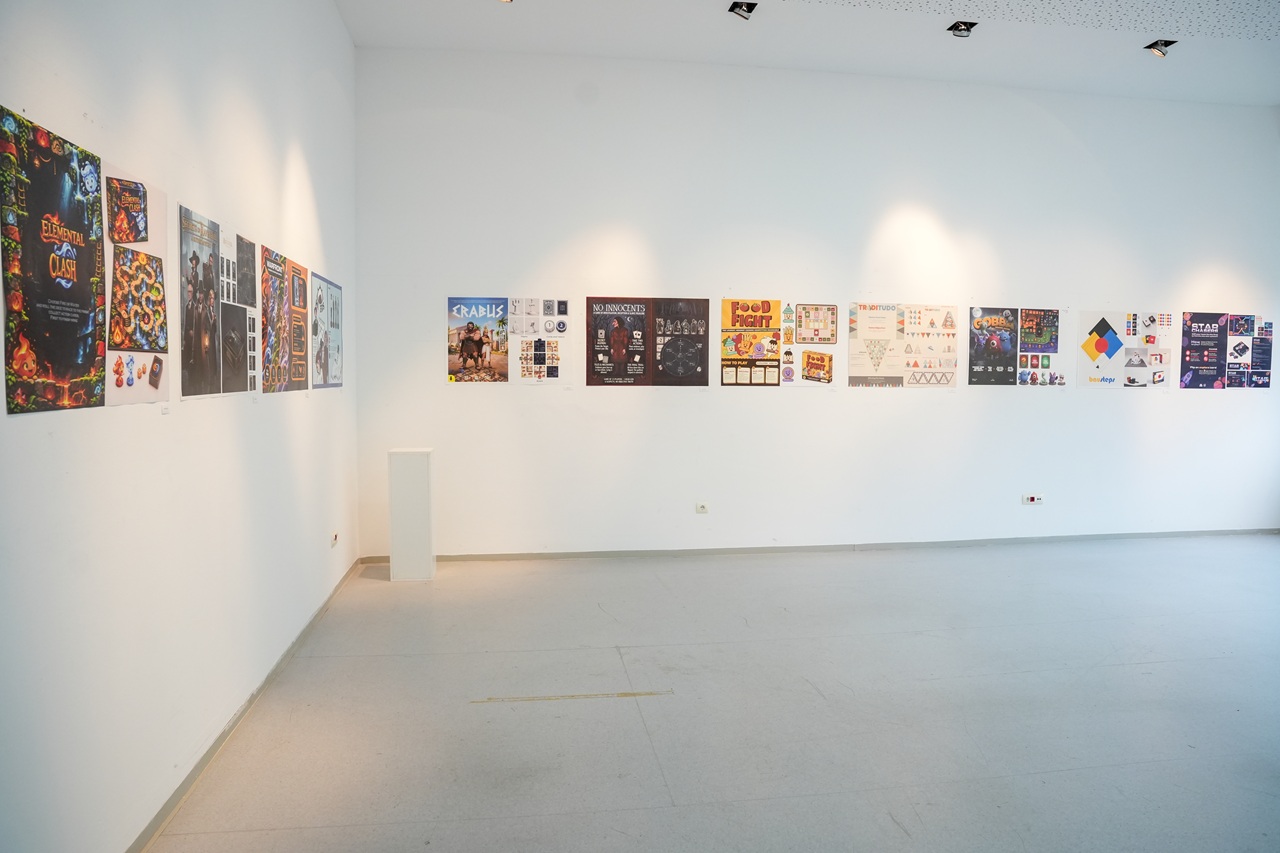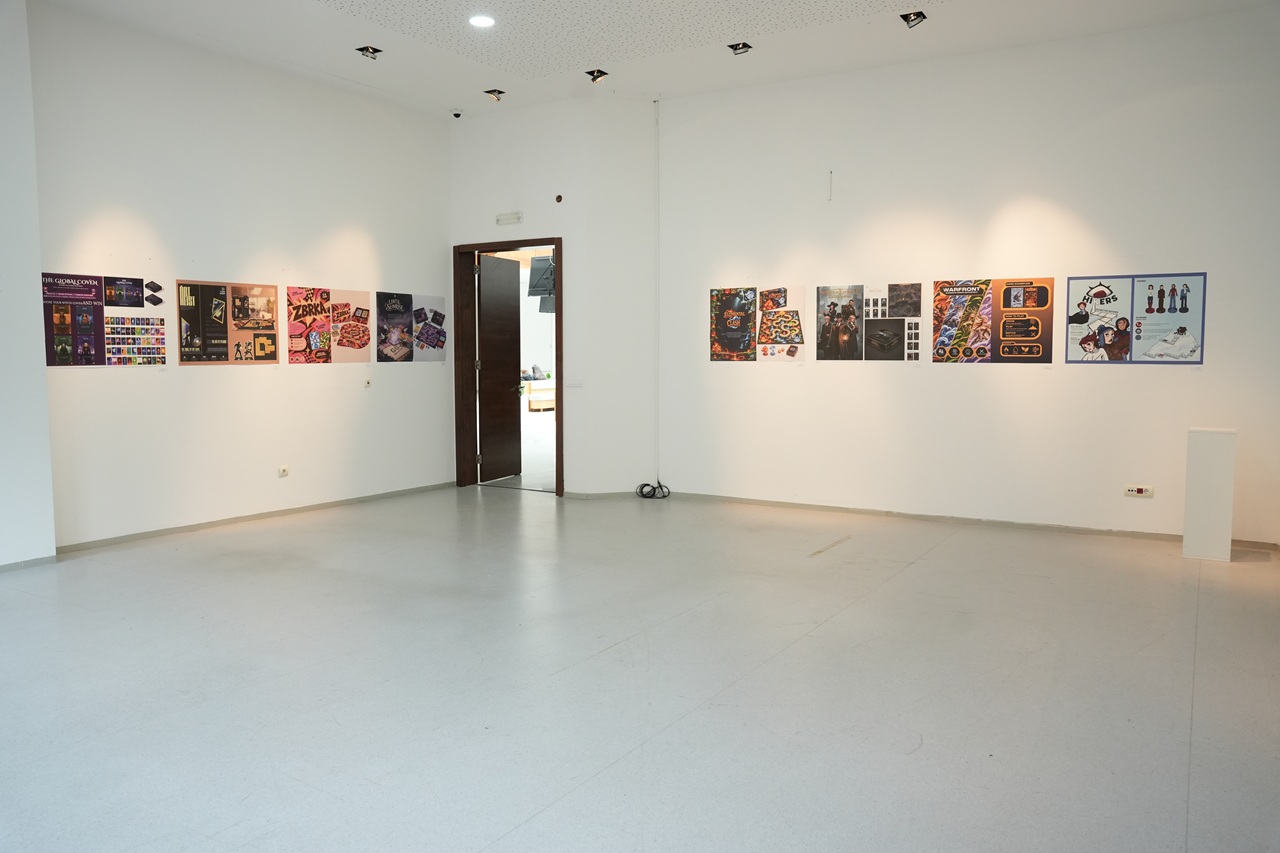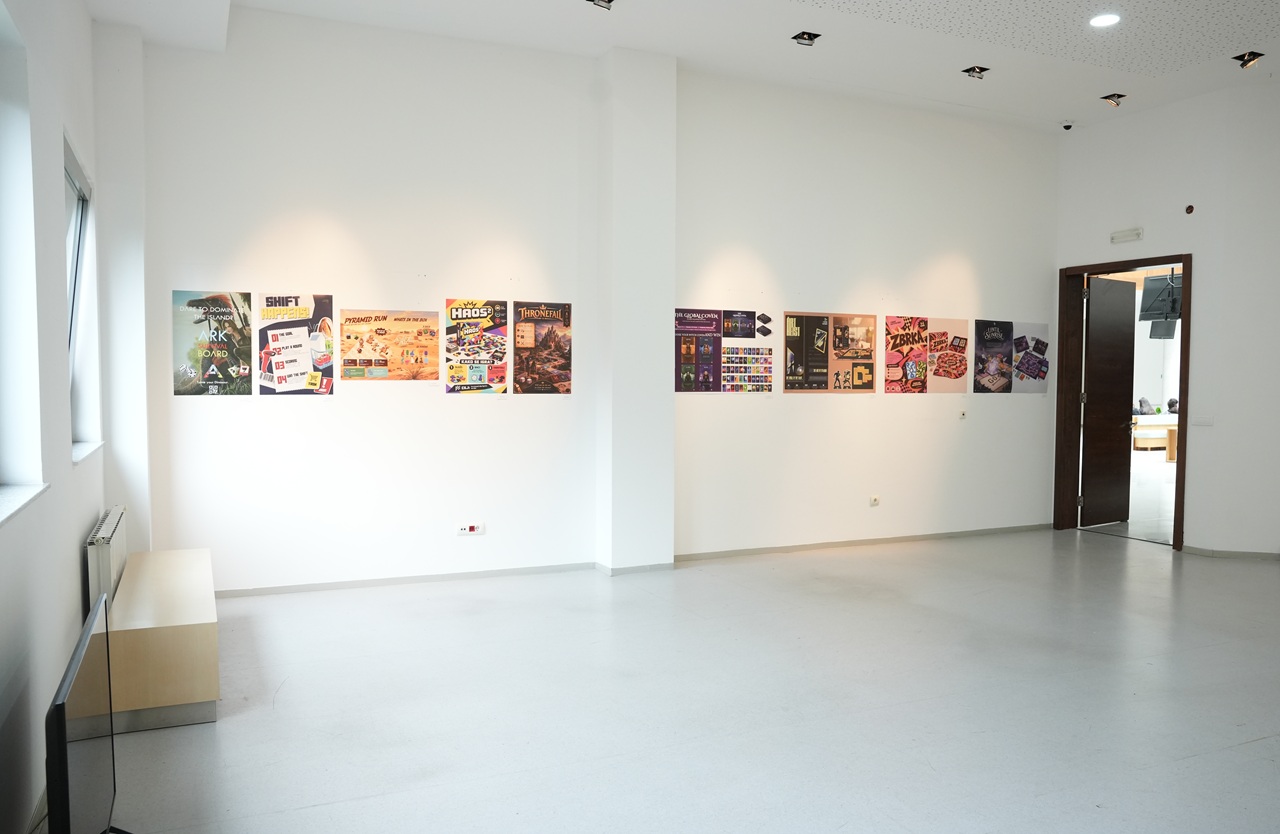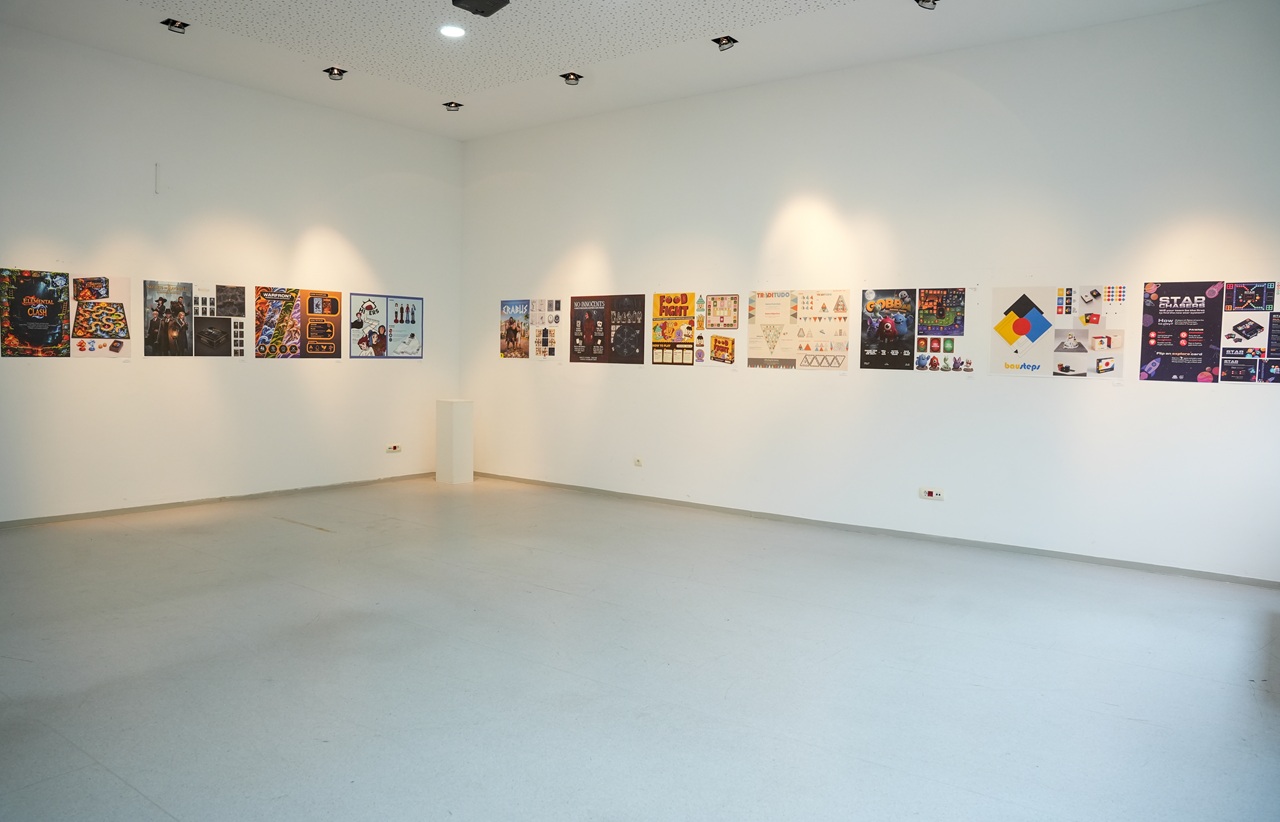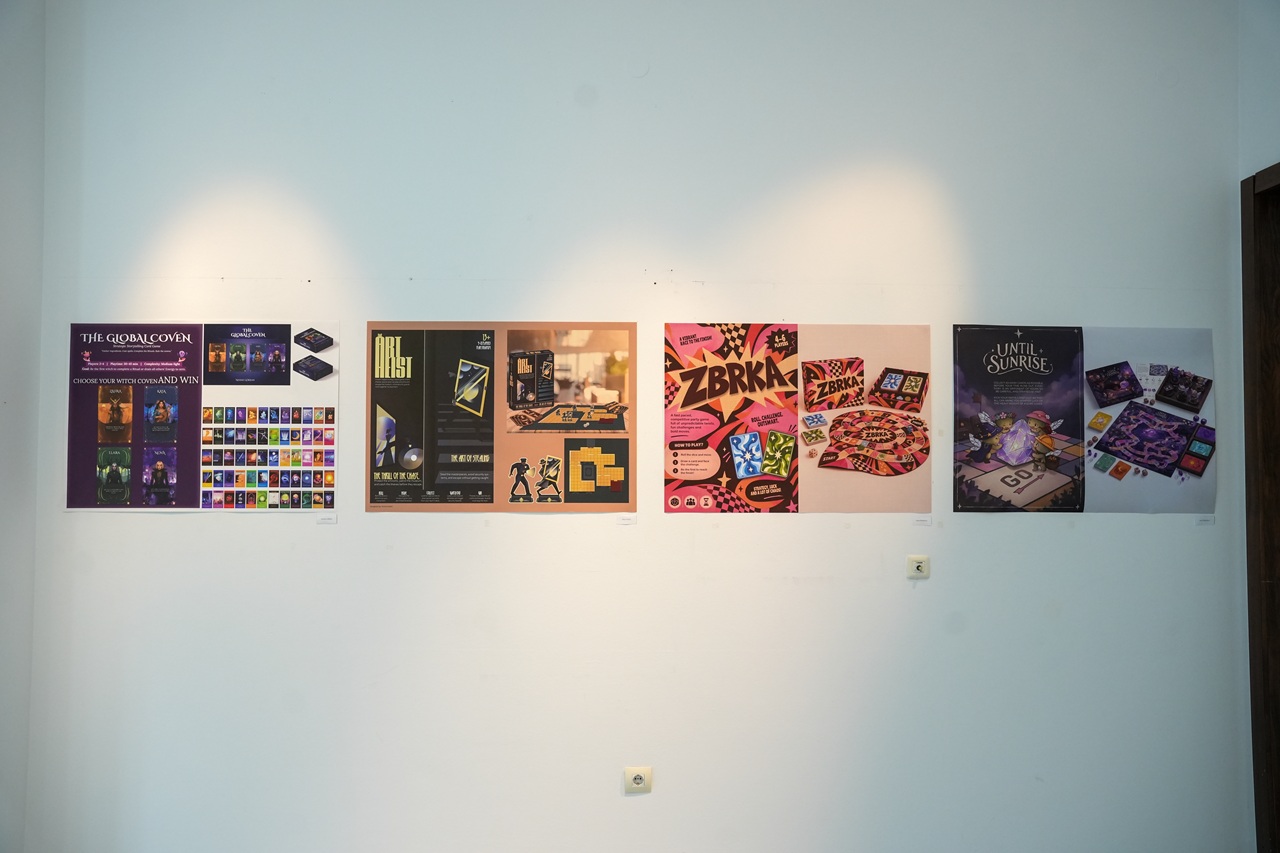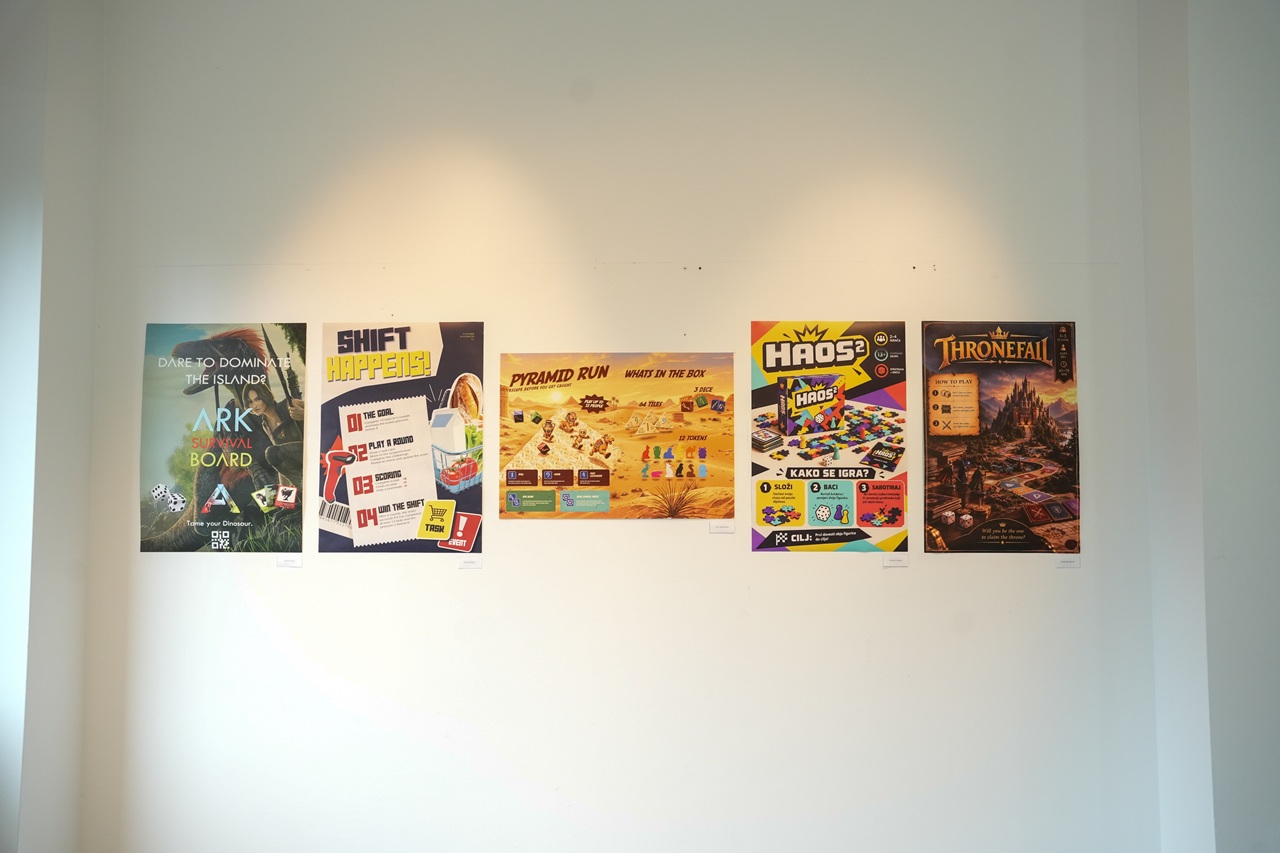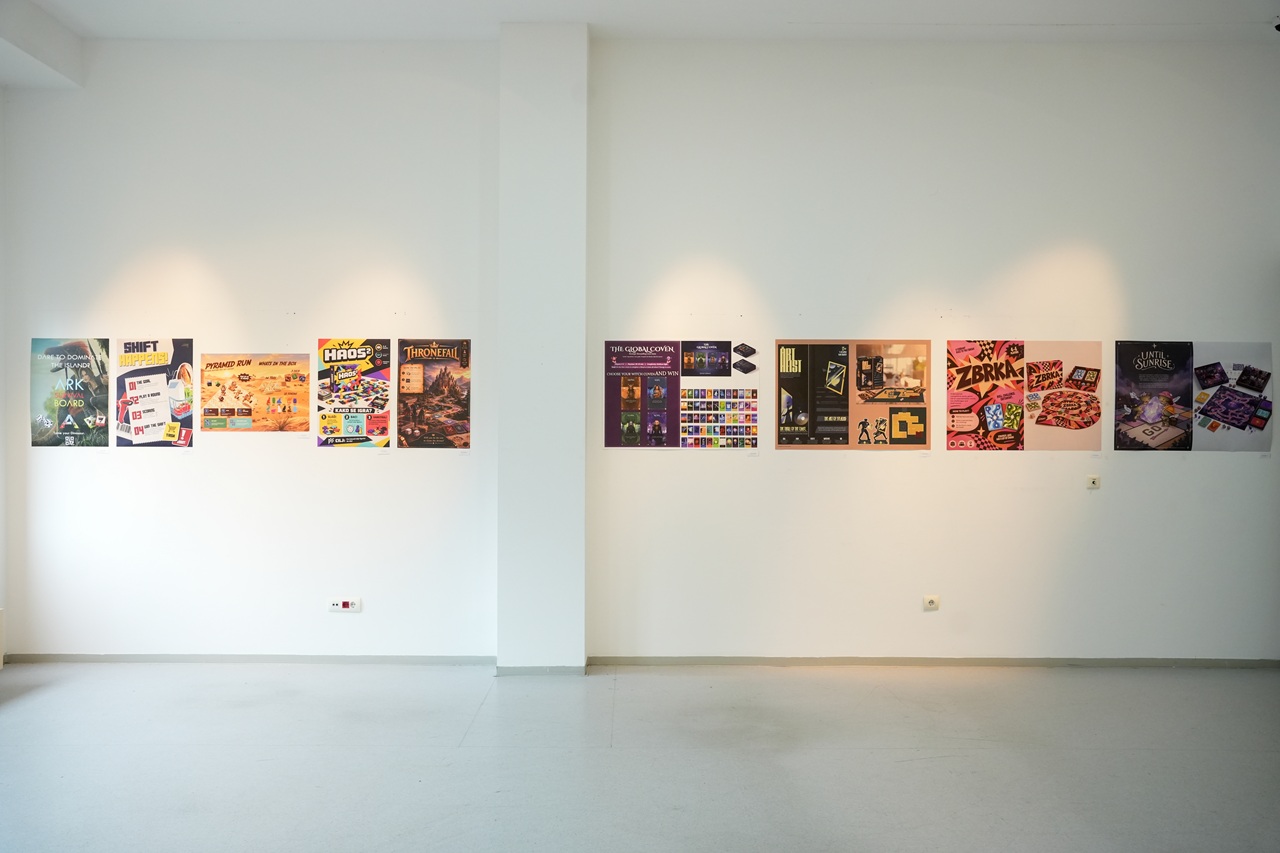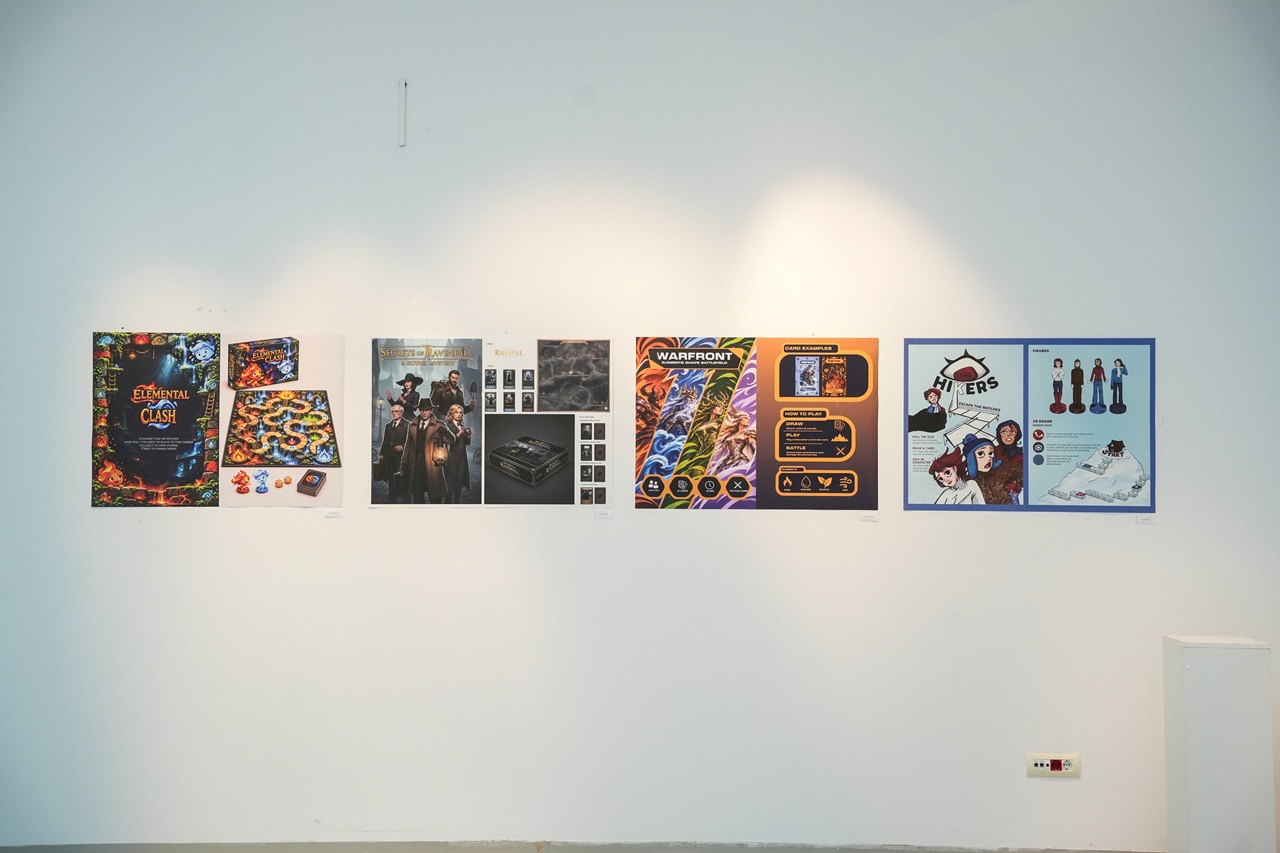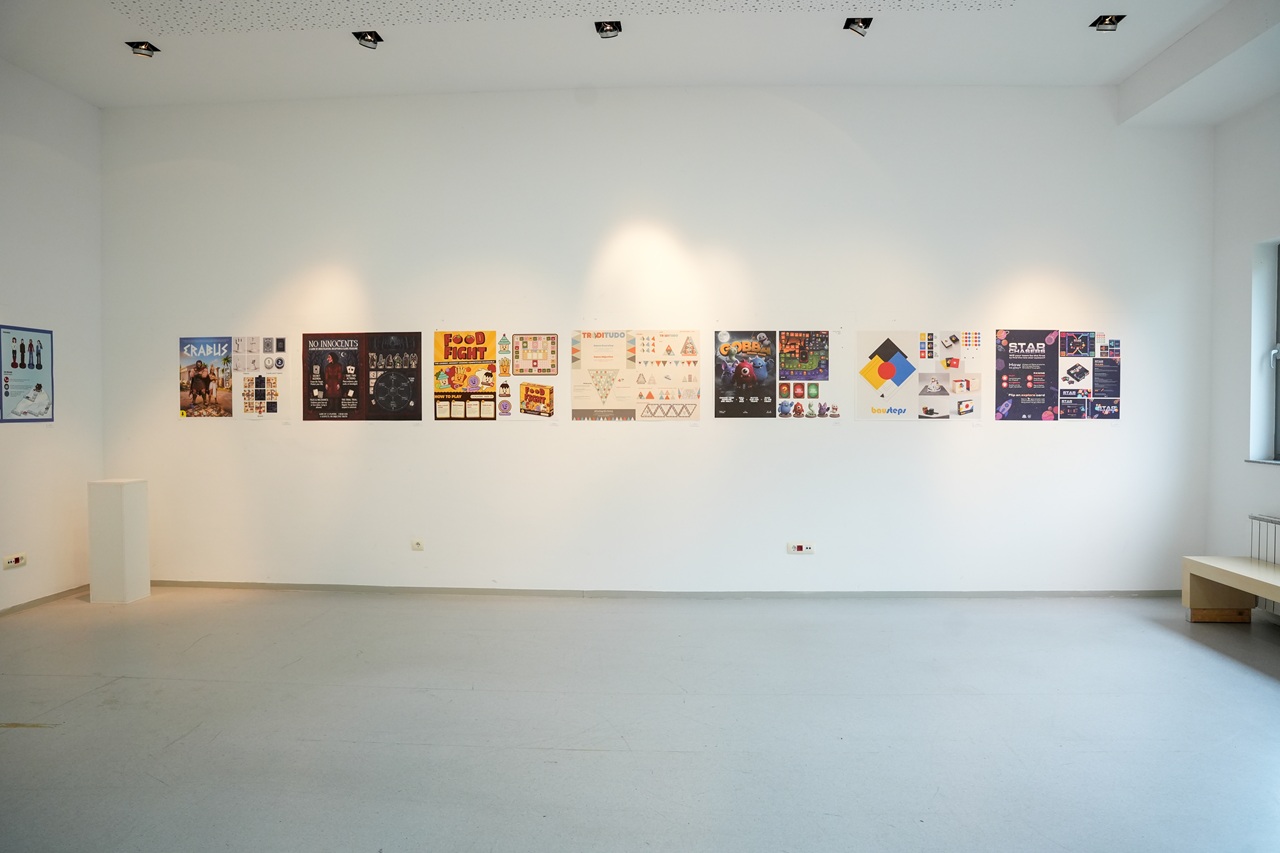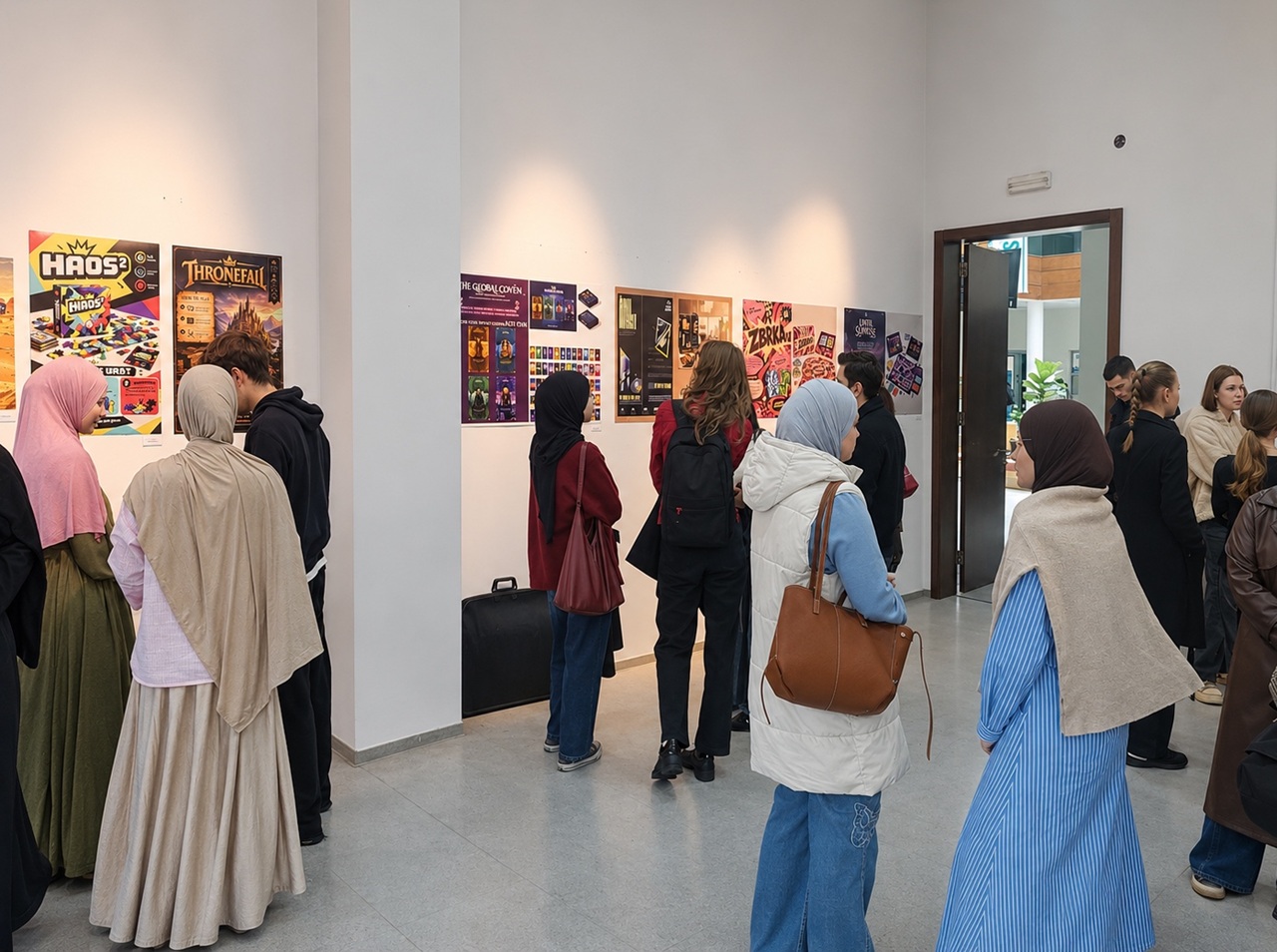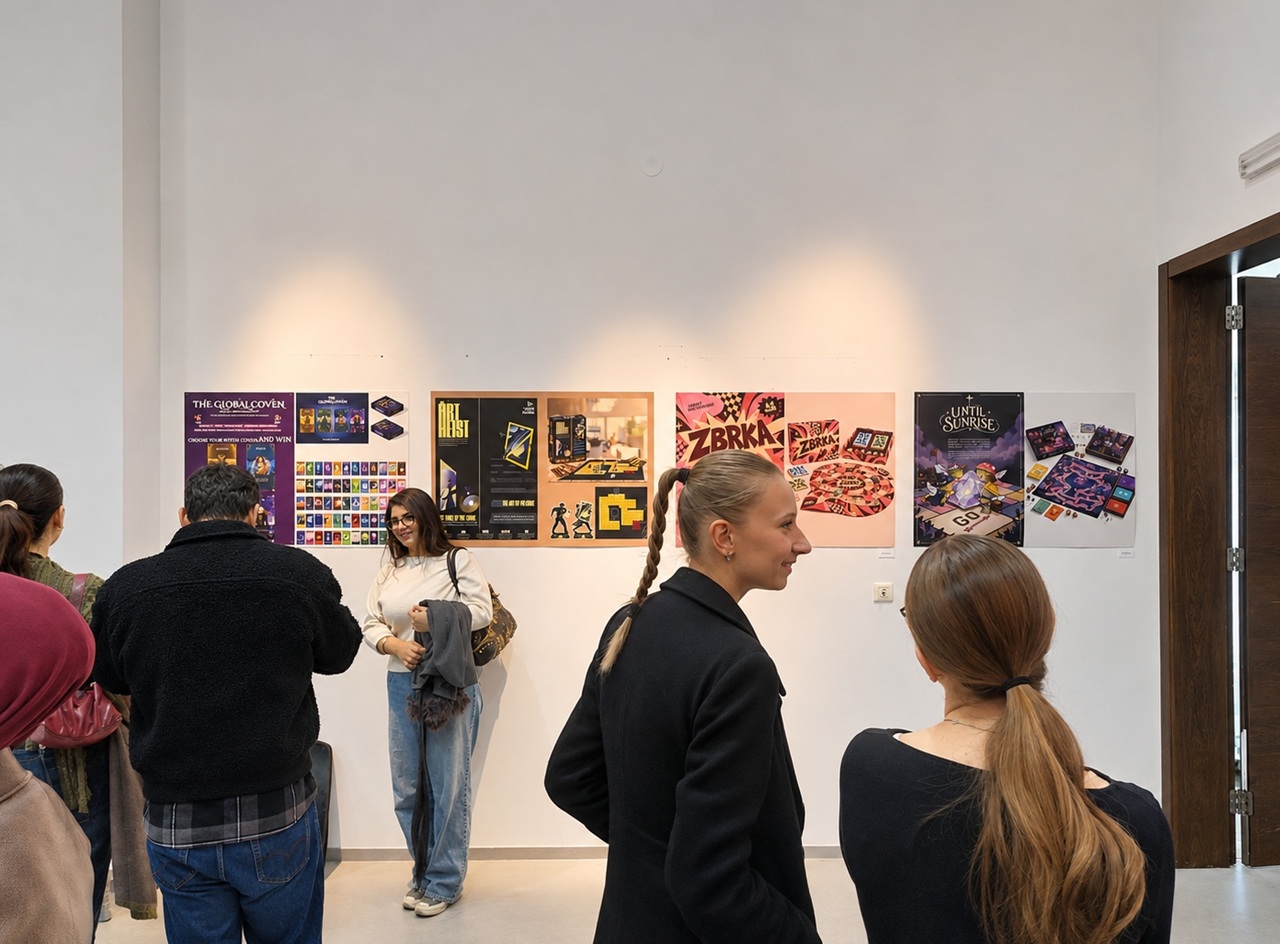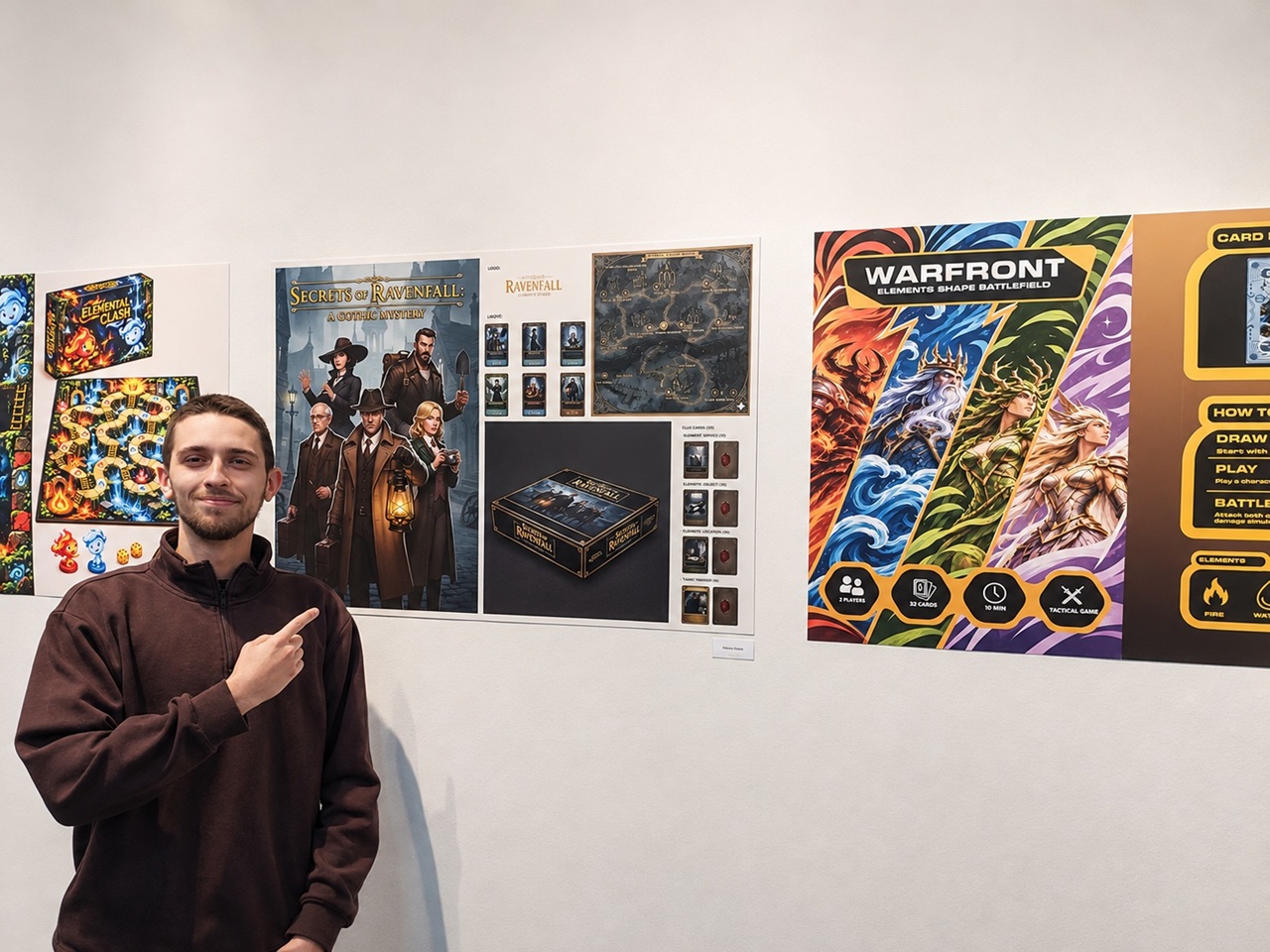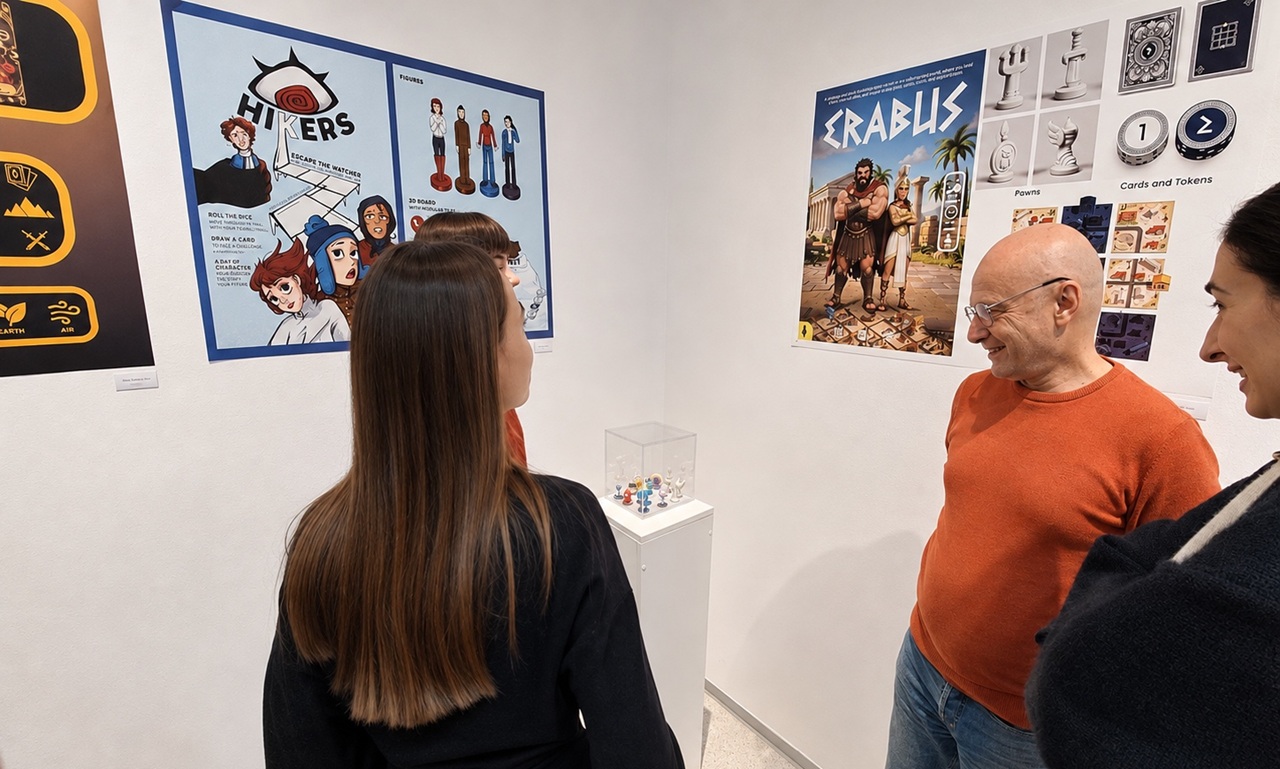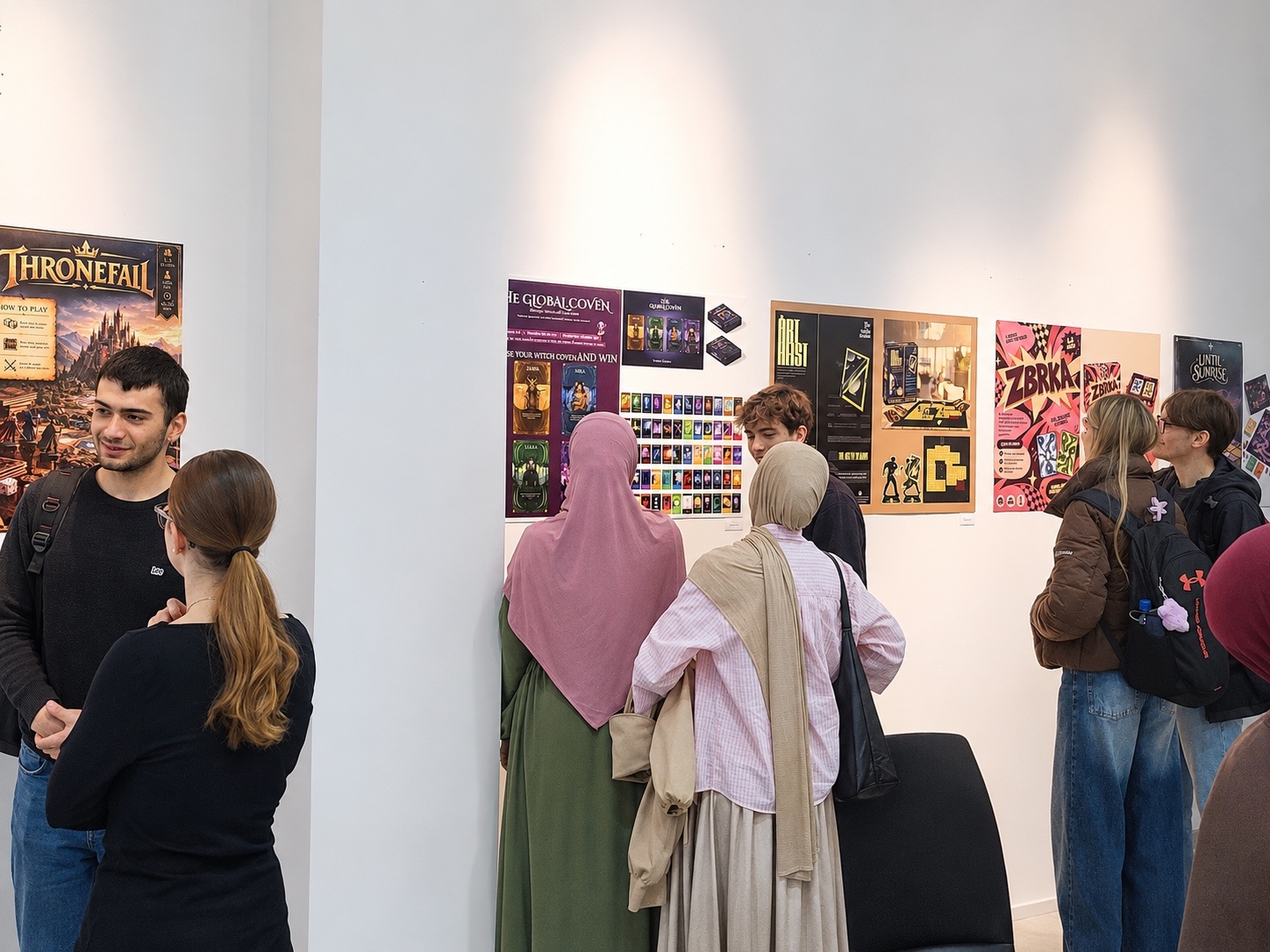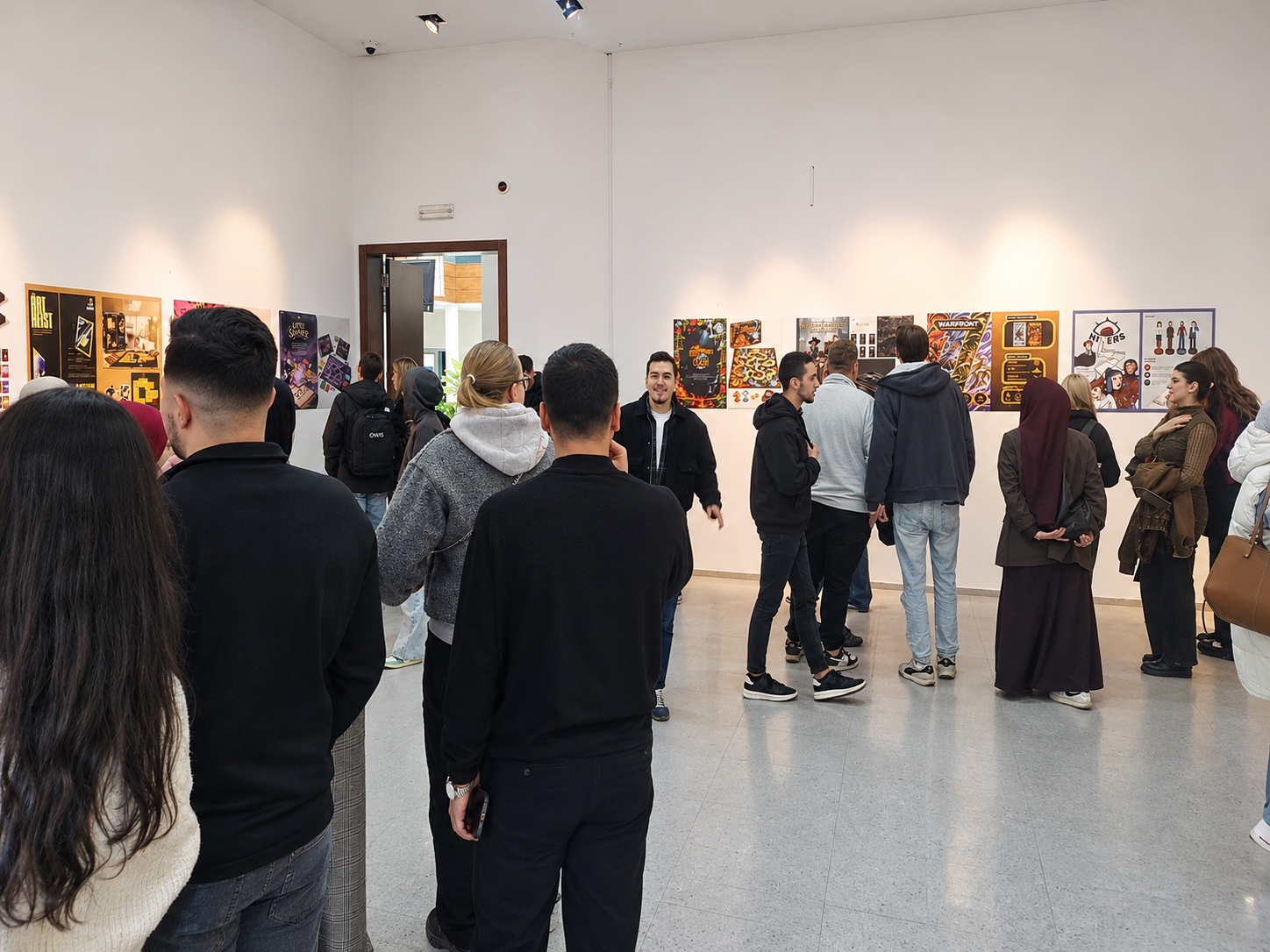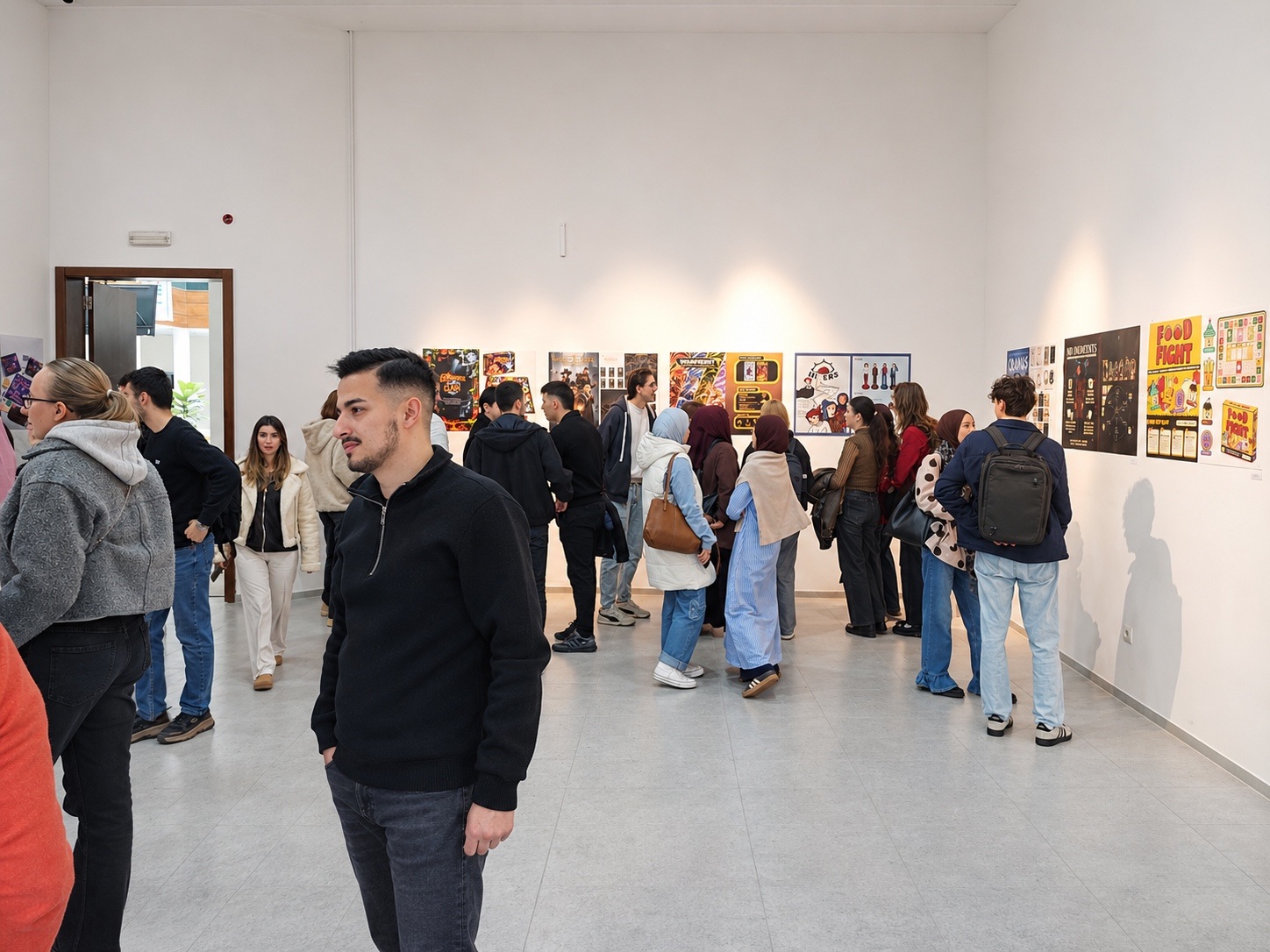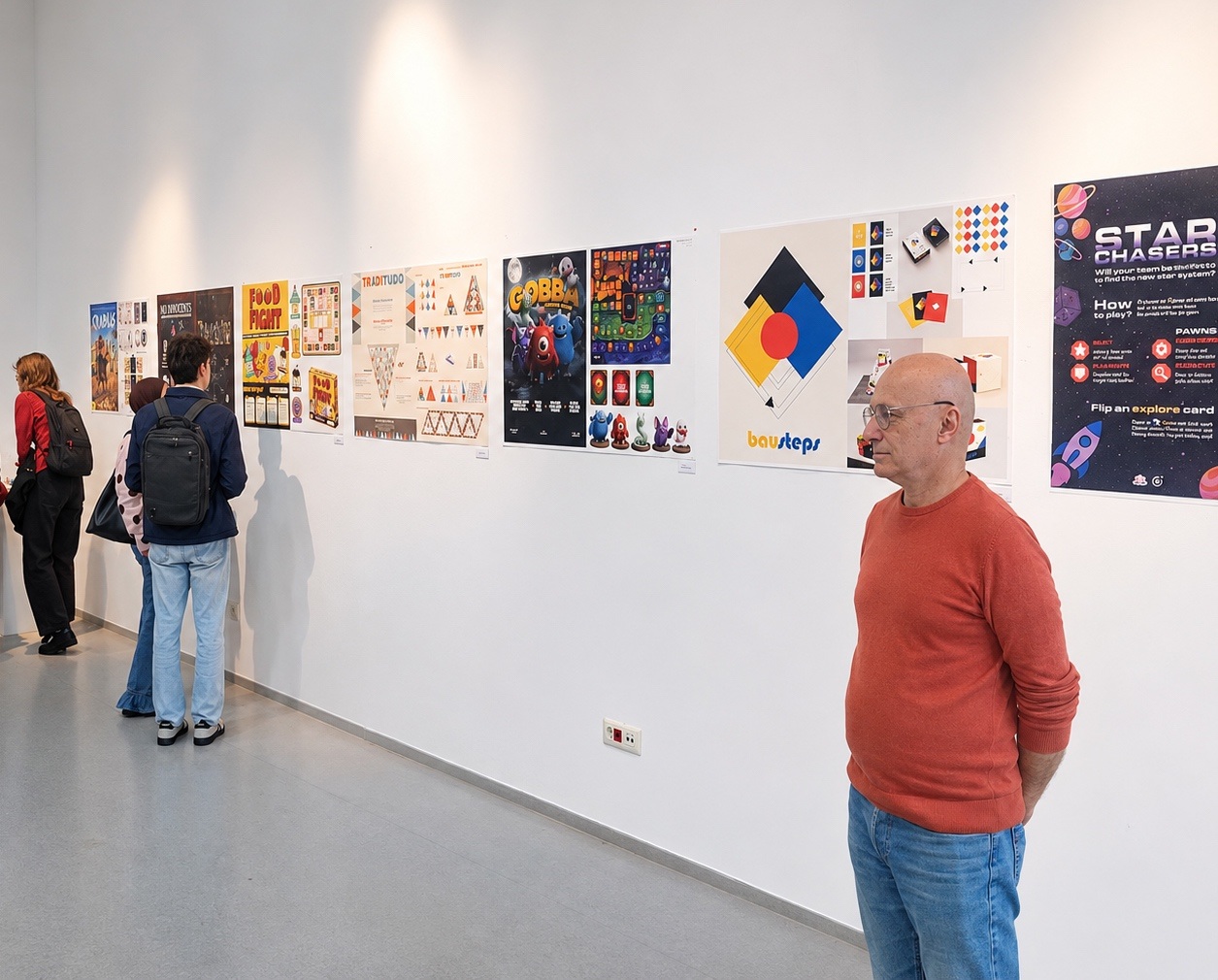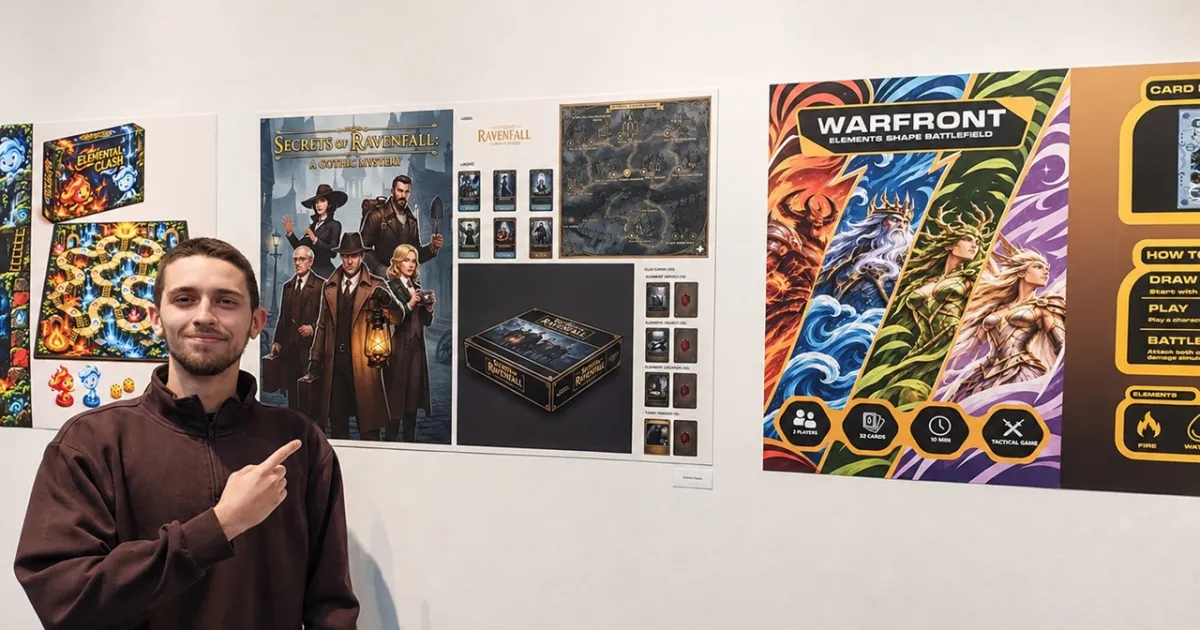
Students of the IUS Visual Arts and Visual Communications Design (VACD) study program presented an exhibition of original board game concepts developed over just five weeks of intensive work.
The assignment challenged students to approach graphic design as a complex problem-solving process. Rather than designing a single visual product, they were required to conceive an original game and develop an entire system of interconnected elements — from game mechanics and rules to boards, cards, playing pieces, packaging, and supporting visual materials.
The central challenge was to establish visual consistency across a wide range of components, ensuring that every element contributed to a coherent, functional, and recognizable whole. Students had to balance creativity with clarity, aesthetics with usability, and individual design decisions with the requirements of the entire system.
In professional practice, developing a board game often involves large multidisciplinary teams working over extended periods, with specialists responsible for game mechanics, illustration, graphic design, prototyping, and production. Considering this complexity, the achievements of the students within a period of only five weeks are particularly impressive.
The exhibited projects demonstrate a remarkable diversity of ideas, visual approaches, and creative solutions. More importantly, they reflect the students' ability to engage with a demanding design process that combines conceptual thinking, visual communication, illustration, product development, and practical problem-solving.
Perhaps one of the most encouraging aspects of the assignment was the enthusiasm with which students approached it. Despite the considerable challenges involved, their engagement and enjoyment of the creative process are evident in the results.
Beyond showcasing individual achievements, the exhibition highlights an essential principle of design education: graphic design is not merely about creating attractive images, but about developing meaningful, functional, and visually coherent systems.
The projects demonstrate what students can accomplish when creativity, critical thinking, and practical application of knowledge come together - even within a remarkably limited timeframe.